Can Michael Schumacher Walk Again? Latest 2026 Health Update Revealed
Behind the walls of a Mallorca villa, Michael Schumacher's life appears to be inching forward, even as the world is left to guess how far he has really come.
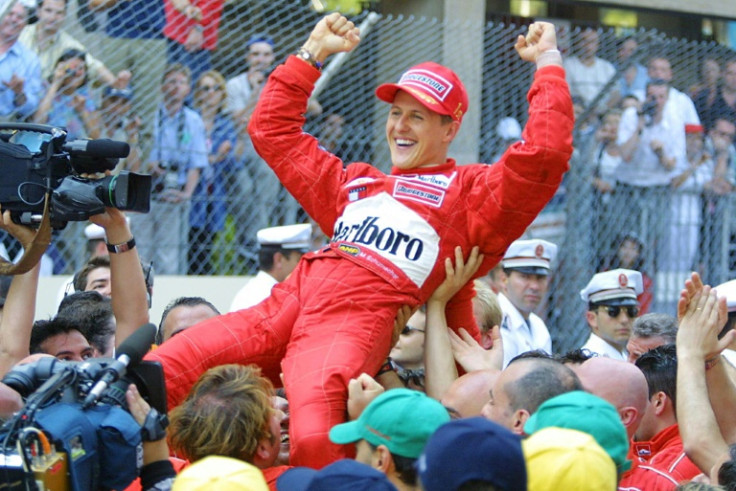
Michael Schumacher is reportedly able to move around his Mallorca home in Spain in a wheelchair under constant medical supervision, more than 12 years after the skiing accident that left the Formula 1 legend with severe brain injuries, according to reports.
The Daily Mail reported that journalist Jonathan McEvoy had visited the Schumacher family's residence in Las Brisas, near Andratx, and spoken to people said to be close to his inner circle. They described what they see as a significant step in Schumacher's long and largely hidden recovery: the seven-time world champion able to sit up and be wheeled through parts of the property, with some limited understanding of his surroundings. None of this has been confirmed by the family on the record.
Schumacher's life changed on 29 December 2013, when he struck his head on a rock while skiing off-piste in Méribel, France, during a holiday with his then 14-year-old son, Mick. The impact caused a traumatic brain injury so grave that surgeons placed him in a medically induced coma. He later underwent emergency operations and extended rehabilitation in a hospital in Lausanne before being moved to his lakeside home in Gland, Switzerland, where a private intensive-care unit was effectively built around him.
Apenas três pilotos na história fizeram as suas primeiras três pole positions na F1 de maneira consecutiva:
— Blog Fórmula 1 (@blog_formula1) May 2, 2026
🇧🇷 Ayrton Senna (1985)
🇩🇪 Michael Schumacher (1994)
🇮🇹 Kimi Antonelli (2026) pic.twitter.com/DzJuhZGZ86
Michael Schumacher's Long Recovery Behind Closed Doors
Since then, the story of Schumacher has been told mostly through silence. His wife, Corinna, chose early on to seal off her husband's medical condition from public view, limiting updates to rare, carefully worded comments from the family and a handful of trusted friends such as former Ferrari team principal Jean Todt. Photographs stopped. Public appearances ended. Michael, once the most visible man in motor racing, vanished.
What has emerged in 2026 slots into that tightly guarded narrative only at the edges. According to McEvoy's report, Michael is surrounded 24 hours a day by a specialist medical team at the family's Mallorca estate, which the Michael's have gradually turned into their main base. He is said to be moved around the property in a wheelchair, able to sit upright and react in ways that suggest partial awareness, though his capacity to speak remains extremely limited.
Another British tabloid, The Sun, went further, suggesting that Michael's communication is reduced to the most basic of signals, such as blinking or small gestures. These details, too, lack official confirmation. No medical bulletin has been issued, no doctor has appeared on camera or in print to describe his condition. Without that, any portrait of Michael's current state is inevitably sketchy and should be treated with considerable caution.
Yet even filtered through layers of privacy and tabloid language, the idea of movement and interaction marks a striking shift from the bleak assumptions many fans had settled into over the past decade. For a man who, for years, has been spoken of in almost static terms, the notion that Michael now sits by a window or is wheeled through a garden is powerfully human.
Can Michael Schumacher Ever Walk Again?
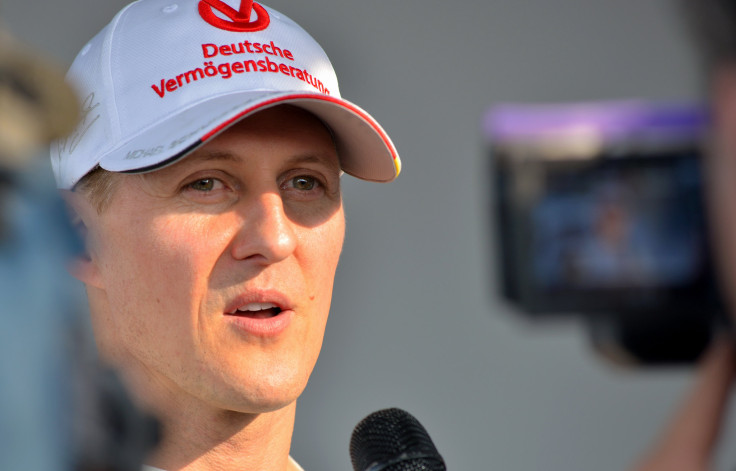
The question of whether Michael could walk again has hovered over every scrap of news about his health since 2013. The latest reports do not go that far. They speak of him sitting, being transported in a wheelchair, perhaps tracking people and sounds. There is no suggestion in the reporting that he is relearning to stand or take independent steps.
Doctors not involved in his care have long warned that expectations must be realistic for a patient with traumatic brain injuries of this severity and duration. Without official medical testimony, it is impossible to gauge what 'significant progress' truly means in Michael's case, beyond the carefully phrased hints from those around him. Nothing is confirmed, and everything still needs to be taken with a grain of salt.
What is clearer is the constancy of the family structure around him. Corinna Schumacher remains at the centre of that operation, reportedly supervising both household and medical teams. Their son, Mick, has pursued his own racing career, making it into Formula 1 before moving into a reserve and endurance racing role. Their daughter, Gina, competes in equestrian sport. Publicly, all three have spoken more about guarding Michael's dignity than satisfying curiosity.
The impulse to know more is understandable. This is Michael, after all, the man who bent Formula 1 to his will in a way few others have managed, then slipped on a helmet for an ordinary day's skiing and never came back the same. But the strange, uneasy truth is that the most famous patient in sport remains, in 2026, largely unseen, his condition glimpsed only through second-hand descriptions and anonymous briefings.
If the latest reports are accurate, though, they do suggest one thing about Michael: that his story has not frozen in that winter of 2013, and that, quietly and slowly, life in some form has continued to move.
© Copyright IBTimes 2026. All rights reserved.
- Recommended For You