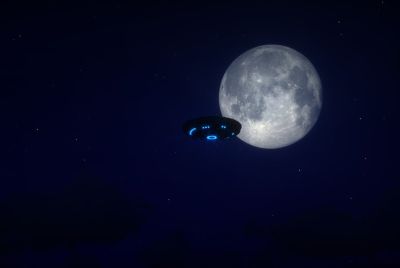
The Vatican Weighs In on UFO Discussion as UAP Disclosure Debate Continues to Escalate
Father Richard D'Souza of the Vatican Observatory discusses the Church's stance on UFOs and the balance between faith and scientific inquiry.
For years, discussions about unidentified flying objects (UFOs) and unexplained aerial phenomena (UAP) were often limited to conspiracy forums, the UFO community, and late-night radio shows. But, as the topic continues to gain traction around the world, officials from the United States, intelligence agencies, scientists, and even mainstream media are openly discussing it, with some experts even urging the government to disclose more about the existence of extraterrestrial life they believed it is concealing for decades.
Now, another powerful institution has entered the conversation: the Vatican.
In a recent interview with NewsNation, Father Richard D'Souza, the newly appointed director of the Vatican Observatory, recently addressed growing public interest in UFOs. While his comments were careful and measured, the moment itself carried major symbolic weight and marked a significant cultural shift.
Jesuit Astronomer Weighs In on UFO Debate
Father Richard D'Souza is a Jesuit priest, with a doctorate in astronomy. He was appointed director of the Vatican Observatory by Pope Leo XIV in September 2025, succeeding Br Guy Consolmagno. D'Souza has been a member of the Conservatory since 2016.
During his interview with NewsNation, D'Souza did not explicitly endorse extraordinary claims or speculate about extraterrestrial visitation, but urged people about the need to be open about understanding the world, from a faith perspective.
'There is so much about the world that we do not understand, and it is human curiosity that drives us to understand these phenomena', he said.
However, he also emphasised scientific scepticism.
D'Souza said he has not personally paid much attention to the US releases and cautioned against sensationalising material before it has been examined by qualified experts.
'We should never abandon the course of reason. These are the anchors that help us move forward in trying to understand new phenomena. I myself haven't given much attention to these things, and we shouldn't sensationalise something that has not been fully proved or had the chance to mature enough to be properly examined by experts in the field', he said.
D'Souza's comments suggest that the Church sees the current UFO discussion as something worth observing seriously, not dismissing outright, but also not sensationalising.
Why The Vatican's Involvement Matters
The Vatican's entry into the UFO conversation comes at a time when public attention toward UAP disclosure is accelerating rapidly.
In the United States, lawmakers continue pushing for transparency regarding classified government programmes tied to UAPs. Congressman Tim Burchett recently claimed that disclosure advocates inside the government are encountering resistance from what he described as the 'deep state'.
Meanwhile, newly declassified UFO archives have generated massive public interest online, reportedly attracting more than one billion views just days after its release.
Investigations also continue regarding unexplained drone incursions and aerial objects observed near sensitive military installations.
With how wide this topic is reaching the masses, this is no longer treated solely as entertainment or fringe speculation, but it has evolved into a broader discussion involving national security, technology, science, philosophy, and religion.
That is precisely why the Vatican's involvement matters.
Faith and Science Have Long Coexisted at the Vatican
D'Souza also pointed out that the Catholic Church has a long history of engaging directly with scientific inquiry.
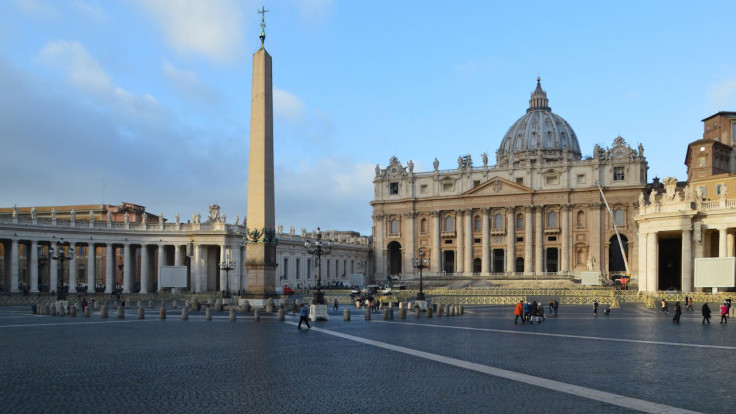
The Vatican Observatory itself was re-founded in 1891 by Pope Leo XIII to demonstrate that faith and science could work together rather than oppose one another.
The observatory remains one of the oldest astronomical research institutions in the world and operates advanced telescopes, including facilities in Arizona used to study deep space and cosmic phenomena.
Vatican astronomers have also previously acknowledged that intelligent extraterrestrial life could possibly exist in the universe without conflicting with Catholic teachings.
© Copyright IBTimes 2026. All rights reserved.
- Recommended For You