Was Michael Schumacher Protected? Todt's 1997 Confession Reignites F1's Most Controversial Crash Debate
Behind the visor and the victories, Michael Schumacher was, Jean Todt insists, a fragile man hiding behind the armour that Formula 1 demanded.
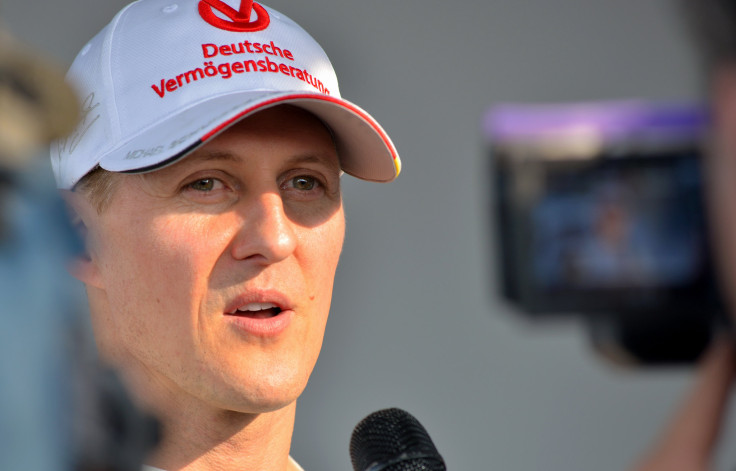
Michael Schumacher's former Ferrari boss Jean Todt has claimed the seven-time Formula 1 world champion's apparent arrogance was a 'mask' he used to hide deep fragility, reopening old arguments over how far Ferrari went to protect their star driver, particularly around his infamous 1997 title-deciding clash in Jerez.
Todt appeared on the High Performance podcast, where he was pressed on how well the public really knew Schumacher. The German, now 55, is widely remembered as an unapologetically ruthless racer who dominated with Ferrari in the early 2000s, winning five of his seven world titles with the Scuderia. Yet Todt painted a different picture, describing a driver who would quietly ask for extra testing at Ferrari's private Fiorano circuit simply to reassure himself that he was 'still good enough,' even after securing the championship.
#ArgentinaGP🇦🇷 '98 || Un día como hoy, hace 28 años, la #F1 llegaba a nuestro país por última vez.
— FormulaArg (@FormulaArgOK) April 12, 2026
Fue victoria de 🥇Michael Schumacher, seguido de 🥈Mika Hakkinen y 🥉Eddie Irvine.
¿Cuantos de ustedes estuvieron ese día en el Gálvez? 🙋🏻♂️ pic.twitter.com/kZbKdUN2Vk
Jean Todt Lifts the Lid on Michael Schumacher Persona
Schumacher and Todt formed one of the most consequential partnerships in modern Formula 1. Under Todt's stewardship, Ferrari collected six consecutive Constructors' titles from 1999 to 2004, while Schumacher took five Drivers' crowns in a row over the same period. From the outside, it looked like an era of near effortless superiority, led by a driver whose self-belief bordered on disdain for anyone in his way.
Todt pushed back firmly on that characterisation. On the podcast, he recalled Schumacher coming to him after winning a world championship and making a surprisingly vulnerable request.
'After he was world champion, before starting the new season, he asked me – I'm going back to our private track in Fiorano,' he said. 'Could you give me half a day where I'm going to do some testing to make sure I'm still good,' Todt recounted.
It is a small story, but it cuts directly across the hard-edged image of Schumacher that many fans and rivals still carry. According to Todt, that self-doubt was not an exception inside Ferrari's golden era, but the rule.
'I think it is a big strength not to be sure to be good,' he said. 'None of us thought we were good. We were always scared of not being good enough. That is why, in a way, it is a bit painful, because we never probably enjoyed as much as we should have done the result.'
The interviewer suggested to Todt that the public image of Schumacher as swaggering, overconfident and almost contemptuous of opponents might, in light of that, be entirely wrong. Todt did not hesitate.
'Completely,' he replied. 'Michael is a kind of shy, generous guy. He hides his shyness by looking arrogant.'
Why would anyone choose that front, he was asked. Todt's answer was disarmingly simple: 'You do not do that to help you. I think it is in your character, in your genes. You are like that.'

Ferrari Protection and the 1997 Jerez Flashpoint
Todt said he saw behind Schumacher's mask very early in their working relationship, as the pair navigated what he mildly called 'the problems we had to fight.' He did not spell them out in detail, but one moment looms over that period more than any other.
In 1997, at the European Grand Prix in Jerez, Schumacher collided with title rival Jacques Villeneuve as the Canadian attempted an overtake in the championship decider. The move backfired. Villeneuve limped to the finish and took the title. Schumacher ended in the gravel and was later disqualified from the entire championship for his role in the incident.
For some, that race remains the purest example of Schumacher the win-at-all-costs predator. Todt's comments add a more complicated layer. Looking back to 1997, he suggested that the episode helped convince Schumacher how firmly the team stood behind him.
'Going back to '97, he realised that he was protected [by Ferrari]. He realised he was loved. And it goes both ways,' Todt said.
In other words, the line between shielding a driver and enabling him has always been thin at the top of Formula 1. Todt did not apologise for Ferrari's loyalty, and there is no indication in his remarks that he regrets the strength of that protection. Instead, he framed it as the foundation for a relationship that shifted from strictly professional to something much closer.
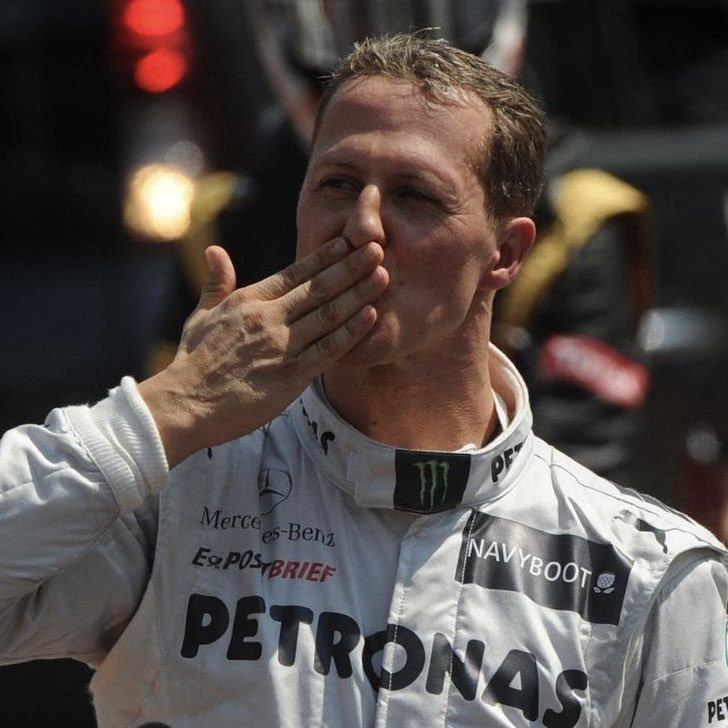
'So clearly, one after the other, from a professional relationship, it became a friendship and family relationship,' he said.
What Todt has now laid out is a version of Schumacher that sits awkwardly with his on-track record. A driver outwardly willing to bang wheels, push rules and absorb boos is, in this telling, a shy man, unsure if he is still fast enough, leaning heavily on the refuge provided by Ferrari.
Schumacher first retired from Formula 1 in 2006 after an unsuccessful final title fight with Ferrari, then returned with Mercedes in 2010, managing just one podium in three seasons before stepping away for good. Todt's reflections, more than a decade on, suggest that much of what the world thought it saw in Schumacher was only ever the armour, not the man underneath.

Nothing in Todt's interview changes the official record of 1997 or resolves the arguments that still swirl around that Jerez collision. But his insistence that Schumacher was 'fragile,' protected and loved inside Ferrari will be seized upon by those who believe the team insulated its star from the full consequences of his most controversial moments. Nothing is confirmed beyond Todt's own account, so his portrayal should be treated with caution by those keen to revisit the history of that era.
© Copyright IBTimes 2026. All rights reserved.
- Recommended For You