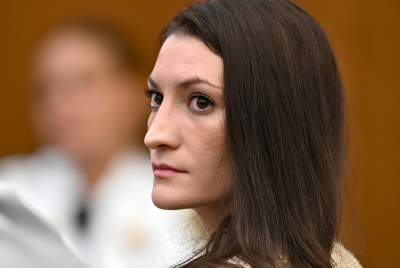
Mom Behind 2013 Torture Killing of Son Pushes for Resentencing in Brutal Case
More than 10 years later, the mother at the center of her son's brutal torture death battles to reduce her sentence, reigniting a case that horrified the nation.

The drawings on the fridge were the first thing people noticed.
In photos from before everything went wrong, Gabriel Fernandez's sketches are still taped up in the kitchen of a modest Palmdale home – bright, clumsy, unmistakably the work of an eight‑year‑old trying to please the adults around him. By the end of May 2013, that same child was lying in a hospital bed, his body so battered that hardened paramedics struggled to process what they were seeing.
California has seen more than its share of grim headlines. Yet the torture and killing of Gabriel Fernandez cut through in a way few crimes do. It exposed not only the capacity for cruelty inside one household, but the catastrophic failure of the systems meant to protect a boy who, neighbours later said, seemed to be "asking for help with his eyes".
Now, more than a decade after Gabriel died, his mother is trying to persuade a court that she deserves a second chance.
Pearl Fernandez Resentencing Bid Reopens Old Wounds
Pearl Fernandez was convicted of murder and child abuse for her role in her son's death. Prosecutors said she not only allowed the torture to happen, but actively participated in it alongside her then boyfriend, Isauro Aguirre. Jurors heard how Gabriel was beaten, starved, forced to sleep in a cupboard, shot with a BB gun and pepper‑sprayed. He died in hospital two days after being found unconscious at home. Aguirre was sentenced to death. Pearl received a life term.
For most people who followed the case – including millions who later watched Netflix's forensic documentary series The Trials of Gabriel Fernandez – that seemed to be the end of the legal story. It was not.
More than ten years on, Pearl Fernandez is petitioning the court for resentencing, asking for her punishment to be reduced. Under a series of reforms passed in California in recent years, some prisoners convicted of murder have been allowed to argue that their original sentences are no longer appropriate, particularly if legal definitions around intent and accomplice liability have changed.
On paper, that is part of a broader criminal justice rethink: the idea that not every case involving a homicide should automatically end with a life term, and that courts should be able to revisit old sentences in the light of new law and, sometimes, new evidence.
In practice, the notion that this principle might apply to Pearl Fernandez has landed like a punch to the gut.
Resentencing petitions in cases of extreme child abuse are vanishingly rare. Judges are obliged to weigh not only the applicant's current circumstances – their behaviour in prison, their psychological state, any claims of rehabilitation – but also the sheer gravity of the original crime and the impact on survivors. In Gabriel's case there is, bluntly, no way to describe what happened to him that does not sound like a horror script.
That is why the news of Pearl's bid has triggered a fresh wave of anger and disbelief, particularly in Los Angeles County, where many still talk about Gabriel as if his death happened last year, not in 2013.
A Community Still Asking How Gabriel Was Left To Die
The legal details of Pearl Fernandez's petition are, for now, largely confined to filings and hearings. The emotional fallout is not.
In Palmdale, neighbours who remember seeing police cars outside the family's flat all those years ago are asking the same questions they asked then, only louder. How did this go on for so long? How did so many adults – relatives, social workers, teachers, deputies – miss the severity of Gabriel's injuries and the danger he was in?
Those questions are not abstract. Records later showed that social services had been alerted multiple times to bruises, injuries and Gabriel's own reports of being beaten. Yet he was left in the very home where the abuse was taking place. Four Los Angeles County social workers were eventually charged with child abuse and falsifying records over their handling of the case, though those charges were later dismissed on appeal.
The sense of systemic failure has never really faded. Gabriel's death forced a grim reckoning inside child protection agencies across the United States. Training was overhauled. Risk‑assessment tools were re‑evaluated. There were taskforces, blue‑ribbon panels and anguished public meetings in which officials promised that "lessons will be learned".
A decade on, those phrases sound painfully thin to the people who watched a small boy's coffin lowered into the ground.
That is the backdrop against which Pearl Fernandez now asks a judge to temper her sentence. For many, it feels like the system that failed Gabriel is once again struggling to centre him in the story.
Justice, Mercy And The Limits Of Forgiveness
Supporters of resentencing laws point out that revisiting a punishment does not erase a conviction. Pearl Fernandez will never be declared innocent of what happened to her son. The question before the court is narrower and more clinical: does her current sentence still fit within the framework of California law as it stands today?
To those who sat through the original trial, that framing feels almost obscenely detached from the reality of the case.
Legal commentators note that the modern push for resentencing has, on the whole, focused on people swept up in sweeping "felony murder" rules – getaway drivers who never pulled the trigger, abused partners coerced into crimes by violent spouses. Pearl Fernandez was not some distant participant in Gabriel's suffering. The jury heard, in often excruciating detail, about the things she did herself.
That is why the public reaction to her petition has been so visceral. The idea of leniency for a mother who tortured and allowed the slow killing of her own child collides head‑on with most people's most basic instincts about right and wrong.
Yet the application has had one undeniable effect: it has pulled the case, and its unanswered questions, back into the light.
People are once again reading Gabriel's name, remembering his face, and talking not only about Pearl and Aguirre but about the teachers, relatives and officials who missed or minimised the signs. They are revisiting that harsh truth that the state can be "involved" in a child's life – file notes, scheduled visits, ticked boxes – and still fail to save them.
In that sense, the story of the resentencing petition is not just about one woman asking for mercy. It is about the limits of what the legal system can ever offer in cases like this.
No amount of punishment, however long, can restore an eight‑year‑old's stolen childhood. No carefully worded judgment can explain why the safety nets woven around vulnerable children so often develop fatal holes. And no resentencing hearing, however it ends, is likely to persuade the wider public that Pearl Fernandez deserves anything other than to live out the consequences of what she did.
What remains, stubbornly, is a simple, brutal fact: Gabriel Fernandez died in a home that should have been his safest place. The people who hurt him have been convicted. The services that failed him have, to varying degrees, been chastised and restructured. Yet a decade later, adults are still arguing about what his mother deserves, while the child at the centre of it all is beyond any earthly justice.
That, in the end, may be the most haunting part of the case – and the reason it refuses, quite rightly, to fade into the background.
© Copyright IBTimes 2026. All rights reserved.
- MOST POPULAR IN Crime