

NASA Just Shocked the World: Most Small Galaxies Might Be Missing Their Cosmic Anchors
New X-ray observations indicate that most small galaxies may not host supermassive black holes at their centres
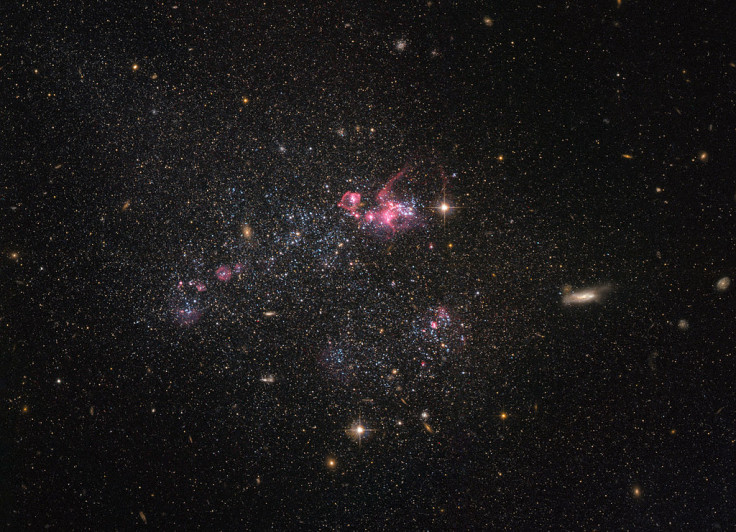
Astronomers analysing two decades of data from NASA's Chandra X-ray Observatory have uncovered evidence that could overturn one of modern cosmology's core assumptions: that nearly all galaxies are anchored by a supermassive black hole.
According to the new research, many small and dwarf galaxies appear to lack these central giants altogether. If confirmed, the findings would force scientists to rethink how galaxies form, evolve, and interact, with implications that stretch from star formation to future gravitational-wave missions.
This discovery challenges more established theories of galaxy formation and may have far-reaching consequences for our understanding of the universe.
A Paradigm Change in Galaxy Science
Decades on, researchers have been convinced that almost all galaxies must have a black hole at their centres, which serves as a gravitational anchor for star formation and the development of galaxies. Nonetheless, a recent survey of 1,600 galaxies observed with Chandra over the last two decades has revealed a startling pattern: several smaller galaxies are provided with these gigantic anchors in the universe.
As one of the lead astronomers on the study, Dr Farah Zou said that the lack of X-ray emission, produced as matter falls into supermassive black holes, was a strong indication that these smaller galaxies may lack black holes. According to her team's research, small galaxies probably have a supermassive black hole about 30 per cent of the time.
'It's more than just bookkeeping. Our study gives clues about how supermassive black holes are born. It also provides crucial hints about how often black hole signatures in dwarf galaxies can be found with new or future telescopes,' she said.
This challenges the established theory that supermassive black holes form from the mergers of smaller black holes. Instead, the article argues that these cosmic giants might have been born huge in the first place.
Implications for Astrophysics and Space Missions

The finding has important implications for astrophysics and future space missions. An immediate impact is the Laser Interferometer Space Antenna (LISA), a mission designed to detect gravitational waves from black hole mergers.
If smaller galaxies do not contain supermassive black holes, the rate of such mergers- and the resulting gravitational waves- may be much lower than expected. This might affect the mission's design and anticipated outputs.
Observing the Universe in X-rays
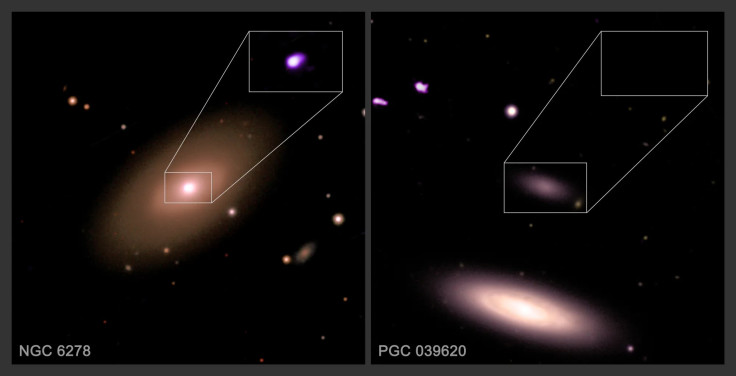
The Chandra Observatory has been pivotal in this discovery. Its ability to detect X-rays when matter is accreted onto black holes enables astronomers to infer the presence or absence of these elusive galaxies.
Galaxies of different magnitudes, ranging from more than ten times the mass of the Milky Way to tiny dwarf galaxies, were observed. Smaller galaxies had always shown no X-ray emission, implying no central black holes.
What This Means for Cosmology
The absence of supermassive black holes in small galaxies raises fundamental questions about how the universe works. Are these galaxies an exception to the rule, or have older models overestimated the abundance of black holes?
Scientists believe that a better understanding of these buildings should open the door to broad questions concerning cosmic evolution, star formation, and the distribution of matter in the universe.
It is an excellent chance to reconsider old assumptions, which Dr Zou observed.
Future Research Directions
The authors of the study note that further studies are needed to establish the validity of the findings. Although X-ray data is strong evidence, additional information on the composition and dynamics of such smaller galaxies is available from complementary observations of the galaxy with optical, infrared, and radio telescopes.
Should they be confirmed, the findings would also shape the direction of future surveys and missions, possibly putting galaxies with unforeseen or missing black holes in the limelight to better understand the variety of galactic structures.
The results of the NASA/Chandra conflict with the traditional view that supermassive black holes are a universal property of galaxies. The realisation that most smaller galaxies might lack such centres prompts astronomers to reconsider galaxy-formation theories and plan future observations.
© Copyright IBTimes 2026. All rights reserved.