

Who Is Navi Pillay? International Jurist Wins 2026 Nobel Peace Prize as Trump Is Snubbed Again
From apartheid courtrooms to Oslo: a life spent prosecuting atrocities
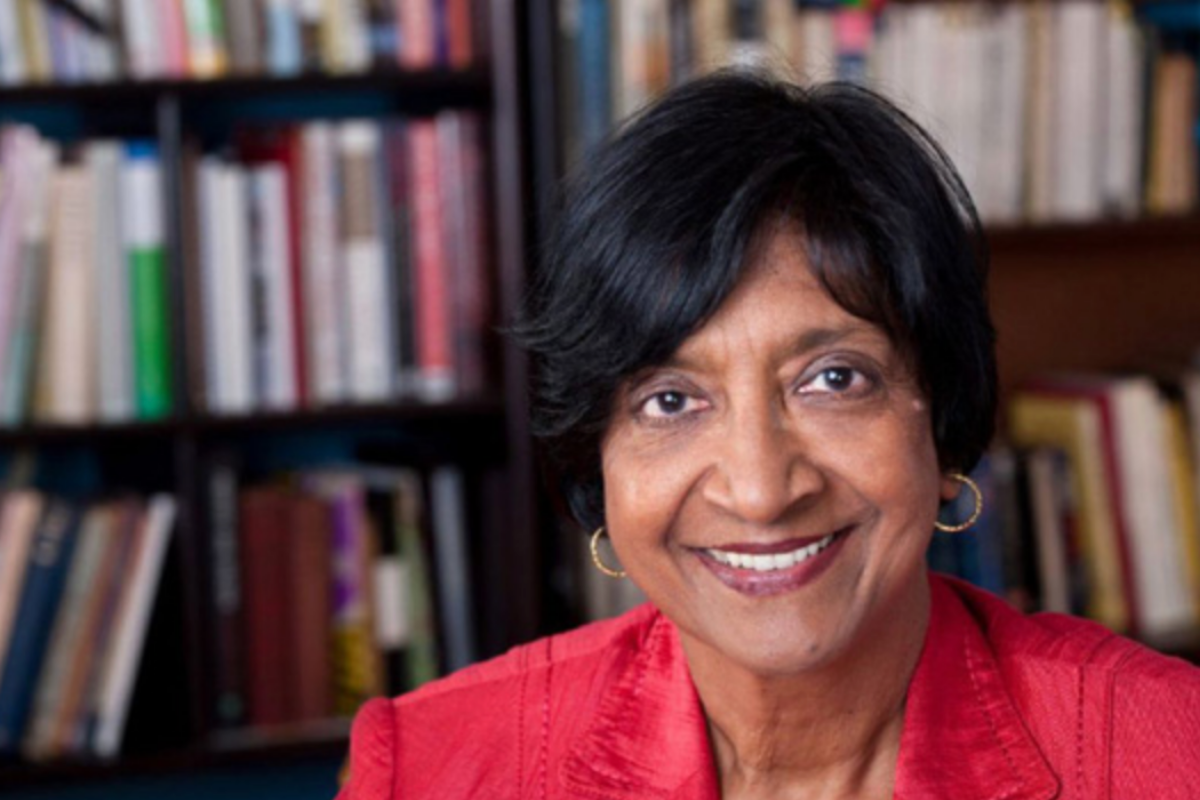
South African jurist Navanethem 'Navi' Pillay has won the 2026 Nobel Peace Prize, capping nearly six decades in human rights law and, once again, leaving US President Donald Trump without the award he has openly chased.
The Norwegian Nobel Committee, whose chair Jørgen Watne Frydnes read the announcement in Oslo on Friday 9 October, cited Pillay 'for her efforts to promote peace and international law.' The committee said she had been instrumental in ensuring that war crimes, crimes against humanity, and genocide are prosecuted.
Pillay did not ignore the man who had wanted the prize for himself. 'If you clap a little bit more, I may share this prize with Trump,' she told an audience at the Nuremberg Forum in Germany, in a video shared by Amnesty International's secretary-general, Agnès Callamard.
BREAKING NEWS The Norwegian Nobel Committee has decided to award the 2026 #NobelPeacePrize to Navanethem “Navi” Pillay for her efforts to promote peace and international law.#NobelPrize https://t.co/97vurspw6z
— The Nobel Prize (@NobelPrize) October 9, 2026
A Career of Legal Firsts and Landmark Rulings
Born in Durban on 23 September 1941 into a family of Indian Tamil descent, Pillay came of age under apartheid, when few women of colour could enter the law. In 1967 she became the first woman of colour to run her own law practice in Natal Province. She spent the following decades defending anti-apartheid activists and exposing torture in detention.
Her rise came quickly once apartheid fell. In 1995 she was appointed an acting judge on the South African High Court, the first non-white woman to serve on that bench. Within months, the UN General Assembly elected her to the International Criminal Tribunal for Rwanda, where she was the only woman among the judges for its first four years and served as president from 1999 to 2003.
Her work in Rwanda reshaped international law. In the trial of Jean-Paul Akayesu, a former local official, the tribunal ruled that rape and sexual violence could constitute acts of genocide. Pillay helped drive that finding, later reflecting that sexual violence, long dismissed as a spoil of war, had been recast as a prosecutable crime.
She joined the first bench of the International Criminal Court in 2003, then served as UN High Commissioner for Human Rights from 2008 to 2014. She now sits as an ad hoc judge at the International Court of Justice in The Gambia's genocide case against Myanmar.
Until 2025, she chaired the Independent International Commission of Inquiry on the Occupied Palestinian Territory, including East Jerusalem, and Israel, a Human Rights Council body, not a court. It concluded that Israel had committed genocide in Gaza, a finding Israel firmly rejects and on which the Nobel Committee has said it takes no position.
Trump's Long Pursuit of the Peace Prize
For Trump, the result was another disappointment in a prize he has chased for years, his second miss in two years. The committee's focus on courts and the rule of international law describes the world Pillay has worked in for three decades.
The leaders of Cambodia, Israel, and Pakistan said they nominated him for the 2026 award, though those claims cannot be verified independently. He has argued repeatedly that he deserves the honour, pointing to his claim of having ended eight wars, among them a ceasefire in Gaza.
The 2025 prize had gone to Venezuelan opposition leader María Corina Machado, who gave her medal to Trump at a White House meeting in January while seeking US support for her Venezuela campaign. The Nobel Committee has stressed that handing over a medal does not transfer the title of laureate.
On 7 October, two days before this year's announcement, Trump said he had been honoured to receive the prize 'indirectly' through Machado, while admitting he did not know how the committee would decide.
The 2025 result had drawn an angry response from the White House, where communications director Steven Cheung accused the committee of placing politics above peace. Trump later wrote to Norwegian Prime Minister Jonas Gahr Støre, saying its decision not to honour him meant he no longer felt obliged to think only about peace.
The prize is chosen by the independent Nobel Committee, not the Norwegian government, a point Støre made in reply.
Pillay will formally receive the award in Oslo on 10 December. The committee honoured her decades of work advancing international law and holding perpetrators of atrocities to account.
© Copyright IBTimes 2026. All rights reserved.