

The Netherlands Pays Sick Workers for Up to Two Years While Americans Face a Very Different Reality
The Netherlands generally requires employers to pay at least 70% of wages during prolonged illness, while American workers often rely on unpaid leave, savings or company policies
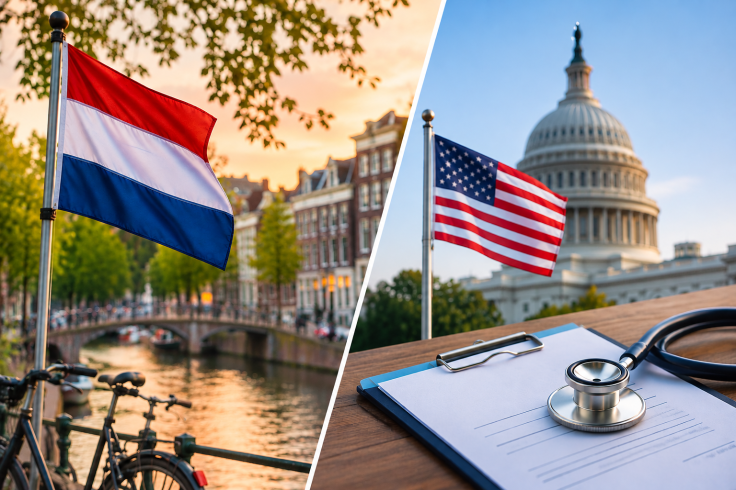
Imagine undergoing chemotherapy while worrying whether your next pay cheque will arrive. In the Netherlands, employees facing serious illness generally receive at least 70% of their wages for up to two years. In the United States, the financial protection available to sick workers depends heavily on where they live and who employs them.
The contrast has attracted renewed attention online, highlighting how differently the two countries approach prolonged illness, employment and financial security.
Netherlands Guarantees Up to Two Years of Sick Pay
Under Dutch employment law, employers generally must continue paying sick employees at least 70% of their wages for up to 104 weeks.
According to the Dutch Employee Insurance Agency (UWV), payments during the first year must be supplemented to meet the statutory minimum wage where applicable. That requirement does not extend into the second year.
Some employment contracts and collective agreements provide more generous payments. Employers must also work with sick employees on their recovery and return to work, potentially through adjusted duties or alternative positions.
If an employer fails to meet its reintegration obligations, Dutch authorities can require an additional year of wage payments. However, the rules have exceptions, including employees whose fixed-term contracts expire during illness.
For someone undergoing cancer treatment or recovering from major surgery, the protection can provide financial stability while they are unable to work.
As a Dutch person let me tell you it's way worse than it seems.
— burcκ (@burckmeister) October 29, 2026
The AVERAGE stress related absence is 250+ days. The AVERAGE burnout related absence is 300+ days.
While on sick-leave, you can return to work for just 4 weeks and the 2 year period **resets**.
Your employer is… https://t.co/M3HMMhedYx
What Paid Sick Leave Do American Workers Get?
The United States has no federal law guaranteeing paid sick leave for private-sector workers. According to the US Department of Labor, some states and local governments require employers to provide paid sick leave, while certain states offer paid family and medical leave programmes.
Other employees depend on company benefits, collective agreements or disability insurance. Under the federal Family and Medical Leave Act (FMLA), eligible employees can take up to 12 weeks of job-protected leave for qualifying medical reasons. However, that leave is generally unpaid.
Eligibility depends on factors including employer coverage, length of service and hours worked. Workers may use accrued paid leave during FMLA leave, depending on applicable rules. Unlike the Dutch system, there is no nationwide requirement for employers to continue paying most sick workers a percentage of their wages for two years.
Cancer Patient Fired After Requesting Medical Leave
A case involving American retailer JCPenney illustrates the consequences workers can face when illness conflicts with workplace attendance policies. According to the US Equal Employment Opportunity Commission (EEOC), a Georgia warehouse employee undergoing breast cancer treatment requested time off for medical appointments.
The agency alleged that JCPenney denied her accommodation request and counted treatment-related absences against its attendance policy. She was dismissed on 3 July 2023. In June 2026, JCPenney agreed to pay $99,000 to settle the federal disability discrimination lawsuit and implement corrective measures.
The settlement resolved the allegations without establishing a court finding of liability. The case also highlights an important distinction: US disability discrimination laws can protect workers who need reasonable medical accommodations, even though federal law does not guarantee paid sick leave.
How Does UK Sick Pay Compare?
Britain provides statutory sick pay, although its duration is considerably shorter than the Dutch system. Under rules introduced in April 2026, eligible employees receive the lower of 80% of their average weekly earnings or £123.25 per week, for up to 28 weeks.
Payments begin from the first qualifying day of illness, while some employers offer more generous occupational sick pay. For workers facing prolonged illness, the difference between paid leave, unpaid job protection and losing employment altogether can determine whether they can continue meeting everyday expenses during treatment.
The contrast between the Netherlands and the United States highlights how national policies can shape workers' financial security during serious illness. While Dutch employees generally have up to two years of wage protection, Americans often rely on a patchwork of state laws, employer benefits and limited federal protections. For workers undergoing lengthy medical treatment, that difference can determine whether they can focus on recovery or face mounting financial pressure.
© Copyright IBTimes 2026. All rights reserved.