

Oura Halts Blockbuster $2B IPO at the Last Minute Despite Five Million Paying Subscribers
Oura's IPO plans are on hold, with questions lingering over its $15.62B valuation and ambitions beyond health tracking

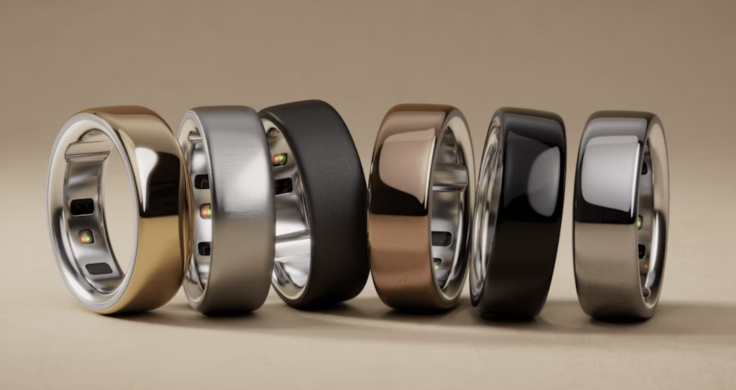
Oura has pulled the plug on its planned US stock market debut at the last minute, putting its $2 billion IPO on hold despite having five million paying subscribers and rapidly growing revenue.
The smart-ring maker said Tuesday that it was postponing its Nasdaq listing because of 'uncertainty in the IPO market,' despite robust demand for the offering. CEO Tom Hale said Oura wanted to deliver an 'extraordinary IPO' for employees and investors and had the 'luxury of choosing our moment.'
The decision comes against a more unsettled backdrop for US markets, with Treasury yields rising sharply alongside oil prices, inflation concerns, geopolitical tensions, and uncertainty over the Federal Reserve's interest-rate outlook. Rising yields can add pressure to equity valuations and investor sentiment.
The 10-year Treasury yield recently moved above 5%, while markets have also been dealing with inflation concerns, higher oil prices, geopolitical tensions,
Why Rising Bond Yields Matter for IPOs
Higher bond yields can put pressure on IPO valuations because government bonds offer investors returns with relatively lower risk, making newly listed growth stocks less attractive at high valuations.
Yields can also affect how investors value companies whose expected growth and cash flows lie further in the future. When yields rise, the rate used to discount those future cash flows also tends to rise, which can reduce the present value investors place on growth companies.
That matters particularly for an IPO such as Oura's, where investors were being asked to place a valuation on a rapidly expanding consumer-health business rather than an established public company with years of market trading history.
Oura had planned to sell 50 million shares at between $40 and $44 each, implying a potential fully diluted valuation of about $15.6 billion at the top of the range. The offering could have raised as much as $2.2 billion, although much of the stock was being sold by existing shareholders rather than Oura itself.
The market backdrop, therefore, became an important consideration even though Oura's underlying business had continued to grow.
Oura's Five Million Paying Subscribers, Massive Revenue Surge
Oura's appeal to investors rests partly on a business model that combines hardware sales with recurring subscription revenue.
The company sells its smart rings, then encourages customers to pay for Oura Membership, which unlocks additional health data, features, and functionality through its app. The company's rings track data, including sleep and other health metrics, while its app uses that information to provide feedback and guidance.
As of 30th June, Oura had five million paid members and an 85% weighted-average 12-month paid-member retention rate. According to Reuters, that figure had jumped to around 5.7 million following the launch of Oura Ring 5.
Membership plans in the US cost $5.99 a month or $69.99 a year. For the nine months ended June 30, 2026, hardware generated about 80% of Oura's revenue, while membership accounted for roughly 20%. Note that Hale has described the subscription scheme as central to the business model.
Overall revenue during that period was $1.21 billion, up 74% from $697.6 million a year earlier. Elsewhere, gross margins also increased to 55% from 51%. The company sold 3.1 million rings during that period, marking a 75% YoY growth. The company also moved sharply into profitability. Net income reached $60.8 million during the nine-month period, compared with $1.6 million a year earlier.
Why Oura Wanted the IPO
Oura has stayed focused on the smart-ring market since launching in Finland in 2013. Its proposition is based on putting a small health-monitoring computer on a user's finger and collecting information continuously.
The company's longer-term pitch extends beyond consumer fitness. Oura has positioned its technology around the growing overlap between personal wellness and digital healthcare, with wearable platforms potentially becoming part of how people monitor health and interact with medical services.
The company has also pointed to applications beyond health, with Hale suggesting that the ring could eventually be used for functions such as payments or replacing physical keys.
However, the proposed valuation also raised questions. At the indicated IPO range, Oura was seeking to enter public markets at a valuation of up to $15.62 billion. Existing shareholders were also offering a substantial majority of the shares in the proposed transaction, meaning Oura itself would receive proceeds only from the 13.5 million shares it was offering. For now, those plans are on hold.
Oura's five million paying subscribers, accelerating revenue, and improving profitability remain intact. However, the company has decided that sustained operating performance alone is not enough to force a public debut, as rising bond yields and broader market uncertainty make investors more cautious about how much they are willing to pay for growth.
© Copyright IBTimes 2026. All rights reserved.
- Recommended For You


