SpaceX vs Blue Origin: Why Musk's Record IPO Gave Bezos a $130B Valuation Rather Than Denting It
Wall Street raised its estimate for SpaceX's launch arm to $546B, but shares have since hit an all-time low
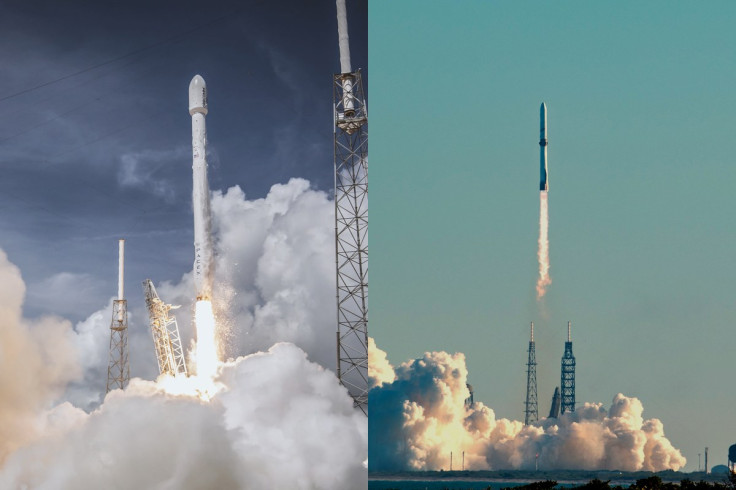
Elon Musk's SpaceX raised close to $86B (£64B) in June, the largest initial public offering (IPO) ever completed. The first thing that listing did to Jeff Bezos was make his own rocket company worth $130B (£97B). Blue Origin priced its first outside funding round in 26 years three weeks later, and investors reached that number by looking at what public markets had just paid for SpaceX.
Everything since has gone the other way. SpaceX stock trades on the Nasdaq under the ticker SPCX, and on 28 July it hit an all-time low of $107.01 (£80). That sits well under the $135 (£101) it floated at seven weeks earlier. The $130B attached to Blue Origin has not moved a cent.
The Number Bezos Did Not Have to Justify
The round is reported rather than announced. People briefed on it say Blue Origin is raising about $10B (£7.5B), with roughly $4B from Coatue Management, $2B from Bezos himself, and the remaining $4B drawing heavy demand from institutions. Blue Origin has declined to comment.
Bezos had bankrolled the company alone since 2000, and the cash is needed. A New Glenn rocket exploded during a static fire test at Cape Canaveral in late May, wrecking the pad. Consultants at Capstone expect about $4.8B (£3.6B) of capital spending this year on the rebuild and on replacement hardware. What happened to the two figures afterwards is set out in the chart below.
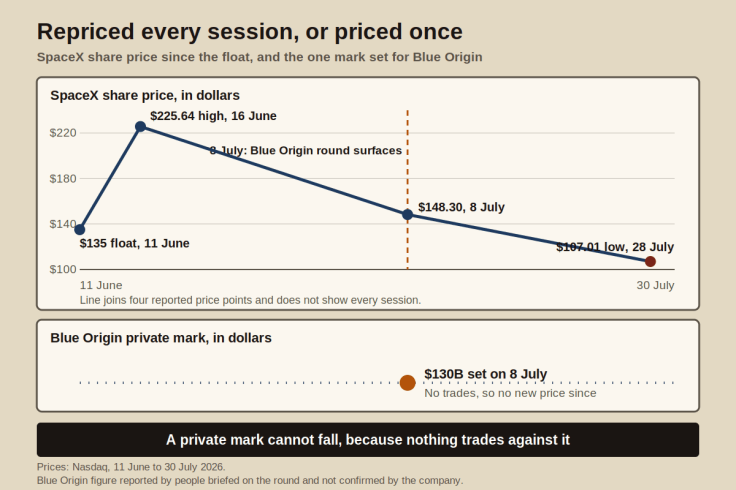
A listed share price is a continuous auction, settled every few seconds again by whoever is willing to buy. A private round is a negotiation between a handful of parties, and once it is signed, the number stays put until someone negotiates the next one.
That asymmetry matters more than it sounds. SpaceX has been repriced on every trading session since 8 July, and each session has been a live vote on what a rocket business is worth. Blue Origin has had no such vote and will not get one until it raises again.
Wall Street Marked the Leader Up, Not Down
The counter-intuitive part is what analysts did with Bezos' figure once they had it. Rather than reading $130B as evidence that a credible challenger had arrived, they read it as a floor under the market leader.
Louie DiPalma at William Blair lifted his valuation of SpaceX's rocket launch business from $300B to $546B (£409B) after the round surfaced. The unit should be worth at least three times Blue Origin, Rocket Lab, and Firefly Aerospace put together, he argued, calling it 'a full decade ahead of peers in terms of development.' The size of that revision is set out in the graphic below.
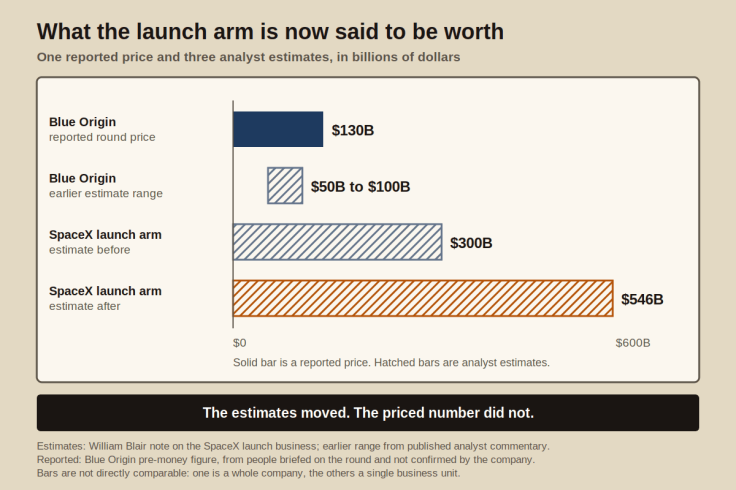
Not everyone reads it that way. Investor Jim Osman called the pattern the 'SpaceX effect', where one company proves a category is real and the market then prices every serious rival on the leader's assumptions. Private buyers, he warned, may be paying for the closest available comparison to SpaceX rather than for Blue Origin's own economics.
Morningstar's Nicolas Owens offered a blunter reading. Another way to see the round, he said, is that Bezos 'doesn't want to put any more of his own money into the business.'
What Happened to Everyone Else's Money
Ordinary investors have had the worst month. Between the float and 7 July, space funds run by Tema, Roundhill, and VanEck fell 24%, 20%, and 25% respectively. British buyers who came in through platforms such as Hargreaves Lansdown, AJ Bell, and eToro hold their stock in dollars, so the currency risk sits on top.
Two dates now decide what happens next. SpaceX reports second-quarter results on 4 August and a large block of shares becomes free to sell on 6 August. Both will move the only one of these two numbers that is capable of moving, and Blue Origin's $130B will still be sitting exactly where Bezos left it.
Disclaimer: Our digital media content is for informational purposes only and does not constitute investment advice. Please conduct your own analysis or seek professional advice before investing. Remember, investments are subject to market risks, and past performance does not guarantee future returns.
© Copyright IBTimes 2026. All rights reserved.
- Recommended For You