The Oxford Grad Who Quit It All to Take On the Humanoid Robot Boom

Billions of dollars are flowing into humanoid robots. Barely a week passes without a new video of a machine with arms, legs, and a face walking across a lab floor, and investors have poured funding into the promise of a drop-in mechanical worker. Oscar Brisset thinks much of that money is chasing the wrong shape.
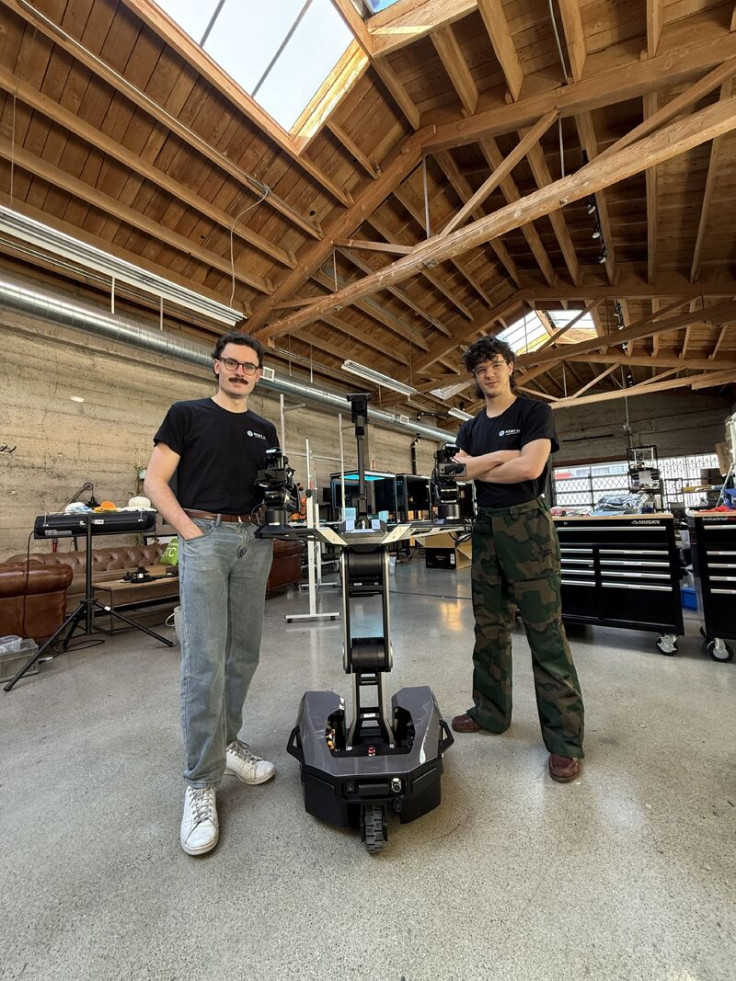
"There's no need for legs: wheels are better for most indoor tasks," says Brisset, co-founder and CEO of Remy AI, a San Francisco robotics startup backed by Y Combinator, the accelerator behind Airbnb, Stripe and DoorDash. "And for most tasks, a two-finger gripper does more than enough compared to a full hand."
The logic behind the humanoid, he argues, is seductive: a robot shaped like a person should slot into any workplace from day one, with no changes to the environment. The reality is punishing complexity in manufacturing and maintenance, and a price tag that makes little sense for most real-world problems. Remy has taken a different bet — a two-armed manipulator with simple grippers, mounted on wheels — aimed squarely at one of the least glamorous but most essential corners of the economy: the warehouse.
From boardrooms to packing stations
Brisset's route into robotics was not a conventional one. He started building businesses at 12, running a secondhand bookstore on eBay, before studying economics at Oxford and joining Boston Consulting Group. There, he worked on billion-dollar transformations for Fortune 500 supply chains and kept running into the same problem.
Piece picking, the simple act of grabbing an item and packing it into a box, was a stubborn cost centre for every warehouse operator he met. Automating it had defeated the industry for years. Meanwhile, his co-founder Ben, then pursuing a machine learning PhD at Oxford with a background in robotics, was describing how far the research frontier had moved. The technology, Brisset realised, was finally reaching the point where it could handle the task flexibly enough, across a broad enough range of products, to matter.
The pair built a prototype. A couple of weeks later, they quit their jobs with no funding, no revenue, and a plane ticket to San Francisco. Brisset spent the following weeks racing between investor meetings, raising funding, eventually gaining acceptance into Y Combinator and moving to California permanently. Within 4 months of quitting their jobs and beginning to develop their solution, Remy already had its first paying customer. The company has since spoken with research teams at global manufacturers such as Mitsubishi and Hyundai, who have shown strong interest in the latest wave of physical AI.
Behind the operator sits a serious technologist. Brisset has been coding for many years, working as an AI engineer at BCG X on projects for Fortune 500s, building platforms used by millions of users. At Remy, he works at the machine learning coalface: leading the data collection that feeds the company's model training, building simulation environments used to train reinforcement learning policies, and running the experiments that pull the latest academic research into Remy's production systems within weeks of papers being published. "We have to be on the cutting edge of research," he says. "The field is moving so fast, and you don't want to get left behind."
The long-tail & an ageing workforce
The opportunity Remy is chasing is vast and largely untouched. Warehousing is a $500 billion industry in the United States alone, yet Brisset estimates 90% of it sits in facilities with little to no automation. That is not for lack of interest, he says, but because the big automation providers concentrate on the largest 10% of warehouses, leaving thousands of smaller operators to compete against the likes of Amazon without comparable tools.
Layered on top is a structural labour crisis: an ageing workforce, immigration clampdowns, younger workers avoiding warehouse jobs, and gig platforms like Uber and DoorDash siphoning off the casual labour pool. "In most of our sales conversations, reliability is what interests operators more than cost savings," Brisset says. "They want a dependable workforce for repetitive, physically taxing tasks."
His diagnosis of the industry cuts against the prevailing hype in another way, too. Robots capable of performing most factory and warehouse tasks, he points out, existed a decade ago. They simply were not worth buying: programming took weeks, they failed the moment conditions changed, and no single task justified the expense. What has changed is not the hardware but the artificial intelligence controlling it: modern models that let robots learn tasks from data rather than line-by-line programming, and adapt to messy, changing environments. The hard part, he insists, is not the algorithms or the machinery. It is the data. And here too, Brisset holds a contrarian technical view: he believes the data collection methods and model architectures dominating the field today are flawed, and Remy is betting on its own approach to both: purpose-built data collection devices and a different way of training its models.
It also shapes his advice to fellow founders in the field. "Too many people are focused on flashy demos because it helps with fundraising," he says. "Robots will only start to be useful when they can do certain tasks really well, rather than lots of tasks poorly."
For Brisset, the ambition reaches beyond one packing station. Everything consumers buy, eat, or use once sat in a warehouse, and he wants automation to stop being a luxury reserved for the giants. "We want to make it a key lever for smaller operators to remain competitive against the mega-corporations they fight every day," he says. His broader lesson, though, is simpler and aimed at anyone weighing a leap of their own: "It usually makes sense to take the risk. The downside is a lot less than you think, and the upside is often a lot higher."
© Copyright IBTimes 2026. All rights reserved.
- Recommended For You