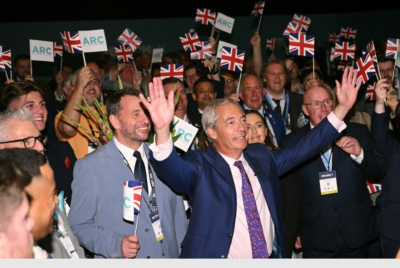
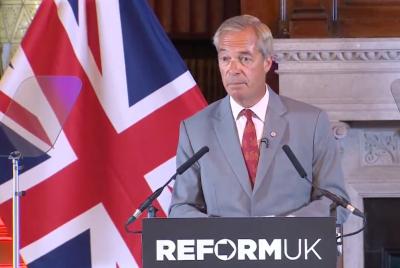
Nigel Farage Quit His UK Seat Amid Financial Probe and Now Faces Count Binface to Win It Back
Nigel Farage returns to the ballot in Clacton after triggering a by-election, with parody candidate Count Binface emerging as his main rival
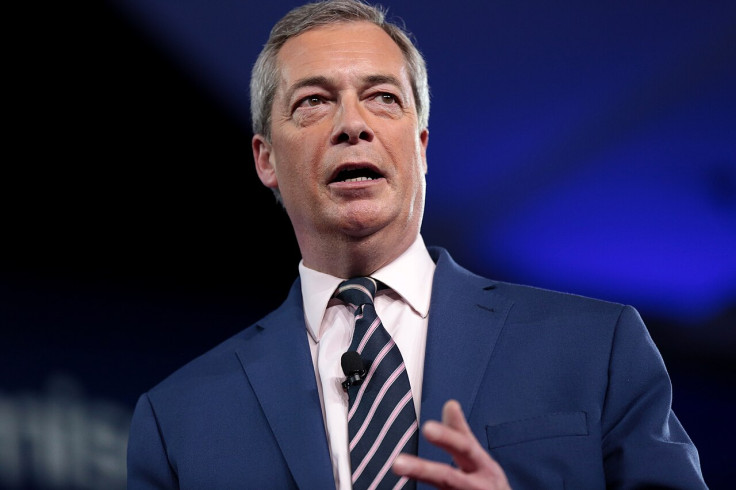
Nigel Farage is fighting to reclaim his Clacton-on-Sea parliamentary seat on Thursday, just weeks after resigning amid a parliamentary probe into his finances. The Reform UK leader is expected to win the Essex by-election, but the contest has taken an unusual turn with parody candidate Count Binface emerging as one of his most prominent challengers.
Farage resigned as MP on 8 July, triggering the snap poll and temporarily halting the parliamentary investigation into his financial affairs. He then announced that he would stand again, presenting the election as a battle between voters and what he called the establishment.
The move has been criticised by opponents as a political stunt, particularly after several major parties decided not to field candidates.
Nigel Farage Returns to a Seat He Gave Up
Farage won Clacton in the 2024 general election on his eighth attempt, taking 46 percent of the vote with 21,225 votes. The constituency is a seaside area in eastern Essex that strongly backed Brexit in the 2016 referendum, making it one of the places where Reform's leader has a natural electoral base.
His decision to resign came while questions were being raised about financial support and gifts that had not been disclosed. Among the matters attracting scrutiny was a £5 million donation from cryptocurrency billionaire Christopher Harborne. Farage has said the money was a gift towards his security and was provided before he became an MP.
There were also questions over financial support from George Cottrell, a convicted fraudster, while London police are investigating donations made to Reform by Cottrell's mother, Fiona.
MPs are required to declare financial support received during the year before their election. Farage has maintained that the people of Clacton should ultimately judge his actions.
By resigning, however, he created the very election in which that judgement is now being sought.
The parliamentary investigation itself has been paused because he is no longer an MP. If he returns to Westminster, the process is expected to resume after Parliament's summer recess ends in September.
Nigel Farage Faces an Unexpected Rival
The most striking feature of the contest is not the number of serious political opponents. It is the absence of them.
None of the major political parties has put forward a candidate, leaving Farage to face a crowded field dominated by independents and smaller political groups. There are 34 candidates in total, according to local authorities, making this the largest number recorded for a UK parliamentary election. With 78,245 eligible voters, the ballot paper will stretch to almost a metre.
Then there is Count Binface.

The satirical candidate is the alter ego of Oxford-educated comedian Jon Harvey and campaigns in a grey dustbin worn over his head, accompanied by a cape and silver armour. His platform combines humour with a more serious argument about participation and democracy.
A Survation poll suggested Binface could take around a fifth of the vote, an extraordinary prospect in a constituency where Farage is still widely expected to win.
Binface is part of a longstanding British tradition of candidates using elections to make political points through satire. The Official Monster Raving Loony Party also has three candidates in Clacton, including Nick The Flying Brick, Baron von Thunderclap and Howling Laud Hope.
For Binface, the joke is not necessarily the whole point. He has argued that taking part matters even when the result appears predictable, writing that a ballot remains worth casting even when voters already know how the night is likely to end.
Nigel Farage Could Face Another Political Test
Winning the seat would allow Farage to return to Parliament, but it would not make the financial questions disappear.
Tim Bale, a politics professor at Queen Mary University of London, told AFP that the resignation had effectively bought Farage time. The investigation, he said, would restart if Farage were re-elected.
That leaves the Reform leader with a potentially awkward sequence ahead. He is likely to regain the seat, but his return could also revive the scrutiny that contributed to his decision to leave it in the first place.
If the investigation eventually finds serious misconduct and sanctions follow, another by-election could become possible.
The result may also provide a useful measure of Farage's political strength. Reform's national polling position has weakened, with Labour recently moving ahead again in voting intention surveys. Cardiff University professor Pete Dorey said Clacton could therefore offer an indication of whether Farage and Reform have reached their peak.
A large victory would reinforce his hold over the constituency. A narrower win, or a substantial fall in his share of the vote compared with 2024, would tell a different story.
For now, the ballot offers Clacton voters a particularly British choice. They can return the politician who resigned from the seat only weeks ago, or they can send a man wearing a bin on his head to Westminster.
© Copyright IBTimes 2026. All rights reserved.
- Recommended For You