

Elon Musk Says Optimus Production Will be 'Extremely Slow at First': Tesla Stock Reacts Negatively
Tesla's Fremont factory will support initial Optimus assembly, with high-volume production expected by 2027

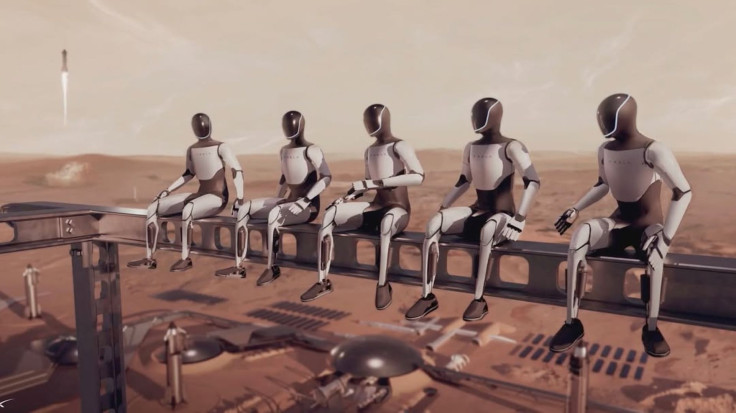
Tesla stock price fell by nearly 7.5% on 2nd July, a day after the world's richest person and Tesla chief Elon Musk responded to an X post, highlighting that Optimus production will be slow initially as it is completely different from making a car.
X user Doctor Jack theorised that Tesla stopped 'doing a lot of demos' for its Optimus V3 humanoid robot because Musk had mentioned the competition would simply copy Tesla if they revealed their progress frequently.
Jack predicted that when Tesla presents the V3 demo, it will have impressive capabilities, and the competition will have no time to react. He even believed that Tesla engineers were likely ahead on Optimus production, citing earlier comments from Tesla exec Lars Moravy.
However, Musk refuted Jack's Optimus theory, and said that the robot is a whole new thing, and production will take time to materialise.
No, Optimus production will be extremely slow at first, as everything is new. This is not like making a car.
— Elon Musk (@elonmusk) July 1, 2026
The Tesla stock immediately reacted to Musk's comment, falling by a sharp 7.5% on 2nd July, dragging down its market cap to $1.47 trillion. The stock price is $100 below its 52-week high of $498.83 per share.
Musk's latest comment aligns with his previous views that Optimus production would follow the manufacturing S-curve with slow early output followed by gradual scaling of the business.
According to Musk, the initial Optimus production phase will prioritise perfecting the assembly process before chasing high production volume because the challenges mainly arise from the robot's complexity, which comprises around 10,000 unique parts designed to work together.
Fremont Factory Transitions to Robot Manufacturing
Optimus discussions on X emerged a day after Musk posted a photo of himself standing with the Optimus production team inside Tesla's Fremont factory.
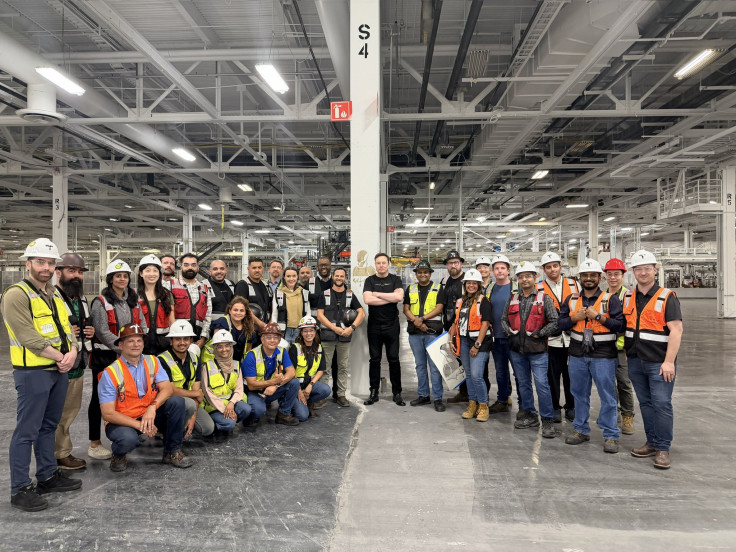
Tesla overhauled the entire space at its Fremont factory, including assembly lines previously used for the Model S and X electric vehicles, to support the initial assembly of Gen 3 Optimus robots.
Note that pilot production is expected to begin this summer at Fremont, and a much larger second Optimus factory is under construction at Giga Texas. However, high-volume production is not expected until summer 2027, with Tesla aiming a long-term capacity of producing 10 million robots every year.
In all, Musk had described Optimus as the company's 'biggest product ever,' citing its long-term value, which could surpass the electric vehicle business to even support colonization on Mars.
Investors are also awaiting insights into Tesla's EV business as the company is set to report Q2 deliveries on Thursday this week. According to investor Gary Black of The Future Fund, Tesla's Q2 deliveries are expected to be around 410,000 EVs in Q2, which is above consensus estimates.
Meanwhile, Ross Gerber of Gerber Kawasaki mentioned that Tesla had a 'solid' quarter after forecasting that sales could rise as elevated gas prices due to the US-Iran war drove more car buyers toward electric vehicles.
Disclaimer: Our digital media content is for informational purposes only and does not constitute investment advice. Please conduct your own analysis or seek professional advice before investing. Remember, investments are subject to market risks, and past performance does not guarantee future returns.
© Copyright IBTimes 2026. All rights reserved.