

Pete Hegseth's Security Threatens to 'Physically Remove' Reporters at First Press Briefing in Six Months
Pentagon reporters warned they could be 'physically removed' before Hegseth briefing
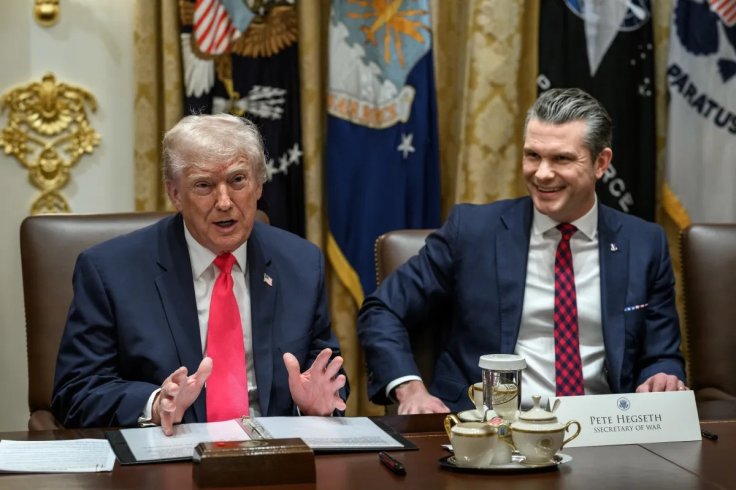
US Defence Secretary Pete Hegseth's security team warned journalists they could be 'physically removed' from a Pentagon press briefing on Tuesday, 10 November, if they failed to maintain professionalism and decorum. The warning came before Hegseth's first formal Pentagon news conference in six months, prompting questions about restrictions on reporters.
The confrontation unfolded as Hegseth returned to face journalists amid an impeachment effort over his handling of the Iran war and other military operations. The Washington Post correspondent Tara Copp reported the security warning, saying journalists were left uncertain about what conduct could result in their removal.
Pete Hegseth's Security Warning Leaves Reporters Questioning Press Restrictions
Copp, The Washington Post's Pentagon correspondent, took to X (formerly Twitter) and shared that a security agent instructed journalists to maintain professionalism and decorum or risk being 'physically removed from the briefing room'.
Reporters asked whether the instruction meant shouting questions, a common practice during contentious government briefings, could result in their removal. According to Copp's account, the security agent did not provide a clear explanation.
A security agent for Defense Secretary Pete Hegseth just warned the reporters here — for Hegseth’s first press conference in 6 months — that we will be physically removed from the briefing room if we are not professional and maintain decorum. We asked if that meant no shouted… pic.twitter.com/BfnBg025ih
— Tara Copp (@TaraCopp) November 10, 2026
'It's the first time any of us could ever remember being threatened like this,' she wrote, adding that shouted questions were normal.
Copp also quoted another journalist describing the situation as 'crazy town', noting that reporters had not encountered comparable warnings at the White House.
When an X user asked whether security personnel had assigned journalists their seats, Copp responded, 'Yes.'
The Pentagon had previously announced additional security screening for the event, requiring reporters to arrive early. However, the warning about physical removal raised a separate concern about how officials intended to enforce expectations of professional conduct.
No journalists were ultimately removed from the briefing.
Pete Hegseth's Security Warning Draws Support and Criticism Online
Not everyone objected to the warning. Several X users defended the security team's position, arguing that maintaining order was a reasonable expectation at official briefings.
'Decorum is not a difficult concept,' one commenter wrote, describing a formal press briefing as an institutional setting rather than a shouting match.
Another user suggested journalists were receiving the treatment their previous conduct warranted, accusing some reporters of seeking confrontations with administration officials.
A third criticised journalists for allegedly interrupting speakers during previous Trump administration briefings. These comments reflected support for stricter conduct rules, although they did not establish that reporters had behaved improperly at Tuesday's briefing.
The disagreement centred on a practical question: Where does maintaining order end and restricting legitimate questioning begin?
Pete Hegseth Defends Iran War Record Amid Impeachment Threat
Once the briefing began, Hegseth focused on defending his leadership and rejecting an impeachment effort launched by Republican Representative Thomas Massie.
He characterised the proceedings as 'a political spectacle' and argued that disagreements over military policy did not constitute impeachable offences.
Massie, a Republican from Kentucky, introduced eight articles of impeachment against Hegseth. The allegations concern military operations involving Iran, Yemen and Venezuela, as well as other actions by the defence secretary.
Hegseth rejected the accusations and defended the Trump administration's military decisions.
'I stand behind every one of these operations. I was proud to execute them, and I would do it again tomorrow,' Hegseth said.
Hegseth also argued that political disagreements should be resolved through legislation, debate and elections rather than impeachment.
The impeachment effort now faces further consideration in Congress, with the House scheduled to consider a procedural motion on Tuesday evening, 10 November, that could determine whether the resolution advances.
© Copyright IBTimes 2026. All rights reserved.