

Lewis Capaldi and Taylor Swift Feud Rumour Debunked, Graham Norton Moment Explained
Lewis Capaldi dismisses rumours of a feud with Taylor Swift after their Graham Norton Show moment is widely misinterpreted.
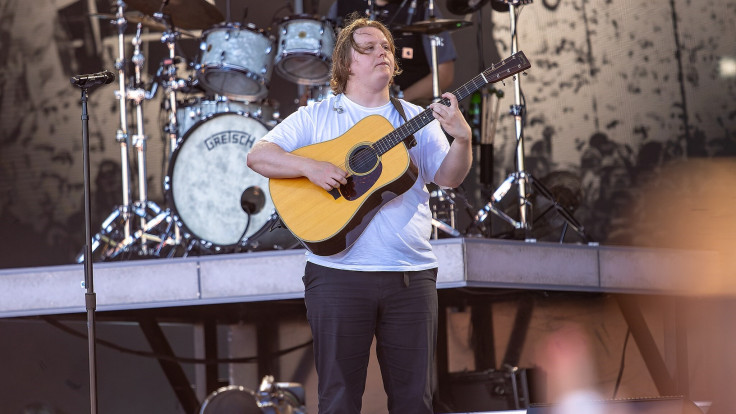
Pop culture was set alight by speculation of a feud between Lewis Capaldi and Taylor Swift but the reality is far less dramatic. The buzz around a supposed rift between the Scottish singer-songwriter and the global pop icon began after their shared appearance on The Graham Norton Show earlier this year.
It suggested that Swift had deliberately overshadowed Capaldi's promotional efforts. However, Capaldi has now firmly put those rumours to rest, asserting they were unfounded and based on misinterpretation. His clarification reveals that it was a matter of timing and record-label strategy, not interpersonal conflict.
How the Rumour Started on The Graham Norton Show
The controversy stems from Capaldi's appearance alongside Taylor Swift on the BBC talk show in October, where Swift was promoting her album The Life of a Showgirl and Capaldi was set to perform and talk about his work.
During the show, host Graham Norton broached the topic of Capaldi's upcoming EP, to which he replied that he 'wasn't allowed to talk about it.' That brief exchange was swiftly misinterpreted on social media. Some viewers incorrectly concluded that Swift or her team had dictated terms about what Capaldi could say, leading to speculation that the pop superstar was trying to hog the spotlight.
Capaldi's Response: Rumours Are 'Hogwash'
In a recent interview on KIIS FM's Kyle and Jackie O Show, Capaldi directly addressed the chatter. He described the notion of a feud as 'hogwash,' emphasising how far-fetched the online theories were.
'I saw a TikTok about that. And it's a woman being like, 'Taylor did this and she's evil,' and this and that,' Capaldi explained, 'and I'm going like, 'That's completely made up.'
He clarified that the real reason he hadn't discussed his EP at the time was that it had not been formally announced yet. His record label had instructed him not to talk about it ahead of the official reveal.
Capaldi recounted the moment on the show. Though Norton asked about the new music, he genuinely believed he wasn't meant to mention it publicly yet. That confusion, rather than any calculation on Swift's part, sparked the rumour.
Taylor Swift's Role in the Moment
Far from being antagonistic, Swift's reaction on The Graham Norton Show appeared entirely natural. When Capaldi expressed uncertainty about speaking on his EP, she asked, 'Who said that?' — a query that, in retrospect, helped fuel the misreading.
This innocuous interaction was quickly seized upon by online commentators, particularly on platforms like TikTok, who wove elaborate stories around Swift's response.
In reality, Swift's involvement was limited to typical collegial engagement between artists appearing on the same programme. What it was not was an assertion of control or influence over Capaldi's slot.
There's no evidence from the show itself to suggest any tension beyond what normally happens during live TV.
Why the Narrative Took Hold
Social media's appetite for celebrity conflict explains much of how the rumour flourished. Quick snippets and out-of-context clips can easily warp an ordinary exchange into something more salacious. That's exactly what happened with Capaldi and Swift.
Internet users jumped to conclusions, often projecting broader narratives about fame and competition onto what was simply a promotional appearance.
As Capaldi himself noted, the root of the speculation was a TikTok clip portraying Swift as an 'evil' figure—something he categorically rejected.
Closing the Chapter on Rumour
By publicly addressing the issue, Capaldi has clarified that there is no feud between him and Taylor Swift, and that the so-called controversy was far more mundane than some headlines suggested.
What remains is a reminder of how quickly narratives can spiral online. And how important it is to distinguish between speculation and fact in celebrity culture.
© Copyright IBTimes 2026. All rights reserved.