

GOP Groups Spent $46M on Anti-Muslim Attack Ads Against Abdul El-Sayed—He's Now the First Muslim Elected to the US Senate
Trump and Cruz branded El-Sayed a 'jihadist' and linked him to the Muslim Brotherhood, allegations he denied
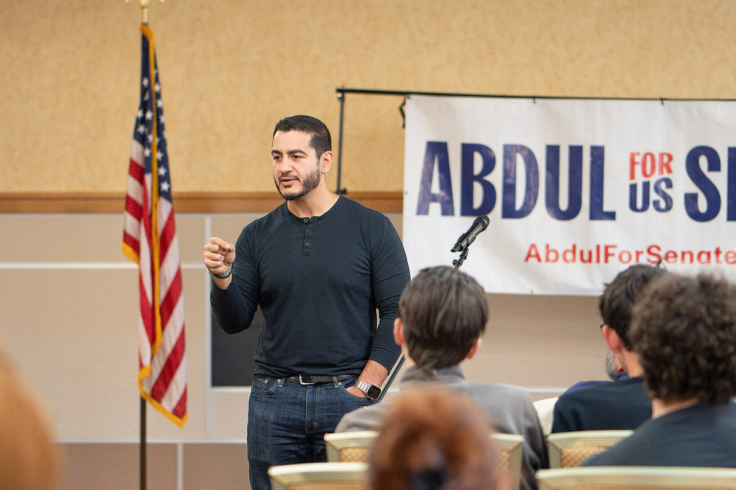
GOP groups spent $46 million on attack ads invoking terrorism, 9/11, and referencing Islam or Muslim groups against Michigan Democrat Abdul El-Sayed. However, the multimillion-dollar campaign failed to stop the 42-year-old former health official from making history.
El-Sayed defeated Republican Mike Rogers in Tuesday's midterm elections, becoming the first Muslim elected to the US Senate, according to CBS News projections. His victory kept retiring Democratic Senator Gary Peters' seat in Democratic hands after one of the election cycle's most contentious and expensive races, despite fierce attacks targeting his religion, political views, and associations.
$46 Million in Ads Put Islam at the Centre of the Race
According to The Washington Post, citing AdImpact, the ads accounted for more than a third of Republican groups' total spending on advertisements attacking El-Sayed. The Senate Leadership Fund, a Republican super political action committee (PAC), accounted for more than $16 million. One advertisement, aired approximately 6,600 times, alleged that an 'Islamic extremist group' had contributed $400,000 to El-Sayed's campaign.
Republicans also spent more than $11 million on advertisements linking El-Sayed to streamer Hasan Piker, who previously said, 'America deserved 9/11'. El-Sayed has condemned the attacks and criticised Piker's remark.
Great Lakes Conservatives Fund, another super PAC supporting Rogers, spent more than $8 million on advertisements alleging ties between El-Sayed and the Muslim Brotherhood, an Islamist political movement with branches in several countries. Those figures reflect advertising expenditure, not independently established evidence supporting the allegations.
Trump and Cruz Escalate the Attacks
The wave of attack ads coincided with escalating criticism of El-Sayed from prominent Republicans, including President Donald Trump and Texas Senator Ted Cruz. Both portrayed El-Sayed as a 'jihadist' and raised allegations involving the Muslim Brotherhood. 'If I am correct that he is a passionate supporter of the Muslim Brotherhood, there is a very real risk that Americans will die as a result,' Cruz said days before the election.
Trump invoked the 11 September attacks and Flight 93 while urging Michigan voters to reject the Democrat, saying the state needed to 'stand up and fight' to prevent a 'jihadist' from entering the Capitol. El-Sayed rejected the Brotherhood allegations, telling Fox News, 'I have never been a member of the Muslim Brotherhood, I never will be a member of the Muslim Brotherhood.'
Democratic Rival Breaks Ranks
El-Sayed also faced resistance within his own party. Democratic Representative Haley Stevens, whom he defeated in the primary, endorsed Rogers just days before Election Day. Stevens criticised an outside advertisement linking US military aid to Israel with rising grocery prices, describing it as antisemitic. El-Sayed said he neither produced nor agreed with the advertisement.
Stevens appeared alongside Rogers at a Detroit church on Sunday before announcing her endorsement after the service. She insisted she was not 'turning her back on Democrats,' citing El-Sayed's association with Piker.
El-Sayed Turns the Tables on Trump-Backed Rogers in Michigan Win
Rogers, 63, an Army veteran, former FBI agent and congressman, cast himself as a common-sense leader while attacking El-Sayed over his views on Israel and Iran, as well as his association with controversial streamer Hasan Piker.
El-Sayed, meanwhile, portrayed Rogers as a Trump loyalist amid voter frustration over the unpopular Iran war and soaring petrol prices, despite Rogers' efforts to distance himself from the White House. El-Sayed ultimately secured victory in a state Trump carried in 2024.
© Copyright IBTimes 2026. All rights reserved.