Trump Promised Bigger Tax Refunds—But Rising Gas Prices Could Cancel Them Out
A surge in fuel costs after the Iran conflict risks draining the expected boost from record tax refunds


The promise sounded simple. Bigger tax refunds would put more money into American pockets. That, in turn, would lift spending and give the economy fresh momentum. For many households, it was meant to be a small but meaningful relief after years of rising costs. Yet, as spring unfolds, that promise is meeting a harsher reality. Fuel prices are climbing fast, and they threaten to absorb much of what those refunds were meant to deliver.
A Boost That Arrived at the Wrong Time
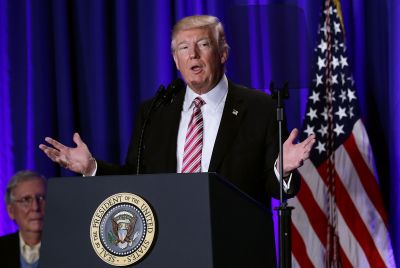
At the end of last year, Donald Trump spoke confidently about a strong refund season. The expectation was clear. Larger refunds, driven by recent tax changes, would encourage spending and support growth. Early figures suggest refunds are indeed rising. The average payout has increased compared with last year, though not yet to the levels some forecasts had predicted. Economists still believe totals may rise further as more complex filings are processed.
But timing has proved critical. Just as refunds begin to reach households, fuel costs have surged. The national average petrol price has jumped sharply in recent weeks. This shift has altered the economic picture almost overnight.
The Shock of Rising Fuel Costs
The trigger was geopolitical. The outbreak of conflict involving Iran disrupted global oil supply chains. Production and shipping faced immediate strain. Prices responded quickly. Economists now expect petrol prices to climb further before easing. Some forecasts suggest a peak later in the spring, followed by only gradual declines. This pattern is well known. Prices tend to rise quickly but fall slowly. Analysts often describe this as a rocket and feathers effect.
For households, the impact is direct. Fuel is a regular and unavoidable expense. When prices rise, budgets tighten immediately. Unlike discretionary spending, petrol cannot be cut easily.
Refunds vs Reality
The numbers tell a sobering story. Estimates suggest the average household may gain several hundred dollars from higher tax refunds this year. At the same time, increased fuel costs could consume almost the same amount. In some projections, the additional spending on petrol nearly matches the expected gain from refunds. Other analyses point to an even larger imbalance, with total fuel costs nationwide exceeding the total increase in refunds.
This creates a simple outcome. The extra money does not translate into extra spending power. It merely offsets higher essential costs.
Pressure On Lower-Income Households
The burden is not shared evenly. Lower- and middle-income households are more exposed to rising fuel prices. They tend to spend a larger share of their income on energy.
At the same time, their tax refunds are smaller in absolute terms. This combination leaves them with less protection against sudden price increases. For these households, the impact is immediate and tangible. A higher petrol bill means less money for food, clothing, or leisure. It also increases reliance on credit, which is already stretched for many.
Recent data suggests that some consumers are turning to borrowing or short-term payment schemes to maintain their spending. That strategy can work in the short term, but it carries risks if costs remain high.
A Slower Path For Growth
The broader economy is also affected. When households spend more on fuel, they tend to cut back elsewhere. Restaurants, retail, and travel often feel the strain first. There are already signs of this shift. Spending on fuel has risen sharply compared with last year. At the same time, growth in discretionary spending continues but shows little sign of accelerating.
Economists now expect slower growth for the year. Earlier forecasts have been revised down, reflecting the drag from higher energy costs. Inflation may also rise in the short term before easing as weaker demand takes hold.
Resilience, but Limits
There is still some resilience in the US economy. Consumers and businesses have absorbed multiple shocks in recent years. From inflation to rising interest rates, the pattern has been one of adaptation rather than collapse. Spending has continued, and recession fears have repeatedly been pushed back. Some analysts point out that energy now accounts for a smaller share of household budgets than it did a decade ago.
Even so, resilience has limits. The current situation comes at a time when savings have fallen and borrowing has increased. The cushion that once protected households is thinner.
The Uneven Economy
The situation also highlights a widening divide. Higher-income households are better placed to absorb rising costs. Fuel represents a smaller share of their spending, and they benefit more from larger refunds.
Lower-income groups face the opposite reality. A greater share of their income goes towards essentials, leaving little room for adjustment. This creates what analysts often describe as a K-shaped economy, where outcomes diverge sharply across income levels.
A Fragile Balance
For now, the outlook remains one of cautious growth rather than decline. The economy is expected to expand, albeit more slowly than previously hoped.
Much will depend on how long fuel prices remain elevated. If they ease quickly, the impact may be temporary. If not, the effect on household finances and spending could deepen. What is clear is that the expected boost from tax refunds is no longer certain. For many Americans, the extra money may already be spoken for, quietly absorbed at the petrol pump.
© Copyright IBTimes 2026. All rights reserved.
- MOST POPULAR IN Personal Finance