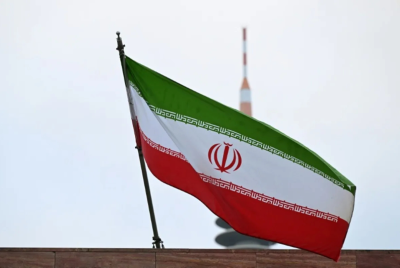
Trump Dismisses Concerns Over Iran Naval Conflict by Claiming Military Blockade Is a 'Very Friendly' Encounter
President Trump's naval blockade of Iran has sparked economic turmoil and heightened political tensions, with Tehran warning of unprecedented retaliation.

Donald Trump has repeatedly used deflecting, casual language to characterise an active US naval blockade of Iran, even as the military operation deepens, oil prices spiral globally, and Tehran warns of 'practical and unprecedented' retaliation.
Speaking at a rally at The Villages in Florida on 1 May 2026, Trump described US forces seizing an Iranian vessel as 'a very profitable business,' comparing the Navy to 'pirates.' These remarks followed his earlier characterisation of a failed round of peace negotiations in Islamabad as having been 'very friendly,' despite those talks ending without agreement and directly triggering the blockade now in force.
The comments came as the US marked the 60-day deadline under the War Powers Resolution, with Trump declaring hostilities 'terminated' in a letter to Congress while the Navy continued intercepting vessels at sea.
Dismissive Framing of an Active Military Operation
The US naval blockade of Iranian ports took effect at 10:00 ET on 13 April 2026 under the command of Admiral Brad Cooper at United States Central Command, following the collapse of peace talks in Islamabad. In the first 24 hours, more than 10,000 US military personnel, supported by over a dozen warships and dozens of aircraft, were deployed to enforce the operation, according to CENTCOM. By 1 May, CENTCOM had redirected 45 commercial vessels, with Admiral Cooper stating 41 tankers carrying 69 million barrels of oil had been blocked from sale.
At the Florida rally on 1 May, Trump recounted the seizure of an Iranian-flagged ship: 'We took over the ship, we took over the cargo, we took over the oil. It's a very profitable business,' he said.
Q: In your letter to Congress, you said the hostilities in Iran have concluded. How can you say that given the naval blockade?
— Aaron Rupar (@atrupar) May 2, 2026
TRUMP: Well, it's a very friendly blockade pic.twitter.com/Bl3DVOhSmu
To cheers from the crowd, he added, 'We're sort of like pirates, but we are not playing games.' The seizure of the Iranian-flagged vessel Touska on 19 April, carried out by the 31st Marine Expeditionary Unit and the destroyer USS Spruance, was the blockade's first direct enforcement action.
In a 29 April interview with Axios, Trump was similarly unguarded: 'The blockade is somewhat more effective than the bombing. They are choking like a stuffed pig.' When reporters at the Oval Office asked how long it would continue, he replied: 'The blockade is genius. Now, they have to cry uncle, that's all they have to do,' according to CNN.
Failed Islamabad Talks and 'Very Friendly' Claim
The peace talks Trump characterised as 'very friendly' were held in Islamabad, Pakistan, on 11 and 12 April 2026. Led on the US side by Vice President JD Vance, special envoy Steve Witkoff, and Jared Kushner, the negotiations were mediated by Pakistan and lasted 21 hours across three rounds. They ended without a deal on Iran's nuclear programme or the status of the Strait of Hormuz, prompting the naval blockade that followed the next day.
According to Axios, Trump claimed the talks 'went well' and that US negotiators had 'became very friendly and respectful of Iran's Representatives.' He also claimed 'most points were agreed to,' but stressed Iran was 'very unyielding' on nuclear ambitions.
Iranian parliament speaker Mohammad Bagher Ghalibaf, who led the Iranian delegation, publicly disputed that framing. 'There are many gaps and some fundamental points remain,' he said. 'We are still far from the final discussion.'

On 1 May 2026, Trump sent a letter to Congress stating: 'The hostilities that began on February 28, 2026, have terminated.' The declaration came the same day the 60-day deadline under the 1973 War Powers Resolution expired, requiring Congressional authorisation for the continued use of military force. Former US ambassador Douglas Silliman told Al Jazeera the administration was 'redefining the timeline of the war' to avoid seeking that authorisation.
Economic Fallout and Iran Warning
The strategic stakes of Trump's blockade extend well beyond rhetoric. Before the war began on 28 February 2026, the Strait of Hormuz carried approximately 25% of the world's seaborne oil trade and 20% of global liquefied natural gas. Iran's closure of the strait, followed by the US counter-blockade, has sent energy markets into disarray. The US Department of Defense estimated Iran had lost approximately £3.8 billion ($4.8 billion) in oil revenue by 1 May, while Trump separately claimed the blockade is costing Tehran £396 million ($500 million) per day.
American consumers have felt the effects. AAA data showed the average US petrol price at £3.48 ($4.39) per gallon as of 1 May, the highest since the Iran war began. Jet fuel prices have doubled over the same period. Spirit Airlines became the first US carrier to cease operations as a direct consequence of rising fuel costs linked to the conflict. Bloomberg reported Trump acknowledged the economic pain at The Villages: 'I thought the numbers would be much worse. I thought the stock market would go down much more.'
Iran's government has signalled it will not absorb the pressure indefinitely. Iranian Foreign Minister Abbas Araghchi described the US blockade as an 'act of war,' and a senior Iranian security source quoted by state media Press TV warned that the blockade 'will soon be met with practical and unprecedented action.' Tehran submitted a 14-point proposal to Washington via Pakistan on 2 May 2026, calling for the lifting of the blockade, the withdrawal of US forces, the release of frozen assets, and payment of compensation, while seeking to defer nuclear negotiations to a later stage. Trump said he had been briefed on the 'concept of the deal' but was awaiting the exact wording.
For a president who once declared the war 'very complete, pretty much,' the blockade's indefinite continuation suggests the conflict is neither complete, nor particularly friendly.
© Copyright IBTimes 2026. All rights reserved.
- Recommended For You