Donald Trump Reveals 'Deal With the Devil' Peace Plan to End Iran War, Promises $1 Trillion US Windfall
Donald Trump's Iran peace pitch links a ceasefire to Strait of Hormuz tolls and sanctions relief, with allies talking up a $1 trillion US gain despite unanswered questions.

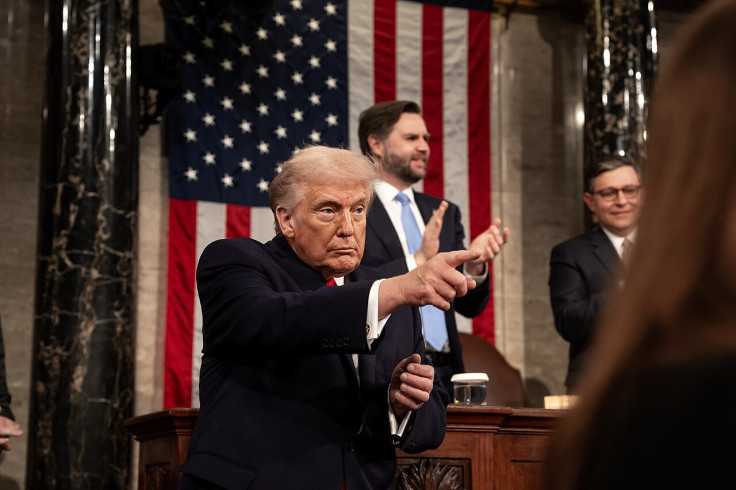
Donald Trump on Sunday outlined what he called a 'deal with the devil' peace plan with Iran, unveiling a proposed 10‑point agreement that he claims would end the Iran war, trigger a two‑week ceasefire in the region and ultimately generate a $1 trillion windfall for the United States.
The president has long cast himself as a master dealmaker on the world stage, often promising sweeping bargains that combine security guarantees with economic gain. His latest Iran peace plan, as described by political allies and foreign policy commentators, attempts to tie a cessation of hostilities to a far‑reaching economic scheme centred on the Strait of Hormuz, a vital shipping lane for global oil supplies.
According to retired Army Maj Gen Paul Vallely, who has been briefed on the discussions, Trump is relying heavily on what he calls psychological operations to pressure Tehran into accepting terms. Vallely, a vocal supporter of the president, described Trump as 'the ultimate negotiator' and argued that his habit of making aggressive public threats is intentional theatre rather than reckless escalation.
'He'll threaten and say, 'We are going to do this and that',' Vallely said, adding that the rhetoric is designed to unsettle Iran's leadership. In his view, the posture has forced the Iranian regime to the table while allowing US forces 'to rest a little bit' as the talks proceed.
Iran Peace Plan Hinges On Strait Of Hormuz Cash Machine
At the centre of Trump's proposed Iran peace plan is the Strait of Hormuz. Roughly a fifth of the world's oil shipments pass through the narrow waterway, and whoever controls it wields enormous leverage over energy markets.
Sources familiar with the outline say the plan would allow Iran to maintain formal control over the strait, but only under a heavily monetised framework. Commercial ships passing through would be required to notify intermediary firms linked to Iran's Islamic Revolutionary Guard Corps, disclosing their cargo, destination and ownership. On top of that, every vessel would pay a toll of at least $1 million, not in dollars but in Chinese yuan or the cryptocurrency Bitcoin.

Trump has reportedly floated the idea of turning that toll regime into a kind of joint venture, with Washington sharing in the revenues. He has privately described the prospective arrangement as a 'beautiful thing,' according to those close to the talks.
Supporters of the concept frame it almost as a reimbursement scheme. After decades of US military deployments in the Gulf, they argue, Trump wants America compensated for the cost of protecting what is effectively a global shipping lifeline.

'Nobody else is going to be [spending] money like we are to make sure [the strait remains] open and safe, so why shouldn't we get paid some money back for a period of time?' Vallely said.
The sums being bandied about are striking. By some internal estimates, Trump allies say, the toll system could eventually channel as much as $1 trillion into US coffers, although no public documentation has been released to substantiate the figure. Nothing is confirmed yet, so any projected windfall should be taken with a grain of salt.
Sanctions Relief, Nonaggression – And A Nuclear Standoff
Beyond the revenue‑sharing scheme, the draft Iran peace plan reads like an attempt to reset the broader relationship between Washington and Tehran. People familiar with the document say its terms include a mutual commitment to nonaggression, the lifting of primary and secondary US sanctions on Iran, and the termination of all United Nations Security Council and International Atomic Energy Agency board resolutions targeting the country.
The package would also call for US combat forces to withdraw from the region and for 'the cessation of war on all fronts,' including reported pressure on Israel to halt its attacks on Lebanon. Iran, in turn, is said to be seeking formal recognition of its right to rebuild after years of conflict and sanctions, including some form of damages for the devastation it attributes to US military power.
Foreign relations analyst Michael Szanto, who has closely followed the negotiations, argues that US and Israeli pressure has already weakened Tehran.
'The Iranian regime, which in addition to being a sponsor of terrorism, has been significantly weakened and degraded by US and Israeli actions, and that is a good thing for the civility of the region and the security of the world,' he said.
Yet Szanto is blunt about what he sees as the biggest obstacle. Iran is determined to preserve its nuclear programme, while Trump and his advisers are equally adamant that Tehran must never obtain a nuclear weapon.
'That is the sticking point, and it WILL be the sticking point,' Szanto said. He warned that some analysts now fear that, in the absence of a deal acceptable to Trump, 'nuclear war is inevitable.' That assessment is highly contested, but it underscores how much of the debate hinges on opaque intelligence and worst‑case scenarios rather than publicly verifiable evidence.
Markets Cheer Trump's Iran Peace Plan While Details Remain Murky
Financial markets have so far treated the Iran peace plan as a welcome sign of de‑escalation. As news of the talks filtered out, the Dow Jones Industrial Average jumped 2.9 percent on 8 April, while the S&P 500 climbed 2.5 percent. On the same day, oil traders abruptly reversed course. US benchmark West Texas Intermediate dropped to $93 a barrel, with Brent crude sliding to $92, both down sharply from almost $115 the previous day.
To Szanto, those moves suggest investors believe Washington still has far more leverage than Tehran. He argued that Iran's leaders have misread how tightening sanctions, covert strikes and domestic unrest have eroded their position, saying there is 'a lot of misplaced hubris' inside the regime and that they remain 'in denial' about how far they have been set back.
For now, though, the scheme remains more aspiration than treaty. Trump's allies concede that finalising the Iran peace plan could take years, even if the current two‑week ceasefire holds. Much of what has leaked comes from partisan sources rather than official communiqués, and there is no published accord that can be scrutinised line by line.
What is clear is that the president is once again trying to package geopolitics as a transaction: peace in exchange for profit, sanctions relief linked to shipping fees, nuclear constraints traded against guarantees of regime survival. Whether Tehran will sign up to what some in Washington openly deride as a 'deal with the devil' is another question entirely.
© Copyright IBTimes 2026. All rights reserved.
- Recommended For You