

Social Security and IRS Send Pro-Trump 'Propaganda' Emails Days Before Midterms, Raising Legal Concerns
Emails raise Hatch Act concerns as a law professor calls them political propaganda rather than public service announcements
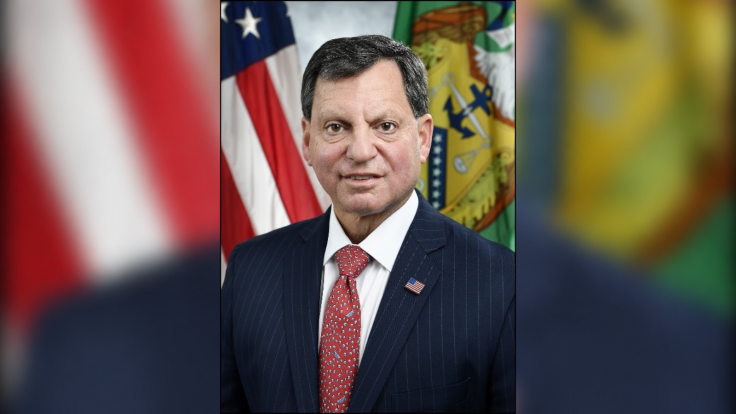
Millions of Americans who rely on federal services have been drawn into a political controversy after the Social Security Administration (SSA) and Internal Revenue Service (IRS) sent emails praising President Donald Trump days before the US midterm elections.
The messages highlighted the administration's record on customer service and tax cuts, prompting questions about whether official government communication channels were being used to promote the president ahead of Tuesday's 3 November vote.
The controversy has also revived scrutiny of SSA Commissioner Frank Bisignano, who serves as chief executive of the IRS. Earlier communications from the agencies had already attracted criticism, raising broader questions about where public information ends and political promotion begins.
What the Emails Said About Trump's Record
In one message, Bisignano praised the SSA's performance under Trump, writing, 'Under President Donald J. Trump, the Social Security Administration (SSA) is transforming into a model of excellence, one that meets and exceeds customer expectations for fast, accurate and secure service.'
A separate email promoted the president's tax legislation, stating that the Working Families Tax Cuts had ushered in a new era of tax relief and prevented what it described as the largest tax increase in American history.
The message added, 'Hardworking Americans like you are keeping more of what you earn because of President Trump's historic tax cuts.' The IRS communication reportedly included a disclaimer that the agency does not generally email taxpayers and that the message was informational, rather than related to an individual's tax circumstances.
The SSA has more than 100 million people with online accounts, although it has not disclosed how many received the latest messages. The scale of its digital reach has added to concerns about the use of official channels for communications praising a sitting president.
Yep! I got it! pic.twitter.com/3sMFu9kMRp
— 💙 JustJulieAnn ™ 💙 (@JustJulie) November 1, 2026
Why the Messages Have Raised Hatch Act Concerns
The emails have drawn attention to the Hatch Act, a 1939 law that restricts certain political activities by federal employees. It prohibits covered employees from using their official authority or influence to interfere with or affect the result of an election.
Washington University in St. Louis law professor Kathleen Clark questioned whether the messages served a genuine public information purpose. She described them as 'propaganda' rather than public service announcements.
The legal question is whether praising an incumbent president through official agency communications shortly before an election could amount to using government authority to influence voters. The answer depends on the messages' purpose, content, circumstances, and the rules applying to the officials involved.
No formal finding that Bisignano or either agency violated the Hatch Act has been established in the information available. Expert concerns should not be mistaken for a legal determination.
Earlier Agency Messages Also Drew Criticism
The latest emails follow an earlier SSA controversy in July, when the agency promoted Trump's tax legislation and claimed that more than 35 million older Americans had received an average of $7,500 (£5,700) in tax relief.
Democratic senators, including Elizabeth Warren, Ron Wyden, and Tammy Baldwin, challenged the claims in a letter to Bisignano. They questioned the accuracy and political character of the message, as well as the use of agency resources and beneficiaries' email addresses for such communications.
The IRS also attracted attention in late October after sending messages encouraging families to sign up for Trump Accounts, investment accounts established under the administration's tax legislation. One email urged recipients to 'Claim your child's Trump Account today!' and credited Trump with creating the programme.
Watchdogs Question the Boundary Between Government and Politics
The controversy comes amid wider complaints about alleged political activity by administration officials. Democracy Defenders Fund and Reporters Without Borders filed a Hatch Act complaint concerning appearances by Federal Communications Commission Chair Brendan Carr, Interior Secretary Doug Burgum, and Commerce Secretary Howard Lutnick at an Alaska campaign rally with Republican Senator Dan Sullivan.
Norman Eisen, co-founder and executive chair of Democracy Defenders Fund, argued that political appointees could not use their official responsibilities to support candidates. The SSA and IRS had been approached for comment on the latest emails, but responses were not included in the information available.
For Americans relying on federal agencies for benefits and tax information, the issue goes beyond election timing. Public confidence depends on people being able to distinguish impartial government guidance from political advocacy. Whether the latest messages crossed the legal line remains a matter for the relevant authorities to assess.
© Copyright IBTimes 2026. All rights reserved.