40 With Nothing Saved for Retirement? Expert Reveals How $625 a Month Could Make You a Millionaire by 65
The cost of delaying retirement planning could be enormous, according to the experts


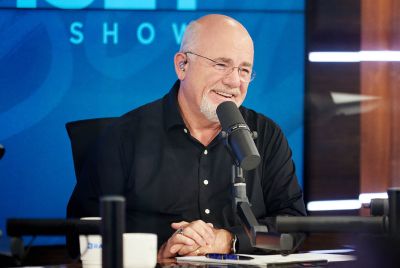
Turning 40 with little or nothing saved for retirement can feel like a financial crisis. However, a recent episode of The Ramsey Show suggests that starting late does not necessarily mean giving up on the goal of building a $1 million retirement nest egg.
Financial experts George Kamel and Jade Warshaw recently discussed the case of a caller named Justin, who told them that he and his wife had not started saving for retirement until he was 39.
Rather than assuming the opportunity had passed, the experts worked through what consistent investing could potentially achieve over the following 25 years.
Justin shared on the call that he had opened a Roth IRA and immediately contributed the annual maximum of $7,500, which works out to $625 a month.
Based on that information, Warshaw modelled what could happen if he continued investing that amount until age 65. The strategy assumed an average annual return of 11% over 25 years, which could grow your retirement investments to around $1.1 million by age 65.
That figure is important because Justin would personally contribute around $187,500 over the 25 years, and the remaining growth would come from investment returns and compounding, according to the experts.
Let Compounding Do the Heavy Lifting
The experts believe that investors do not necessarily need to make spectacular investment decisions to build substantial wealth.
'You don't need to be a prodigy investor to have wealth,' Kamel said, while emphasising investing consistently rather than repeatedly jumping in and out of investments.
For someone starting at 40, consistency becomes particularly important because there are fewer years for compound growth to work.
Warshaw stressed that 'the earlier the better,' but also pointed out that someone starting at 40 could still potentially become a millionaire.
'That's what we found in our millionaire study: their retirement accounts weren't the $1 million they put into it. Most of that, 80% to 90% of your nest egg in retirement, will likely be compound growth,' Kamel had stated.
During the episode, Kamel and Warshaw gave another example to demonstrate how investing early makes a major difference: investing $100 a month from age 21 at an assumed 11% annual return could produce more than $1.8 million by age 67, despite only around $56,000 being contributed directly. These numbers demonstrate the enormous cost of delaying saving for retirement.
'It's up to you to do the first 10% to 20%, but the more time you have, the better. Because every dollar goes a whole lot further when you're young,' Kamel added. 'This is not a knock on those who are older and don't have anything saved. It's just to show you that we better get on it, and there's no time like the present, because waiting 'til tomorrow is worse.'
However, the 11% assumption is not a guaranteed retirement return. Warshaw described it as a 'fair rate of return' when looking at the historical annualised performance of the S&P 500, but future returns can be substantially different.
Disclaimer: Our digital media content is for informational purposes only and does not constitute investment advice. Please conduct your own analysis or seek professional advice before investing. Remember, investments are subject to market risks, and past performance does not guarantee future returns.
© Copyright IBTimes 2026. All rights reserved.
- Recommended For You