Why Asking 'How Much per Month?' Could Cost You $76,500 in Retirement Growth
Interest rates guide repayment choices: pay off high-rate debt quickly, but keep low-rate loans and invest the difference

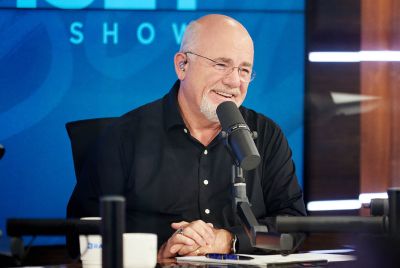
George Kamel has a quick test for whether a purchase will help or harm someone's finances, and it turns on the question a buyer asks before signing. On an episode of The Ramsey Show, the co-host and personal finance expert argued that people who judge a deal by its monthly cost, rather than its total price, are steadily eroding their retirement savings, in some cases by tens of thousands of dollars.
'Wealthy people ask how much. Poor people ask how much per month,' he said. Anyone reassured by a small monthly figure, he added, should be weighing the full balance of the debt instead.
The arithmetic behind the warning is straightforward. A $40,000 (£29,600) car financed at 7% over 72 months carries a payment of about $682 (£505) a month. Across the six years of the loan, the buyer hands over roughly $49,100 (£36,400), around $9,100 (£6,700) of it in interest.
The larger cost is the one that never reaches a statement. Invested in a low-cost index fund returning 8% a year, that same $682 monthly sum would grow to about $76,500 (£56,700) over seven years. Repeated across a career, on one financed purchase after another, Kamel argues those forgone gains harden into a retirement-sized shortfall.
He is not speaking from theory. Kamel joined Ramsey Solutions as an intern in 2013 and, following the firm's debt-free method, cleared his own student loan and credit card debt within about 18 months before he began investing.
He went from a negative net worth to millionaire in under a decade, a journey he set out in his bestselling book Breaking Free From Broke.
@george.kamel My journey from a negative net worth to millionaire is possible for you, too. #debtfreecommunity #debtfreejourney #millionaire #millionairestatus #babystepsmillionaire #fintok #moneytok
♬ original sound - George Kamel
The Maths Behind the Payment Trap
The trade-off is built into the way loans amortise. Lengthening the term lowers each payment but raises the total interest, so a borrower fixed on the monthly figure tends to pay more overall. Stretch the same $40,000 loan to 84 months and the payment falls again, while the interest bill climbs.
Kamel's aim is to cut commitments rather than simply keep up with them. 'If you want to be free and you want to be able to survive on single income, having less payments in your life is better,' he said. Fewer fixed payments, he contends, leave a household better placed to absorb a lost job or an unexpected bill.
The strain is visible in the national data. Federal Reserve figures show required debt payments took up 11.16% of disposable income in the first quarter of 2026, roughly two percentage points above the low reached in early 2021. The personal saving rate held at about 4% over the same quarter, according to the Bureau of Economic Analysis, and had slipped to 3% by July even as incomes rose.
When Fewer Payments Is the Wrong Answer
The rule is not absolute, and the interest rate decides which way it falls. On a credit card charging around 24%, the case for clearing the balance first is overwhelming. A $10,000 (£7,400) balance at that rate throws off about $2,400 (£1,800) a year in interest, so paying it down amounts to a guaranteed 24% return that few investments can match.
A cheap, fixed-rate mortgage turns the logic around. Clearing a 3% home loan early, purely to be rid of a payment, surrenders the gap between that 3% and what the same money might earn if invested. Here the stronger move is to keep the loan and put the difference to work.
The approach Kamel recommends is to rank debts by interest rate, clear anything that costs more than savings can realistically earn, and resist new monthly commitments taken on simply because the payment fits. Before any financed purchase, he advises working out the total price rather than the monthly one.
The payoff for asking the harder question, in his account, is the emergency fund, the single-income cushion, and the on-time retirement that the monthly-payment habit tends to erode.
© Copyright IBTimes 2026. All rights reserved.
- Recommended For You