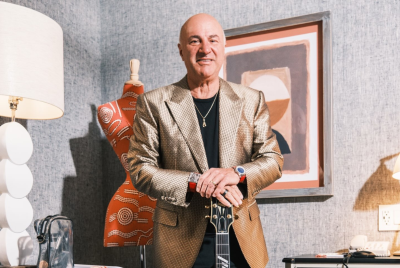
'We Waste So Much on Starbucks': NYSE's Legend Peter Tuchman Reveals $250 Rule Can Make You a Millionaire
Peter Tuchman advises redirecting small monthly expenses into the S&P 500 for a seven-figure retirement
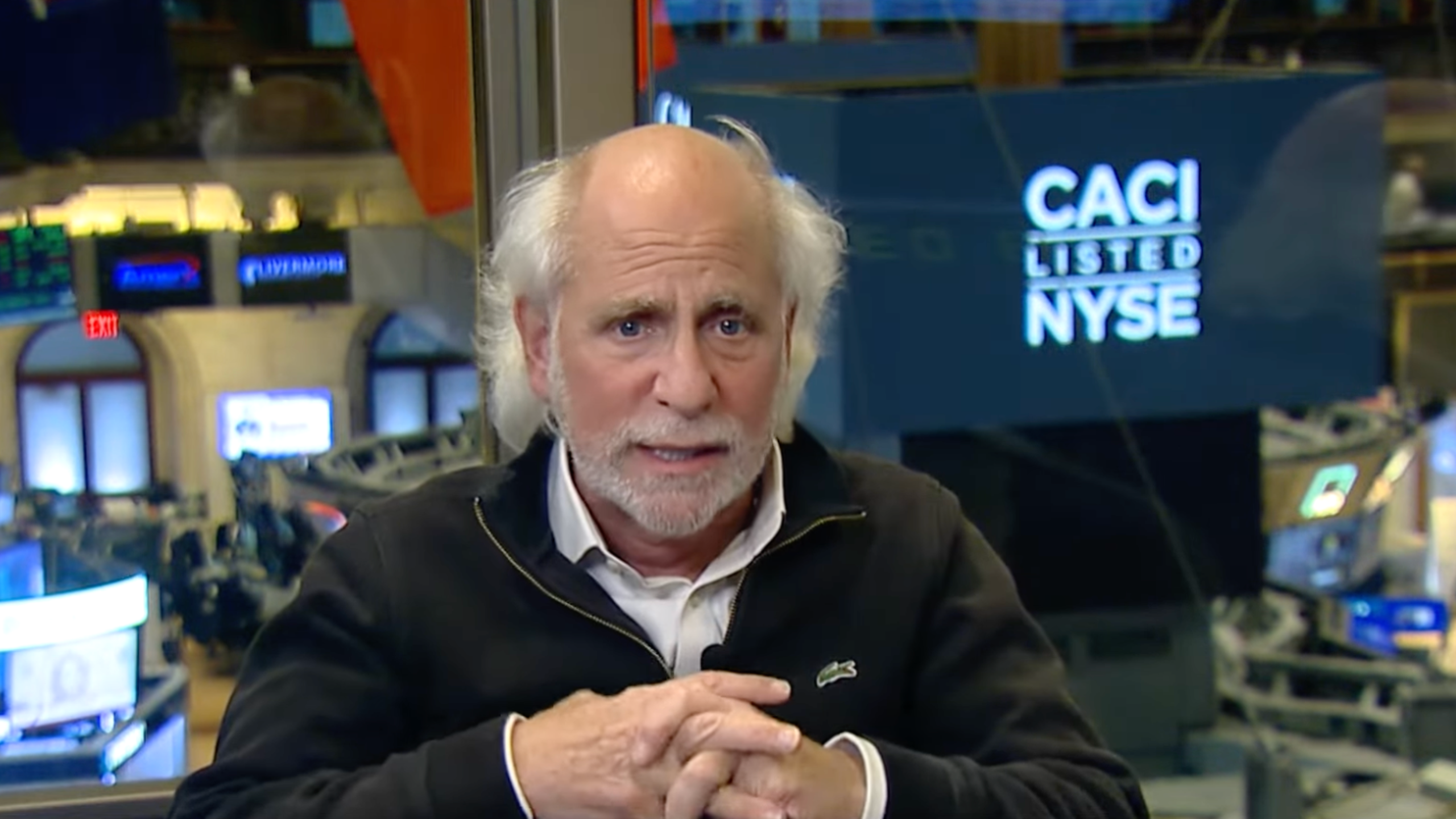
The impulse to buy something you do not need lasts about 20 minutes. That observation, delivered on a recent podcast by the man often called the most famous active broker on Wall Street, doubles as his entire case for how ordinary people can retire as millionaires.
Peter Tuchman, the 68-year-old New York Stock Exchange floor trader known as the 'Einstein of Wall Street,' told the School of Hard Knocks podcast that the spending habits draining most people's bank accounts are also the ones standing between them and a seven-figure retirement fund.
'Think about all the $250 (£198) that we waste on too many Starbucks or whatever people waste money on,' Tuchman said.
His pitch is a single number. Redirect $250 (£198) a month into the S&P 500 starting at age 18, and by 60 you would have $1.4 million (£1.1 million). 'It's not the sexiest part of that scenario,' he said of the timeline, 'but 1.4 million is.'
The math broadly checks out. The S&P 500 has averaged roughly 10% in annual returns since its inception, according to Fidelity. At that rate, $250 a month compounded over 42 years lands in the region of $1.4 million before adjusting for inflation or fees.
A Billion Dollars a Day, Zero Shares of His Own
Tuchman has worked on the NYSE floor since 1985, starting as a teletypist earning $47 (roughly £37) a week. He now executes between $500 million (£395 million) and $1 billion (£790 million) in daily volume alongside his son Benjamin. He described them as the last father-and-son team on the exchange floor.
Yet until recently, he had never personally owned a single share of stock. Floor regulations barred him from holding any name he also traded for clients within a 30-day window. After his wife, filmmaker Lise Zumwalt Tuchman, died of cancer in August 2023, he opened a retirement account structured so he has no direct control over it, Fortune noted.
That detachment kept him level-headed through Black Monday in 1987, the 2008 financial crisis, and a bout of COVID-19 in March 2020 that nearly killed him. He was given three months to live and lost a significant portion of his left lung.
'Whether the market goes up or down, I don't care as long as I've done the right thing for my customer,' he said.
Stocks, Not Stuff — and the Parts Inside
The trader's core message to young investors is a phrase he credited to another market maker on the floor: 'Invest in stocks, not stuff.' He described himself as a 2:00 a.m. Instagram impulse buyer who has paid an extra $25 (£20) just for overnight delivery, then used his own habits to make the point. 'That urge by definition lasts about 20 minutes,' he said. 'Walk around the block, have a piece of chocolate, and then go put that money into the stock market.'
KNICKS WIN BABYYYYY, BOOYAH! 🔵🟠 https://t.co/amugl1PH4Z pic.twitter.com/kV1YxZkizk
— Peter Tuchman (@EinsteinoWallSt) June 4, 2026
He illustrated the concept using Apple. Every time a new iPhone launches, consumers spend $1,000 (£790) on it even when their current handset works fine. If they bought five shares of Apple stock instead and kept their existing phone, they would hold tens of thousands of dollars' worth of equity over several upgrade cycles rather than a drawer of obsolete devices.
His advice to teenagers is to walk down the corridor of their school, check what trainers, phones, and apps their classmates are using, and buy one share of each. Fortune compared the approach to legendary fund manager Peter Lynch's philosophy of investing in what you already know and use.
Tuchman pushed the idea one step further. Apple does not manufacture every component inside an iPhone. Rare earth minerals, chips, and GPUs are all produced by independently traded firms. Nvidia chief executive Jensen Huang recently identified energy infrastructure as the next catalyst for AI's expansion, and Tuchman said investors who trace a product back to its raw parts can find positions before those suppliers attract mainstream attention.
For anyone tempted to chase the next meme stock, he left one final line. 'FOMO, hype and hope are not sustainable trading strategies,' Tuchman said. 'Nobody got broke taking a profit.'
Disclaimer: Our digital media content is for informational purposes only and does not constitute investment advice. Please conduct your own analysis or seek professional advice before investing. Remember, investments are subject to market risks, and past performance does not guarantee future returns.
© Copyright IBTimes 2026. All rights reserved.
- Recommended For You