

Strait of Hormuz Closure is a Guaranteed Global Recession, Inflation Risks Surge on Rising Oil Prices
Oil prices could reach as high as $200 per barrel

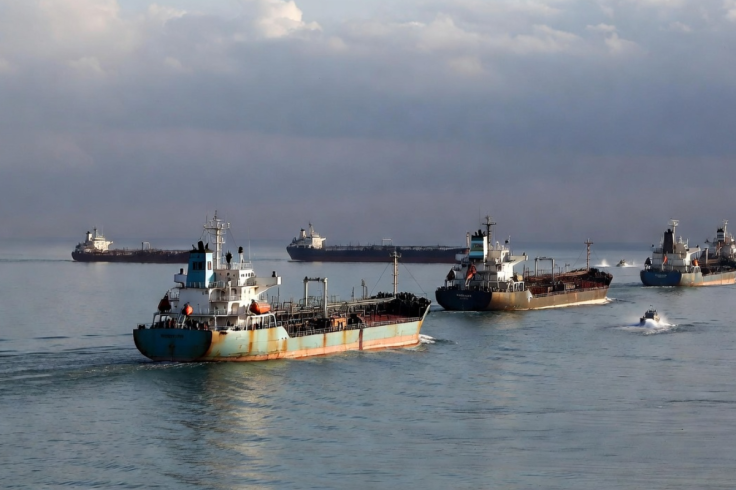
The effective closure of the Strait of Hormuz has sent shockwaves through global markets, with energy analysts warning that a prolonged blockade will trigger a 'guaranteed global recession.'
Following the coordinated US-Israeli military strikes on 27 February 2026, which targeted Iran's leadership and nuclear infrastructure, Tehran responded by declaring the waterway closed.
On 3 March 2026, Brent crude futures surged past $82 per barrel, marking a three-day rally as insurers cancelled coverage for vessels attempting to transit the corridor.
Around one-third of global seaborne oil exports and a fifth of natural gas shipments flow through the narrow waterway between Iran and Oman daily. However, tankers are avoiding the waterway as insurers have cancelled coverage for vessels.
On Saturday, Iran's Revolutionary Guards reportedly told vessels that passage through the strait was no longer allowed. The next day, four oil tankers near the Strait were attacked.
'The price of oil has reached $81/bbl, and the world is certainly waiting for it to reach at least $200. The Strait of Hormuz is closed. Our heroes in the Islamic Revolutionary Guard Corps Navy and the Army will set fire to any ships that wish to pass through this strait,' Irani Brigadier General Ebrahim Jabari declared on the state television.
Recession a 'Near Certainty' if Strait Shuts Down
Analysts at Rapidan Energy Group state that the current 70% drop in traffic has already begun fracturing global supply chains.
They believe a global recession is a 'near certainty' if the shipping channel is closed, as global energy supplies would sharply decline.
Brent Crude oil prices jumped 6.5% on Tuesday to $82.85 per barrel. While the war's full economic costs will depend on its duration, gas prices have already surged above $3 for Americans.
A prolonged closure of the Strait of Hormuz could likely drive oil prices well above $100 a barrel. Subsequently, costly crude would then fuel inflation across the economy. If oil prices hit $100 a barrel and remain there, it would add between 0.6 and 0.7 points to global inflation, according to Capital Economics estimates.
Furthermore, an oil shock could also slow global growth. Former White House energy adviser Bob McNally disclosed: 'A prolonged closure of the Strait of Hormuz is a guaranteed global recession.'
The US Federal Reserve usually raises interest rates to combat inflation. If prices rise amid a stagnating economy, the central bank will have fewer good options to tackle the dynamic macro landscape. This week, Bernstein also raised its 2026 Brent oil price target to $80 per barrel from $65, but sees prices reaching as high as $150 per barrel in a severe case of prolonged conflict.
The rapid escalation could mean that Iran might not seek peace even if US President Donald Trump proposes a ceasefire. Analysts believe Tehran might be able to secure better ceasefire terms by waiting for the economic costs of the war to mount. In all, US strikes have already brought Americans higher energy costs in the short term and an elevated risk of stagflation in the long run.
For now, the US Central Command (CENTCOM) maintains that the strait is not 'legally' closed, but the physical threat of IRGC drones and mines has been enough to deter almost all commercial shipping, creating a de facto blockade that the global economy is not yet prepared to absorb.
Disclaimer: Our digital media content is for informational purposes only and not investment advice. Please conduct your own analysis or seek professional advice before investing. Remember, investments are subject to market risks and past performance doesn't indicate future returns.
© Copyright IBTimes 2026. All rights reserved.