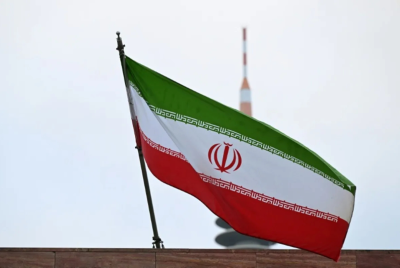
Donald Trump Issues 'Shoot and Kill' Order to US Navy as Strait of Hormuz Conflict Escalates
Tensions escalate as Donald Trump commands US Navy to target Iranian vessels amid fragile ceasefire.


Donald Trump has ordered US navy forces in the Strait of Hormuz to 'shoot and kill' any Iranian boats caught laying sea mines, he announced on Thursday on his Truth Social platform, in a move that throws fresh uncertainty over a shaky ceasefire in the Iran war and deepens a crisis already reverberating through global markets.
The escalation came after nearly two weeks of an uneasy truce between Washington and Tehran, a ceasefire that Trump himself had said he would extend indefinitely while insisting there was 'no time frame' for ending the conflict. That pause was fragile even on paper. Iran seized two commercial vessels in the Strait on Wednesday and fired on a third Liberian‑flagged ship, according to shipping companies and maritime security sources, even as US forces maintained a de facto blockade on traffic in and out of Iranian ports.
Donald Trump's Shoot‑To‑Kill Order In His Own Words
The latest twist began with a pair of characteristically blunt posts from Donald Trump on Thursday afternoon, first reported at 14:01 BST.
'I have ordered the United States Navy to shoot and kill any boat, small boats though they may be (Their naval ships are ALL, 159 of them, at the bottom of the sea!), that is putting mines in the waters of the Strait of Hormuz,' the US president wrote on Truth Social.
He went on to say there should be 'no hesitation,' confirming that American mine‑clearing vessels were already operating in the Strait. 'Additionally, our mine 'sweepers' are clearing the Strait right now,' he added. 'I am hereby ordering that activity to continue, but at a tripled up level!'
None of this has yet been translated into a published Pentagon rules‑of‑engagement document, so for now the order exists in the slightly surreal space of presidential social media, backed by real firepower in one of the world's most sensitive waterways. There has been no independent confirmation of Iranian boats actively laying mines at the precise moment of his order, so his language should be read as a standing instruction rather than a response to a specific, verified incident.
A separate post saw Donald Trump claim that the US was now in 'total control' of the Strait of Hormuz and that 'no ship can enter or leave without the approval of the United States Navy.' If taken literally, that would amount to the United States asserting gatekeeper status over a key international strait used for global trade, something the UN's maritime agency has previously said no country has a legal right to do.
Blockade, Mines And A War With No Clear Off‑Ramp
The news came after the US military announced the previous Monday that it would block shipping in and out of Iran's ports. Commanders have not publicly specified the exact line of the cordon, but US Central Command says that, since the start of the blockade, it has ordered 27 vessels to turn around or return to Iranian harbours.
Matters escalated sharply on Sunday when US forces attacked and seized an Iranian‑flagged cargo ship, the M/T Majestic X, in the Gulf of Oman. In a statement posted on X on Thursday, Central Command said American forces carried out a 'maritime interdiction and right‑of‑visit boarding' of the stateless vessel, which it said was transporting oil from Iran in the Indian Ocean.
'We will continue global maritime enforcement to disrupt illicit networks and interdict vessels providing material support to Iran, wherever they operate,' the statement read. 'International waters cannot be used as a shield by sanctioned actors. The Department of War will continue to deny illicit actors and their vessels freedom of maneuver in the maritime domain.'
Iran has called the blockade a red line and accused Washington of using hunger and energy shortages as leverage. Trump officials, for their part, have framed the policy in starkly transactional terms. The president has said he wants to stop Iran making money from its oil by 'selectively opening' the Strait for a reported fee, and has talked of an 'all or nothing' approach to traffic leaving Iranian ports.
Critics, not only in Tehran but in European capitals and at the UN, argue that the blockade has already forced up oil and gas prices and made any serious peace talks less likely, even as Trump insists he is under 'no pressure' to seek a diplomatic exit and is unconcerned by looming midterm elections.
Global Fallout As Donald Trump Doubles Down
The wider impact of Donald Trump's Iran strategy is no longer hypothetical. The UN's development chief, Alexander De Croo, told Reuters that more than 30 million people risk being pushed back into poverty as higher fuel and fertiliser prices ripple out just as farmers are planting crops. Fertiliser shortages, worsened by the backlog of ships blocked around the Strait of Hormuz, have already hit agricultural productivity, he warned, with food insecurity likely to peak in a few months.
In Europe, the economic strain is starting to show. Britain's budget deficit has fallen to its lowest level in six years, but official data released on Thursday showed a clear drop in fuel duty receipts as consumers cut back in the face of soaring prices linked to the Iran war. The International Monetary Fund has slashed UK growth forecasts for 2026 more than for any other G7 state, citing the country's exposure to higher energy costs.
Italy, heavily dependent on gas imports that flow through the Persian Gulf, has warned that its own defence‑spending plans may be in doubt because of the energy shock triggered by the conflict. A government document released in Rome pointed to rising public debt and tumbling growth forecasts, directly linked to turmoil in the Middle East.
© Copyright IBTimes 2026. All rights reserved.
- Recommended For You