Why US Stocks Fell Today: Dow Drops 247 Points As Oil Surges After Trump's Iran Blockade
Trump's Blockade Order Affects Markets Amid US-Iran Tensions
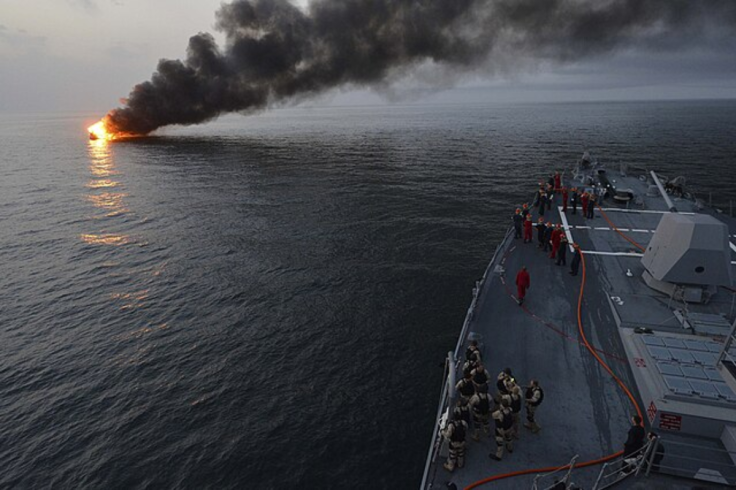
US President Donald Trump's decision of Strait Houmuz blockade has had a direct impact on the US stock futures. Dow Jones Industrial Average fell 247 points on Monday while oil surged past $100 a barrel. The trigger was a U.S. Navy blockade order against Iran, issued after weekend peace talks fell apart.
President Donald Trump announced over the weekend that the US Navy would immediately blockade the Strait of Hormuz after ceasefire negotiations with Iran ended without agreement. The talks, held in Islamabad, collapsed over disagreements on Iran's nuclear program, ending what had been a fragile diplomatic opening roughly 45 days into the U.S.-Iran conflict.
"Effective immediately, the United States Navy, the Finest in the World, will begin the process of BLOCKADING any and all Ships trying to enter, or leave, the Strait of Hormuz," Trump wrote on Truth Social. "The Blockade will begin shortly. Other Countries will be involved with this Blockade. Iran will not be allowed to profit off this Illegal Act of EXTORTION."U.S. equities began Monday's trading session in negative territory.
The Dow Jones Industrial Average fell 247 points, or 0.5 per cent, while the S&P 500 remained unchanged and Nasdaq Composite rose 0.2 per cent, CNBC reported. The broader market remained relatively steady as investors continued to hope for a potential de-escalation between the U.S. and Iran.
West Texas Intermediate crude oil jumped 5 per cent to above $101 per barrel, while international Brent crude rose 5 per cent to above $100 a barrel. Gold traded slightly lower at around $4,760 an ounce.
What CENTCOM Actually Ordered vs. What Trump Said
The gap between the US President's language and the military's formal order drew immediate scrutiny from investors trying to assess the blockade's real-world scope.
Trump framed the action as a blockade of the Strait of Hormuz itself. Taken literally, that would halt tanker traffic from every Gulf producer, including U.S. allies Saudi Arabia, Kuwait, and the United Arab Emirates.
U.S. Central Command (CENTCOM), the military command overseeing operations in the Middle East, issued a formal press release describing the action in narrower terms: a complete blockade of all Iranian ports, effective Monday, April 13. The CENTCOM order also directed the Navy to interdict vessels paying transit tolls to Iran, a revenue stream Tehran has used to fund operations in the waterway. The CENTCOM statement made no explicit reference to closing the strait to third-country shipping.

The discrepancy matters enormously to commodity markets. A blockade confined to Iranian ports would disrupt Iranian oil exports and import logistics. But a full Strait closure would constitute an act of economic warfare against multiple nations and almost certainly trigger diplomatic crises with Washington's Gulf allies.
The Islamabad talks were the most substantive engagement between Washington and Tehran since the conflict began roughly seven weeks ago. Their failure on the core question of Iran's nuclear program suggested the two sides remain far apart on the fundamental conditions for a ceasefire.
Iran has not publicly stated its full negotiating position, and the White House has not detailed which specific nuclear demands it presented.
CENTCOM's blockade announcement named no end date.
© Copyright IBTimes 2026. All rights reserved.
- Recommended For You