

Trump's $5,000 GOP-Win Dividend Could Be 'One of the Most Imprudent Uses' of $1.3tn, Economist Says
The proposal would require congressional approval and has drawn warnings over inflation, federal deficits and its uncertain funding source
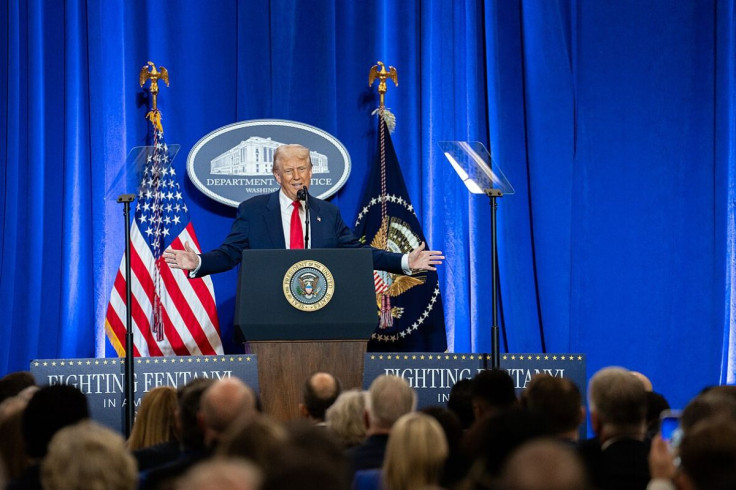
President Donald Trump has promised a $5,000 'Trump Dividend' payment to every adult American if Republicans keep control of both chambers of Congress in the 2026 midterm elections, a pledge economists say could cost between $1.2tn and $1.3tn and raise fresh questions over inflation and how it would be funded.
The plan has drawn criticism from budget analysts, financial markets and some Republicans over its potential impact on prices and doubts about the legal basis for the payments.
Michael Strain, director of economic policy studies at the American Enterprise Institute, said a large government payout risked pushing inflation higher at a time when prices remain a concern.
Economists Warn Payout Risks Reigniting Inflation
Strain compared the proposal with the stimulus payments issued during the coronavirus pandemic, arguing that the economic conditions are different.
Pandemic relief was introduced when businesses were closing and millions of people were facing financial hardship. He said the proposed dividend would instead put a large amount of money into an economy already dealing with inflation.
Marc Goldwein, senior policy director at the Committee for a Responsible Federal Budget, also questioned the proposal's finances. He noted that dividends are normally paid when governments have a surplus. The US government, by contrast, is running an annual deficit estimated at between $1.8tn and $2tn, while the national debt has passed $40tn.
'We don't have surpluses to give away,' Goldwein said. Federal interest payments are also expected to reach about $1.27tn during the 2026 fiscal year, according to Treasury figures. That is broadly comparable with the estimated overall cost of the proposed dividend.
Financial markets responded cautiously after Trump's announcement. The yield on the 10-year US Treasury note rose above 4.9% during afternoon trading. Higher Treasury yields can feed into other borrowing costs across the economy, including rates for mortgages and car loans.
Republicans Split Over Legislative Backing
Trump cannot simply order the federal government to issue the payments without congressional approval. Under the US Constitution, Congress controls federal spending, meaning an appropriation would be required before money could be distributed.
Some Republicans have indicated support for legislation. Senator Bernie Moreno said he would work on a bill after the election.
Vice President JD Vance defended the idea of returning money raised through tariffs to Americans.
Senate Majority Leader John Thune said he was open to allowing Americans to keep more of their income, but questioned whether a dividend bill could secure the 60 votes needed to overcome a Senate filibuster.
Other Republicans have rejected the proposal. Representative Thomas Massie said he was 'insulted by the notion' that his vote could be 'bought' for $5,000.
Representative David Schweikert said he would work to block it and warned it could contribute to an 'interest rate death spiral'. Arkansas Governor Sarah Huckabee Sanders also criticised the idea, saying a strong economy was not built by 'giving things away'.
Democrats Dismiss Pledge as Political Bribery
Democrats have accused Trump of using the proposal as an electoral tactic. Kentucky Governor Andy Beshear described Trump as the 'briber in chief' and pointed to an earlier promise of $2,000 tariff rebate cheques, which were never issued.
Representative Ted Lieu mocked the proposal by suggesting Democrats could make even larger promises if they won Congress. Representative Robert Garcia also dismissed the pledge, saying he did not believe the payments would happen.
Past Payment Pledges Went Unfulfilled
The proposal has also prompted comparisons with other payment promises made by Trump. The previously discussed $2,000 tariff rebates did not materialise, while proposed dividends based on savings from the Department of Government Efficiency also failed to appear.
Trump did issue $1,776 'warrior dividend' cheques to service members in December 2025. Those payments were later identified as a repurposing of military housing stipend funds rather than new bonus money.
Richard Painter, a government ethics expert, compared Trump's latest proposal with George McGovern's 1972 campaign promise of a $1,000 promissory note. Painter questioned the seriousness of the $5,000 pledge and stressed that Congress, rather than the president alone, has the authority to approve federal spending.
Trump Urges Supporters to Treat Him as 'On the Ballot'
Trump made the pledge at a Republican convention in Dallas, where he urged supporters to 'pretend that I'm on the ballot'. His comments were aimed at encouraging Republicans to vote in the 2026 midterms, which typically attract fewer voters than presidential elections.
Fewer than half of the Republican candidates in competitive races attended the Dallas event, with many choosing to campaign in their own districts. The only condition Trump has publicly attached to the proposed payment, apart from a Republican victory, is that recipients spend the money in the United States.
White House spokesman Davis Ingle defended the president against critics, saying people had repeatedly doubted Trump in the past. Adviser Stephen Moore offered a more cautious assessment, saying: 'You never know with Trump whether this was just kind of a rhetorical thing, or whether he really meant it.'
© Copyright IBTimes 2026. All rights reserved.