

Newsom Calls Trump's $5K Promise 'Taxpayer-Funded Blood Money' and Accuses Him of Trying to Buy Votes
Controversy surrounds Trump's proposed $5,000 payment to US citizens amid questions of funding and legality
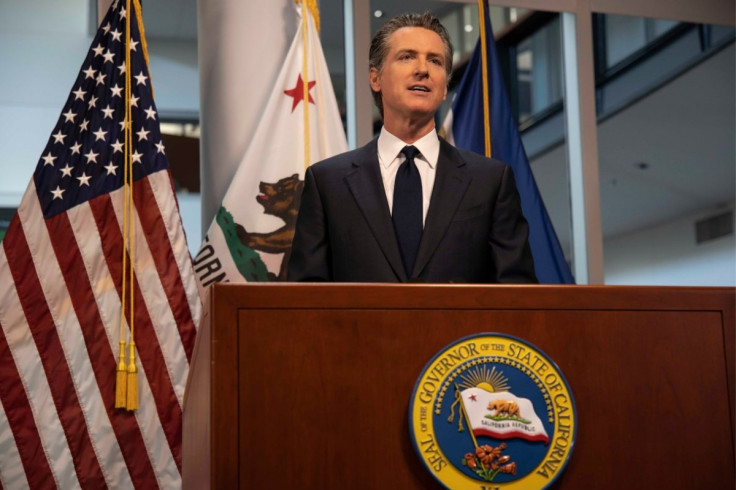
California Governor Gavin Newsom has accused Donald Trump of trying to 'buy' American voters with a proposed $5,000 (£3,700) payment after the US president unveiled the pledge at the Republican Party's first-ever midterm convention in Dallas, Texas, on Wednesday, 9 September.
Newsom described the proposal as 'taxpayer-funded blood money' and linked it to Trump's handling of the war with Iran. His comments came as questions mounted over how the proposed payments would be authorised and financed ahead of the November midterm elections.
'After making you sicker and poorer with his war, Trump now wants to buy your vote with $5,000 in taxpayer-funded blood money,' Newsom said. He also called Trump 'the most corrupt man ever to occupy the Oval Office'.
Trump made the pledge during an almost two-hour speech at the convention, saying every adult US citizen could receive a $5,000 'dividend' if Republicans win both chambers of Congress in the November elections.
The proposal is a pledge rather than an existing payment programme, and several questions surrounding it remain unanswered.
Trump's $5,000 Promise Raises Questions Over Cost
For context, Trump's announcement came as the cost of living remains a major concern for American voters. Research from the McKinsey Institute for Economic Mobility and the WK Kellogg Foundation found that 60 per cent of respondents in an April survey said greater financial security would define a better life over the next three to five years. Ninety per cent identified groceries and food costs as their top cost-of-living concern.
Housing, transportation and healthcare were also among the leading concerns.
Trump also said the money would have to be spent in the US, although it was not immediately clear how that condition would be enforced.
The potential cost is substantial. Estimates put the cost of paying $5,000 to every eligible adult US citizen at roughly $1.35 trillion (£1 trillion). That figure is an estimate based on the number of people who could qualify, rather than an official White House cost calculation.
The proposal has also prompted questions about Trump's authority to make such a payment without congressional approval.
Marc Goldwein, senior policy director at the Committee for a Responsible Federal Budget, said Trump would need approval from Congress to send the money to Americans.
Goldwein also pointed to the US fiscal position. The country is running annual deficits of about US$2 trillion (£1.48 trillion) and has accumulated roughly US$40 trillion (£29.51 trillion) in debt, according to figures cited in reporting on the proposal.
Trump has previously proposed a similar approach.
Earlier this year, he suggested a US$2,000 (£1,476) dividend funded by tariff revenue and said he did not think congressional approval would be necessary. He also issued members of the military a US$1,776 (£1,311) payment that he described as a 'warrior dividend'.
Vance Says Tariff Plan Could Fund Trump's Promise
Vice President JD Vance pointed to tariffs when asked by Fox News how Trump could fund the latest $5,000 promise.
Vance said Americans would 'share in some of the benefit of this incredible wealth that we are creating'.
But the tariff figures cited in the report raise questions about whether that revenue alone could cover the proposed payment. The Tax Policy Center estimates tariffs would raise about US$1.7 trillion (£1.26 trillion) between 2026 and 2036, including approximately US$177 billion (£131 billion) in 2026.
Those figures cover a decade of projected revenue, while the proposed $5,000 (£3,700) payment would require an estimated $1.35 trillion (£1 trillion) if made to all eligible adults in a single round. They therefore do not represent an immediately available pot of money for the proposed payment.
Economist Peter Schiff separately accused Trump of trying to 'buy the midterms', describing the proposal as bribing people 'in exchange for their votes'. Schiff also argued that the US Federal Reserve would ultimately have to finance the shortfall and warned that this could result in severe inflation.
Those are Schiff's economic and political assessments, rather than established facts about how the proposal would actually be financed.
The White House had not provided clarity on the pledge, including how it would be funded or how the requirement to spend the money in the US would be enforced.
The political timing has nevertheless made the proposal particularly contentious. Trump announced the payment while urging voters to 'pretend I'm on the ballot' for the midterms, even though he is not personally running in the congressional elections.
The legal question is also more nuanced than the political criticism suggests. Attorney John Day told the Associated Press that the proposal would not constitute a payment for an individual's vote if it were available to everyone regardless of how they voted or whether they voted at all.
Whether Trump's proposal could ultimately become a functioning payment programme depends on questions that remain unresolved, including congressional authority, the source of the funding and the practical rules governing eligibility and spending.
© Copyright IBTimes 2026. All rights reserved.