

Trump's 'Farcical' Iran War Just Destroyed America's Strongest Economic Weapon, Nobel Economist Warns
Nobel Laureate Paul Krugman highlights the weakening of US financial leverage due to prolonged Iran conflict.
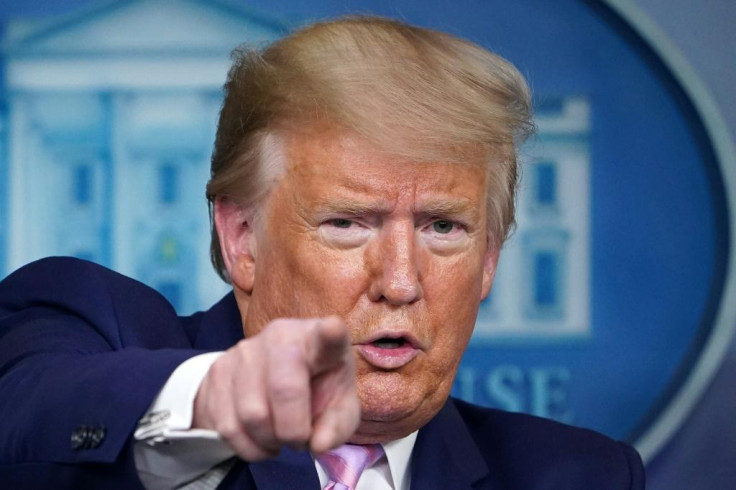
Donald Trump's Iran war has weakened America's most potent non-military lever of power, according to Nobel Prize-winning economist Paul Krugman, who warned in a late June column that the prolonged conflict has exposed cracks in the dominance of the US dollar. Writing as the war entered its fourth month with no clear end in sight, Krugman argued that the fallout is already reshaping how countries conduct global finance and sidestep US influence.
The US dollar has held its position as the world's reserve currency since the 1944 Bretton Woods Agreement, a system that cemented America's financial leadership in the aftermath of World War II. That dominance has long allowed Washington to exert pressure globally through sanctions and financial restrictions. Krugman's assessment suggests that this long-standing advantage is no longer as secure as it once seemed.
Trump Iran War and the Erosion of Dollar Power
Krugman described the Iran war as a 'stunning failure,' pointing to the gap between early expectations of a swift campaign and the reality of an extended conflict marked by ongoing strikes and counterstrikes. He was blunt about the geopolitical consequences. According to him, the drawn-out confrontation has undermined US credibility while accelerating efforts by other nations to reduce reliance on the dollar.

He stopped short of predicting the collapse of dollar dominance. The currency remains central to global trade and finance. But he drew a sharper distinction between economic strength and strategic leverage. The real damage, he suggested, lies in the erosion of what he called a critical economic weapon, the ability of the United States to control and restrict financial flows through its banking system.
That leverage works because most international transactions are processed in dollars and routed through US financial institutions. This gives American authorities visibility and control. When sanctions are imposed, they bite because access to dollar transactions is hard to replace. Or at least, it used to be.
Krugman argued that the Iran conflict has effectively stress-tested that system. Iran's ability to continue operating under pressure has shown that alternatives exist, even if they are less efficient. And once a workaround proves viable, others tend to follow.
Economist Warns of Alternative Systems Rising
At the centre of Krugman's warning is the rise of alternative payment networks, particularly those linked to China. He pointed to the increasing use of the yuan and China's Cross-Border Interbank Payment System, known as CIPS, as evidence that countries are actively exploring ways to bypass dollar-based transactions.
Krugman noted that even US allies in the Gulf are considering closer alignment with these alternative systems. If partners begin hedging their bets, the network effect that underpins dollar dominance begins to weaken. It is subtle at first, then it compounds.
The United States is not overwhelmingly dominant in global trade or output. Instead, it sits alongside China and the European Union as one of three major economic blocs of comparable scale. The dollar's outsized role in global finance has never been a simple reflection of economic size. It is built on habit, trust, and convenience.
Markets prefer dollars because everyone else uses them, making transactions smoother and more liquid. But if enough countries shift even part of their activity into alternative systems, that gravitational pull weakens. Not overnight, not dramatically, but steadily.
The power of US sanctions has always depended on the lack of credible alternatives. If those alternatives mature, sanctions become less threatening. Krugman's argument is that the Iran war has accelerated that process by forcing countries to innovate around restrictions rather than comply with them.
Online, the debate has already spilled into wider geopolitical discussions. Analysts and commentators on X have pointed to growing trade settlements in non-dollar currencies, while others argue the dollar's entrenched role makes any serious displacement unlikely in the near term. The divide reflects the uncertainty Krugman himself acknowledges. The dollar is not collapsing, but its aura of inevitability may be fading.
What remains unclear is how far this shift will go. Financial systems move slowly until they do not. The infrastructure being built today could take years to rival the dollar's dominance, or it could reach a tipping point faster than expected if geopolitical tensions continue to push countries away from US-led systems.
Krugman's warning is less about immediate decline and more about trajectory. America still holds the strongest cards in global finance. The question is whether it has just made it easier for others to start playing a different game.
© Copyright IBTimes 2026. All rights reserved.