Trump Backs Down From Multi-Billion Dollar IRS Settlement Account Following Intense Congressional Rebellion
Trump's Anti-Weaponisation Fund scrapped after bipartisan Senate revolt and legal setbacks.
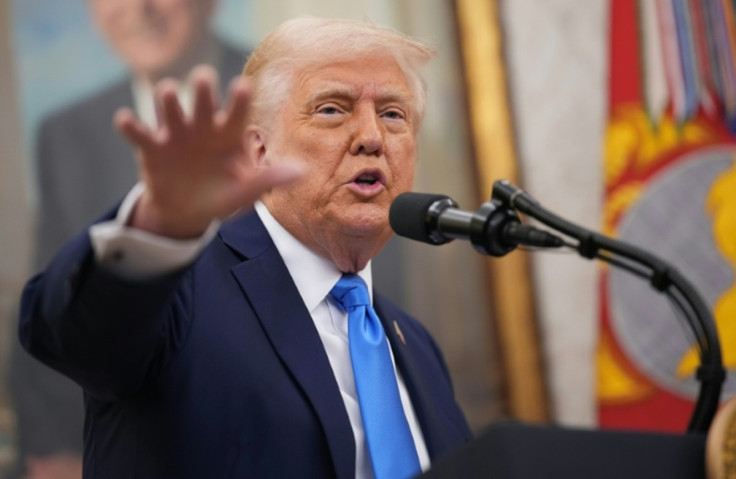
President Donald Trump has quietly stepped back from one of his most contentious domestic proposals after facing resistance from within his own party.
The Trump administration plans to drop its £1.4 billion ($1.8 billion) 'Anti-Weaponisation Fund', a DOJ-administered scheme established to compensate alleged victims of prosecutorial overreach under the Biden administration, following a rare bipartisan rebellion in the Republican-led Senate, two federal court setbacks and a public broadside from former Vice President Mike Pence. Two senior administration officials confirmed the reversal to Axios on 1 June 2026, with one stating bluntly: 'It's dead for now.'
The retreat marks a notable setback for Trump's second term, derailing his own priority immigration enforcement legislation and exposing fissures within a party he has long projected as unified.
How the Fund Came to Be and Why It Exploded
The Department of Justice announced the Anti-Weaponisation Fund on 18 May 2026 as part of the settlement agreement in President Donald J. Trump v. Internal Revenue Service. Acting Attorney General Todd Blanche established the fund 'to provide a systematic process to hear and redress claims of others who suffered weaponization and lawfare.'
The plaintiffs, President Trump, Donald Trump Jr., Eric Trump and the Trump Organization, had sued the Treasury and IRS in federal court in the Southern District of Florida following the leak of their tax returns. Under the terms of the settlement, the plaintiffs receive a formal apology but no monetary payment. In exchange, they agreed to drop their pending lawsuit with prejudice and withdraw two additional administrative claims, including one relating to the raid on Mar-a-Lago.
The fund was allocated £1.4 billion ($1.776 billion), drawn from the federal judgment fund, a perpetual congressional appropriation used by the DOJ to settle cases. The DOJ press release stated that any unspent money would revert to the federal government when the fund ceased operations no later than 1 December 2028.
The political calculus shifted almost immediately. At issue was not only the nearly £1.4 billion ($1.8 billion) in federal money tied to the settlement, but broader concerns about executive authority, the use of taxpayer funds and potential eligibility for individuals convicted in connection with the 6 January 2021 assault on the Capitol.
Republican Revolt: The Party That Couldn't Be Held
The pushback from Senate Republicans was, by any measure, significant. GOP senators said they were blindsided by the $1.8 billion fund. Senate Majority Leader John Thune told reporters he was not given a heads-up and that it 'would have been nice' if he had.
Former Senate Republican leader Mitch McConnell issued one of the most critical assessments of any Trump proposal in recent years: 'So the nation's top law enforcement official is asking for a slush fund to pay people who assault cops? Utterly stupid, morally wrong, take your pick.'
Senator Susan Collins, the top Senate appropriator who faces a competitive re-election in November, told CNN that Acting Attorney General Blanche had failed to convince her to support it: 'I do not support the weaponization fund as it has been described. I do not believe individuals that were convicted of violence against police officers on January 6 should be entitled to reimbursement of their legal fees.'
The controversy directly stalled the GOP's immigration enforcement package. Senators left Washington for their Memorial Day recess without taking action on the legislation, concerned that, because of the fund, they could not muster the 50 votes needed to pass a bill providing tens of billions of dollars to ICE and border patrol. Trump had demanded the package land on his desk by 1 June 2026.
GOP Senator Susan Collins on Trump’s $1.8B slush fund
— Republicans against Trump (@RpsAgainstTrump) May 21, 2026
“I do not support the weaponization fund as it has been described. I do not believe individuals that were convicted of violence against police officers on Jan. 6 should be entitled to reimbursement of their legal fees.”
—CNN https://t.co/U197yFpPwL pic.twitter.com/4LQWM79pY8
Pence, the Courts, and the Final Blow
The pressure extended beyond Capitol Hill. Former Vice President Mike Pence, appearing on NBC News' Meet the Press, stated: 'Well, look, I think that the weaponization fund is a bad idea from the start. And I would encourage the administration just to drop it. Let's get rid of this fund. I mean, it's deeply offensive to me that you could have a fund that could even possibly compensate people who assaulted police officers or vandalized the Capitol on January 6th. And I think that's broadly held by most Republicans and most Americans.'
The courts also moved against the fund. Two federal judges dealt blows to the fund on the same Friday: one temporarily blocked the administration from proceeding with any payouts, and a different judge, overseeing Trump's original IRS lawsuit, ordered the administration to respond to claims that it had committed 'fraud' on the court, warranting an inquiry into potential wrongdoing by both sides.
The Department of Justice disagrees strongly with the decision on the Anti-Weaponization Fund put forth by the United States District Court Judge in the Eastern District of Virginia, wherein the Court stated that, under no circumstances, may the Department of Justice proceed with…
— U.S. Department of Justice (@TheJusticeDept) June 1, 2026
Two Capitol Police officers who defended the building on 6 January 2021 also filed a lawsuit seeking to have the fund declared illegal, describing it as 'a taxpayer-funded slush fund to finance the insurrectionists and paramilitary groups that commit violence in his name.'
The DOJ maintained its position even as the legal and political challenges mounted. A DOJ spokesperson told Newsweek: 'The Department remains extremely confident in the legality of the Anti-Weaponization Fund which is supported by ample precedent, including Obama-era settlements. We will not allow the policy preferences of judges to interfere with our efforts to provide restitution to victims of lawfare.'
The DOJ had pointed specifically to the Keepseagle settlement under the Obama administration, a £592 million ($760 million) fund established to address claims of racism against the federal government, as legal precedent. Critics dismissed the comparison as a false equivalence, arguing that a settlement compensating alleged political opponents of a sitting president bore no resemblance to a racial discrimination claim.
The administration's decision to abandon the fund does not erase the political damage already done, or close the judicial proceedings already under way.
© Copyright IBTimes 2026. All rights reserved.
- Recommended For You