Trump Establishes $1.7 Billion Fund With Taxpayer Money to Pay Jan 6 Defendants and Political Allies
Controversial fund bypasses Congress, raises ethical concerns
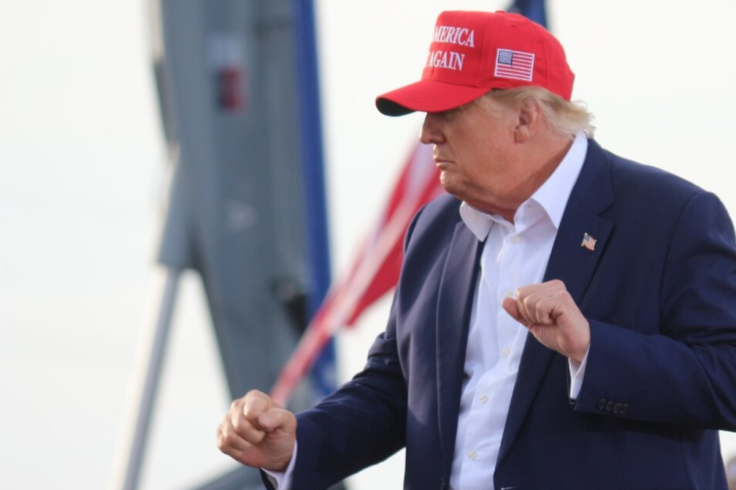
President Donald Trump is moving to establish a $1.7 billion (£1.26bn) taxpayer-funded compensation fund that would pay political allies and individuals charged in connection with the 6 January 2021 Capitol attack. The arrangement is tied to Trump dropping his $10 billion (£7.4bn) lawsuit against the Internal Revenue Service, a deal that has not yet been officially announced.
The fund would draw money from the Treasury Department's Judgment Fund, a permanent appropriation used by the federal government to pay court judgments and settlements. Crucially, Congress would not need to separately approve the payment, raising immediate concerns among critics and some administration officials alike.
A Fund Built With Little Oversight
Under the proposed terms, a five-member commission would have total authority to hand out the $1.7 billion to anyone who claims they were harmed by the Biden administration's so-called 'weaponisation' of the legal system. That pool of potential recipients includes the nearly 1,600 individuals charged in connection with the Capitol attack, as well as entities associated with Trump himself.
What has drawn particular scrutiny is the structure of the commission. According to sources familiar with the matter cited by ABC News, Trump would have the authority to remove commission members without cause, and the body would be under no obligation to disclose its procedures or the identities of those who receive payments. The process, critics argue, is designed to operate with minimal public accountability.
Senator Elizabeth Warren did not hold back in her reaction. 'An insane level of corruption — even for Trump,' she wrote on X, describing the arrangement as 'a $1.7 billion slush fund for Trump's hand-picked stooges to hand money to January 6th insurrectionists and his political allies.'
An insane level of corruption—even for Trump.
— Elizabeth Warren (@SenWarren) May 15, 2026
A $1.7 BILLION slush fund for Trump’s hand-picked stooges to hand money to January 6th insurrectionists and his political allies.
Here’s the President’s priority as Americans sell their plasma to afford gas and groceries: https://t.co/wahV5OPEAj
Trump Himself Flagged the Conflict
The ethical questions surrounding the fund are not new, and Trump himself has acknowledged them. Speaking in the Oval Office in October, Trump said: 'It's awfully strange to make a decision where I'm paying myself.'
Despite that admission, the settlement talks have continued, accelerating in part due to legal pressure. US District Judge Kathleen Williams had questioned in a prior ruling whether Trump and the federal agencies he is suing are 'sufficiently adverse to each other,' writing: 'Although President Trump avers that he is bringing this lawsuit in his personal capacity, he is the sitting president and his named adversaries are entities whose decisions are subject to his direction.'
Virginia Canter, ethics chief counsel at the Democracy Defenders Fund and a former White House lawyer, said that the arrangement is 'just another way for President Trump to treat the American taxpayers' money as like a cash machine to serve his own personal interests.'
Democrats Move to Block the Fund
Opposition from Democratic lawmakers has been swift and pointed. Earlier this year, a group of House Democrats introduced legislation specifically aimed at banning Jan. 6 defendants from receiving any compensation from a fund of this kind, though that bill has not advanced through Congress.
Congressman James Walkinshaw was among those who spoke out publicly, stating that the plan shows Trump 'is moving to create a $1.7 billion slush fund to cut checks with your tax dollars to January 6 defendants, Trump-connected entities, and MAGA allies claiming they were wrongfully targeted by the Biden Administration,' according to a statement.
Warren's criticism on X further underscored the Democratic position, framing the fund as a political reward system paid for by ordinary Americans. 'Here's the President's priority as Americans sell their plasma to afford gas and groceries,' she added in the same post.
From Pardons to Payouts
The fund follows a pattern that began on Trump's first day back in office. On 20 January 2025, Trump granted blanket clemency to nearly 1,600 people convicted of or awaiting trial for offences related to the Capitol attack. Those granted clemency included leaders of the Oath Keepers and Proud Boys, some of whom had been convicted of seditious conspiracy, with 14 of the most prominent figures receiving commuted sentences rather than full pardons.
Since those pardons, hundreds of Jan. 6 defendants have begun seeking financial compensation from the federal government. Trump had signalled his support for such payouts, saying that 'they were patriots as far as I was concerned' and that they 'were treated very unfairly.'
The establishment of a taxpayer-funded compensation fund with this level of executive control and this little public oversight would mark an unprecedented use of public money in American political history. Legal experts have described the arrangement as without precedent, and the debate it has ignited cuts to the heart of questions about the separation of powers, the independence of federal institutions, and the limits of presidential authority over public funds.
© Copyright IBTimes 2026. All rights reserved.
- Recommended For You