Trump's Treasury Lawyer Resigns in Disgust Over Secret $1.8 Billion Payout Fund for J6 Rioters
Democrats have branded the secretive scheme the 'most brazen theft' of taxpayer money in US history, while officials refuse to explain Morrissey's abrupt exit.
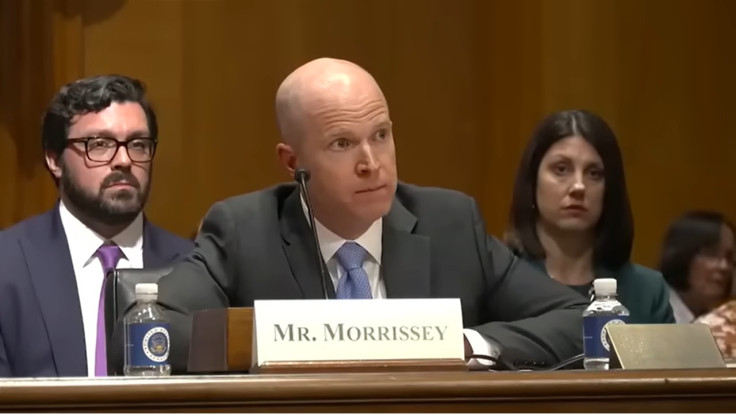
Brian Morrissey, the Treasury Department's general counsel, has resigned just hours after the Trump administration unveiled a $1.776 billion (£1.32 billion) fund tied to compensation claims for people who say they were wrongly targeted by the Biden-era Justice Department, including some Jan. 6 rioters.
His departure, reported by the New York Times, came roughly seven months after his Senate confirmation and quickly became part of a wider storm over the arrangement.
The news came after acting Attorney General Todd Blanche announced the so-called 'Anti-Weaponisation Fund', a move that has rattled Washington and revived arguments over how the Trump administration is using settlement money.
The fund is being created as part of a deal to resolve Donald Trump's lawsuit against the Internal Revenue Service over the leaking of his tax returns during his first term.
Trump's Anti‑Weaponisation Fund And The 6 January Link
At the heart of the row is the new 'Anti‑Weaponization Fund', a Justice Department creation that is already being described by critics as a political slush pile for the MAGA movement.
The fund is designed to compensate people who claim they were unfairly pursued by Biden‑era prosecutors, a category that could include some of the roughly 1,600 individuals charged over the 6 January 2021 attack on the US Capitol, as well as former Trump aides.
The Treasury Department is now obliged to transfer $1.776 billion (£1.32 billion) into a dedicated account. Under the terms released on Monday, that account will be overseen by a panel of five commissioners selected and removable at will by Blanche.
Congress does not have to sign off the payments because the cash will flow from the Judgment Fund, an uncapped pool the federal government uses to settle legal claims without separate appropriations.
The settlement emerged from a lawsuit Trump filed against the IRS, accusing the tax agency of failing to prevent the unauthorised disclosure of his tax information.
A judge had recently questioned whether a sitting president could legally sue an agency he controls, and Trump dropped the case on Monday as the agreement was reached.
The White House has insisted the plan is above board. At a healthcare event, Trump denied any personal role in structuring the arrangement and claimed the deal had been 'very well received.' The administration has not provided a public list of who might ultimately benefit from the fund.
Brian Morrissey's Exit From Trump's Treasury
Into this fraught political and legal moment stepped Brian Morrissey, and out of it he appears to have walked just as quickly.
Morrissey, the Treasury's general counsel, tendered his resignation seven months after winning Senate confirmation and on the very same day the fund was announced, according to three people familiar with his decision quoted by the New York Times.
Morrissey served in the former president's first administration, previously worked as a partner at the powerful law firm Sidley Austin and once clerked for Supreme Court Justice Clarence Thomas, a conservative appointed by George H. W. Bush.
On paper, he looked like exactly the sort of loyalist the second Trump term was designed to elevate.
Morrissey has not spoken publicly about why he quit and did not respond to media requests for comment. A Treasury spokesperson, in a carefully neutral statement, said only: 'Mr. Morrissey has served the United States Treasury with both honour and integrity. We wish him all the best in his next endeavours.'
Two sources who read his resignation letter told reporters he thanked President Trump and Treasury Secretary Scott Bessent for the opportunity to serve.
As of this writing, there is no official confirmation that Morrissey resigned in protest at the anti‑weaponisation fund or the way it is being implemented.
Outrage Over 'Most Brazen Theft' Of Taxpayer Cash
Reaction to the fund has been immediate and blistering. Senator Ron Wyden of Oregon, a veteran Democrat and long‑time tax watchdog, called the arrangement the 'most brazen theft and abuse of taxpayer dollars by any president in American history.'
Representative Jamie Raskin of Maryland, who played a leading role in Trump's second impeachment, described the agreement as 'pure fraud and highway robbery.'
Nearly 100 House Democrats have already filed an amicus brief seeking to block the settlement, arguing that it twists the concept of legal redress into a mechanism for rewarding political allies.
Further reporting by The Daily Beast suggested a second layer of concern: recipients of the money, and the amounts they receive, will not be publicly disclosed.
That lack of transparency has fuelled accusations that the fund is less about remedying genuine misconduct and more about quietly funnelling federal money to Trump supporters, including some who took part in the 6 January riot that sought to overturn the 2020 election result.
The Justice Department, Treasury, White House and Morrissey himself have all been asked for further comment by US outlets.
So far, none has strayed beyond prepared statements or offered a detailed defence of the fund's design, prompting questions about how much internal dissent it may have stirred within the government's own legal ranks.
Trump, Legal Peril And A $1.8 Billion Cushion
The anti‑weaponisation fund sits against a broader backdrop. In May 2024, Donald Trump was found guilty on 34 felony counts of falsifying business records in New York.
Six months later he defeated Kamala Harris in the presidential election and returned to the White House with a sharpened narrative about victimhood at the hands of what he calls a 'weaponised' justice system.
Todd Blanche, now acting attorney general, stood by Trump through that criminal trial as his personal lawyer. He will now appoint every member of the commission that decides who is compensated and how much they receive, and can remove them without cause.
For critics, it is difficult to imagine a more concentrated form of presidential influence over a pot of public money.
The Justice Department and Treasury signed off on the vast pot of money to settle President Trump's lawsuit against the Internal Revenue Service over the leak of his tax returns during his first term.
According to documents, the fund will be drawn from the federal government's Judgment Fund and placed in an account controlled by a five‑member commission chosen entirely by acting Attorney General Todd Blanche, the president's former personal lawyer.
© Copyright IBTimes 2026. All rights reserved.
- Recommended For You