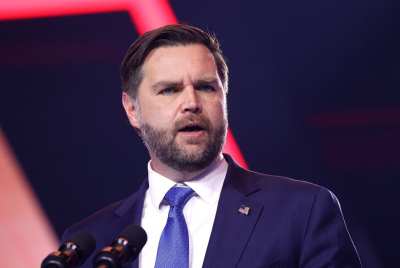
JD Vance Branded 'Most Unpopular VP in US History' After Shocking 21-Point Poll Collapse in Just Months
VP JD Vance's approval ratings plunge, sparking doubts about his future and ripple effects across the Trump administration

Vice President JD Vance has suffered a historically significant collapse in public approval, with new polling data indicating a 21-point swing in the wrong direction within months, placing him at the bottom of modern vice-presidential rankings, according to CNN data analysis.
The sharp decline, highlighted by CNN chief data analyst Harry Enten, underscores mounting political headwinds facing the Trump administration and raises fresh questions about Vance's political durability.
Historic Polling Collapse Raises Alarm
According to Enten's aggregation of national polling data, Vance's net approval rating has fallen from +3 to −18, a 21-point swing in the wrong direction within months of taking office.
Speaking on CNN, Enten characterised the drop bluntly: 'That is a 21-point swing... down he goes.'
The data places Vance behind every modern vice president at a comparable stage in office, including Kamala Harris (−13), Mike Pence (−7), Joe Biden (+4), and Dick Cheney (+37). Enten concluded that Vance's standing is 'historically the worst' when benchmarked against his predecessors.
Separate CNN/SSRS polling further illustrates the downward trend. In January 2026, 41 per cent approved of Vance while 58 per cent disapproved, leaving him 17 points underwater. By late March, approval had dropped to 37 per cent with 62 per cent disapproval, a net rating of −25.
🎥 CNN: JD Vance has become the most unpopular Vice President in the history of the United States!
— Drop Site (@DropSiteNews) April 12, 2026
🔹 Polls show Vance's popularity has dropped by 21% since the start of the term in 2025, and compared to other Vice Presidents in recent history, he holds the worst rating at this… pic.twitter.com/WqUA1YlnWX
Broader Political Drag From White House Turbulence
Enten noted that Vance appears to be 'dragged down along with the president', pointing to wider dissatisfaction with the administration.
Polling data indicates that Donald Trump himself has faced declining approval ratings, contributing to a broader negative environment for senior officials.
In Vance's case, early expectations that he could broaden the administration's appeal appear to have faded, as his public profile becomes more tightly linked to the White House's performance.
The real divide in our time is between those who believe in a better future for us and our children, and those who don’t.
— JD Vance (@JDVance) April 7, 2026
Great to speak in Budapest today with @PM_ViktorOrban pic.twitter.com/pMrS6aLLNH
Early Promise Gives Way to Rapid Erosion
The speed of Vance's decline is especially notable given his relatively stable starting position. At the beginning of 2026, polling suggested he had entered office with modest but positive net approval. However, that early goodwill 'evaporated quickly', according to aggregated CNN data, as public sentiment shifted sharply negative.
The current polling collapse represents a far steeper and more consequential reversal given the national visibility and institutional weight of the vice presidency.
NEW: JD Vance is the least popular vice president at this point in his presidency in history, according to CNN.
— Leading Report (@LeadingReport) April 12, 2026
Implications for 2028 and Republican Strategy
As a potential contender for the 2028 presidential election, Vance's standing among voters is closely watched by Republican strategists and donors. Recent data suggests his perceived viability has already begun to weaken, with declining favourability potentially narrowing his path to securing the Republican nomination.
At the same time, Vance retains significant support within segments of the Republican base, particularly among conservative grassroots organisations and younger right-leaning voters. This creates a complex political landscape in which strong intra-party backing may not translate into broader national appeal.
Vance's office has not responded publicly to the CNN polling analysis. His net approval rating stood at −25 as of late March 2026, according to CNN/SSRS polling. The Republican primary for the 2028 presidential election has not yet formally opened.
© Copyright IBTimes 2026. All rights reserved.
- Recommended For You