Donald Trump Faces Fresh Cognitive Health Fears, Claims Reconstruction Is 'Fancy Name' For Civil War
Trump's remarks in Texas raise questions about his grasp of US history and cognitive health.

Donald Trump's grasp of basic US history was again under scrutiny on Friday in Corpus Christi, Texas, after he told supporters that Reconstruction was just a 'fancy way of saying Civil War,' prompting fresh questions online about the 79‑year‑old president's cognitive health.
The remark came as Donald Trump campaigned in Texas ahead of next week's Republican Senate primary, sharing a stage with all three candidates in a bitterly fought race. It adds to a series of verbal slips and historical misfires that critics have seized on in recent months, at the same time as they highlight visible physical issues and call for more transparent health information from the White House.
The administration, for its part, continues to insist he remains mentally sharp and physically 'near‑perfect,' so much of the debate still rests on interpretation rather than medical evidence.
Trump reveals he doesn’t know the difference between the Civil War and Reconstruction pic.twitter.com/UAPNKRmtlQ
— Aaron Rupar (@atrupar) February 27, 2026
Donald Trump Blurs Civil War And Reconstruction In Texas Speech
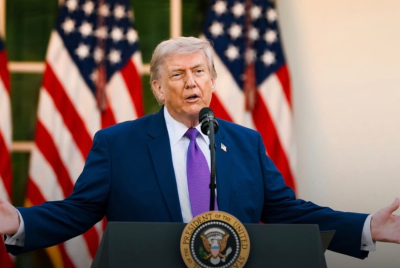
Speaking in Corpus Christi on Friday, Trump broke off from prepared remarks on energy and the economy to riff on a voter's use of the term Reconstruction.
'You used the word 'Reconstruction,' right?' he told the crowd. 'And I said, "by Reconstruction are you saying the Civil War? Is that what you're saying?" That was a fancy way of saying Civil War.'
Historically, that is wrong. The Reconstruction era is widely defined as the period of more than a decade after the end of the American Civil War, when the federal government sought to reassert control over the former Confederate states, reintegrate them into the Union and push through constitutional amendments abolishing slavery and extending civil rights. It is a distinct phase, not a synonym.
Texas, where Trump was speaking, seceded from the Union in February 1861 and joined the Confederacy a month later. Few large battles took place on its soil, but it contributed an estimated 70,000 to 90,000 soldiers and equipment to the Confederate war effort before being drawn into Reconstruction politics.
Trump moved on quickly in his speech, pivoting to an appeal to Hispanic voters. 'We want every single, and largely Hispanic, vote. We love the Hispanic voters, we love them,' he said.
The White House did not issue an immediate correction or clarification of his Reconstruction comments in the material provided, and there is no indication that Trump or his team accept that he misspoke.
Social Media Piles In On Donald Trump's 'Fancy Way' Claim
Once footage of the Reconstruction line hit social media, reaction was swift and mocking. Many users linked it directly to long‑running questions about Donald Trump's mental acuity.
'But he can pick a Giraffe out on a cognitive test. That's all that matters,' one user on X wrote, referring to the simple animal‑identification task in the Montreal Cognitive Assessment that Trump has repeatedly claimed he 'aced.'
'Wow, he can't tell the Civil War from Reconstruction... shocking... And here I thought he was a genius in everything,' another posted.
A third commenter took a wider swipe at his understanding of government. 'He also doesn't understand how the Supreme Court rulings work, but cut him some slack. He's just the President,' they wrote.
Those are partisan jabs rather than expert assessments, but they sit on top of a broader anxiety in parts of the US electorate about having a president approaching 80 who often speaks off the cuff and bristles at formal testing.
Trump and his aides have consistently rejected suggestions of decline. Officials regularly point reporters to statements from his physician describing him as being in near‑perfect health, and the president himself uses the cognitive test anecdote as a stock line to argue that he is mentally fit for office.
Health Scrutiny Grows As Donald Trump Misquotes Coolidge
Trump's physical and mental state has been a recurring topic since he returned to the White House last January. At public events he has been photographed with a dark bruise on the back of his right hand and walking on noticeably swollen ankles. Commentators have also flagged what they describe as manic episodes and frequent verbal stumbles, presenting them as signs of possible cognitive decline.
None of that has been confirmed by independent medical disclosure. The White House has pushed back firmly, insisting any visible marks are benign and that the president's schedule and decision‑making prove he remains robust. Without fuller health records, outside claims about specific diagnoses remain speculative and need to be treated with caution.
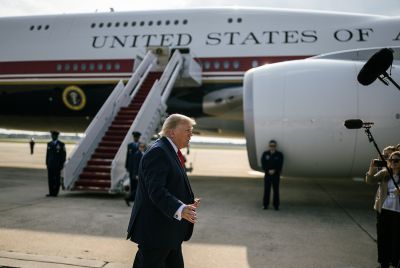
The Corpus Christi event was not the only moment on Friday to feed the narrative. As he flew to Texas aboard Air Force One, Donald Trump posted on Truth Social what he said was a quote from former president Calvin Coolidge.
'President Calvin Coolidge: 'The Business of America is BUSINESS!'' he wrote.
Coolidge's actual line, delivered in a 1925 speech to the American Society of Newspaper Editors, was more nuanced. 'After all, the chief business of the American people is business,' he said, as part of a longer reflection on the dual role of newspapers as both public service and commercial enterprise. The truncation is a common political shorthand, but critics folded it into their portrait of a president playing fast and loose with the words of others.
Campaign Backdrop: Texas Senate Primary And Donald Trump's Influence
The setting for all of this was a high‑stakes Republican primary. Trump travelled to Texas alongside Senator John Cornyn, who is seeking a fifth term and faces challenges from state attorney general Ken Paxton and representative Wesley Hunt. All three contenders have been competing fiercely for the president's endorsement, using photos, joint appearances and rhetoric to emphasise their proximity to him.
On Friday Cornyn posted pictures from Air Force One, underlining his access. Paxton and Hunt have also been leaning hard into their Trump ties as Tuesday's vote nears.
Speaking briefly to reporters in Texas, Trump said he had 'pretty much' decided whom to endorse in the Senate race, but answered 'no' when pressed on whether he would reveal his choice.
© Copyright IBTimes 2025. All rights reserved.
- Recommended For You