

Donald Trump Allegedly Purchased Millions in Dell Stock Just Weeks Before It Was Awarded $9.7B Pentagon Contract
A president legally insulated from conflict‑of‑interest laws is testing just how far public trust can stretch when his private bets line up with billion‑dollar government deals.
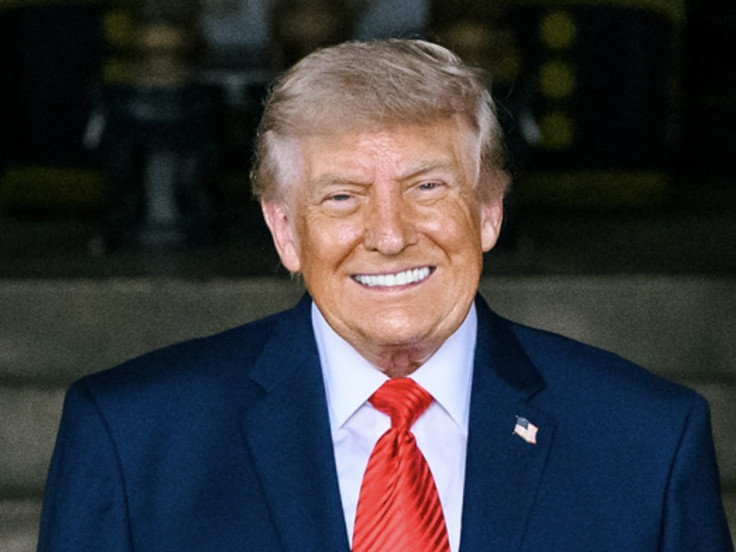
Donald Trump allegedly bought more than $1 million worth of Dell Technologies shares on 10 February, just weeks before the company's government arm won a $9.7 billion Pentagon contract, according to financial disclosures cited by The Daily Beast. Ethics groups are now raising concerns about the timing of the trade and the optics surrounding the deal.
For years, Trump's personal finances have sat in a grey area. Federal conflict of interest rules do not apply to the president, and Trump has not followed the modern practice of fully divesting assets or placing them in a blind trust. His team says independent managers oversee his accounts, but that arrangement has continued to draw scrutiny when investments appear to coincide with major government decisions.
Dell Stock, Trump Praise And A $9.7bn Contract
According to disclosure filings reported by The Daily Beast, Trump's investment portfolio bought between 1 million and 5 million dollars in Dell stock on 10 February, with additional smaller purchases in March. On Wednesday, the US Department of Defense announced that Dell Federal Systems, the company's government focused unit, had secured a five year, 9.7 billion dollar contract to manage purchases of Microsoft software, services and licences for the military, the intelligence community and the US Coast Guard.
I am proud to announce the award of the $9.7 billion Core Enterprise Technology Agreement (CETA) with Dell Federal Systems for Microsoft services. We are aggressively delivering on @SecWar’s mandate: aggressively reducing IT redundancies and drive down enterprise costs. 🦅
— DoW CIO Kirsten Davies (@DoWCIODavies) May 28, 2026
To be… pic.twitter.com/fBzjekQZgS
The market reaction was immediate. Dell shares jumped nearly 40 per cent in after hours trading on Thursday after the announcement, turning any sizeable holding into a far more valuable asset almost overnight.
It is the timing that has unsettled government watchdogs. Trump, now 79, has been publicly effusive about Dell, praising the company at rallies and events. Just nine days after the February stock buy, he told a crowd in Georgia to 'go out and buy a Dell computer,' calling its products 'phenomenal,' according to the report. That kind of promotional language might once have passed as off the cuff boosterism. Coming from a sitting president with a disclosed stake in the firm, it reads rather differently.
The relationship between Trump and the Dell family adds another layer. In December, Dell chief executive Michael Dell and his wife, Susan, pledged billions to fund so called 'Trump Accounts' for 25 million American children, a flagship initiative heavily touted by the White House. The Dell contract, the stock purchases and those philanthropic pledges now sit in the same uneasy frame.
'This absolutely does ring alarm bells with regard to conflicts of interest,' Greg Williams, director of the Center for Defense Information at the Project on Government Oversight, told The Washington Post, in comments quoted by The Daily Beast.
Ethics Rules And Defence
Legally, critics say, the rules remain remarkably permissive. Presidents are exempt from the main federal conflict of interest statute that bars senior officials from taking part in matters that could affect their finances, leaving the system reliant on norms rather than hard legal barriers.
Margaret Dylus-Yukins, senior legal counsel for ethics at the Campaign Legal Center and a former lawyer at the Office of Government Ethics, told the Post that the long-standing norm has been for presidents to avoid even the appearance of self-enrichment. In Trump's case, she said, promoting a company owned by a friend in which he also invests creates the appearance of a conflict, even if it does not amount to an actual ethics breach under current rules.
The Trump camp has rejected any suggestion of wrongdoing. White House spokesman Kush Desai told The Daily Beast that Michael and Susan Dell are among the entrepreneurs and philanthropists responding to Trump's call to invest in the next generation through Trump Accounts.
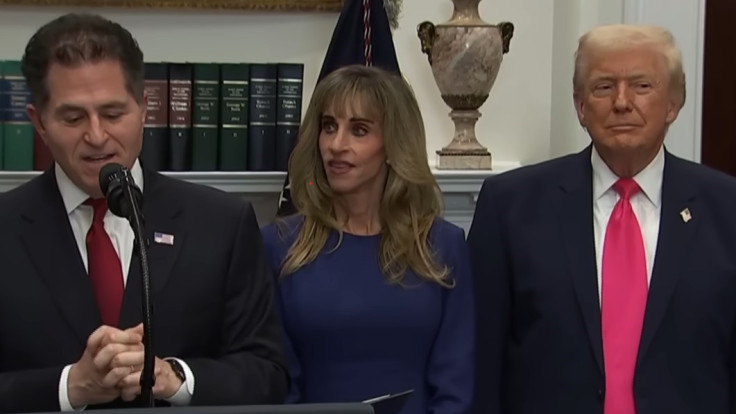
'President Trump's only interest is doing what's best for the American people,' Desai said, adding that his praise for the Dells was rooted in their contribution to the programme.
Other aides have tried to distance Trump from the specifics of his investments. The Trump Organization said his assets are placed by outside brokerage firms and overseen by independent third party managers. White House spokeswoman Anna Kelly said his holdings sit in a trust managed by his children and insisted that 'the president only acts in the best interests of the American public.'
'There are no conflicts of interest,' Kelly said.
Eric Trump went further on X, saying the president's investments are kept in fully discretionary accounts managed by independent third party financial institutions with sole authority over trading and portfolio decisions.
Thanks @JDVance. The media is so dishonest…
— Eric Trump (@EricTrump) May 19, 2026
President Trump’s investment holdings are maintained exclusively in fully discretionary accounts managed by independent third-party financial institutions. These institutions have sole and exclusive authority over all investment… https://t.co/OZNtJvjTbw
Taken together, the family's defence is straightforward: the trades are handled by outside professionals and the president is legally exempt. Ethics experts argue that the legal minimum is not the same as the standard expected of the office, especially when friendship, public praise, stock purchases and a major Pentagon contract converge in one story.
For now, there is no public sign of a regulatory investigation and no evidence that Trump had advance non public knowledge of the Dell deal. The Pentagon has declined to comment, and The Daily Beast said it had contacted the department. Until more information emerges, the gap between what is lawful and what looks proper remains the central issue.
© Copyright IBTimes 2026. All rights reserved.