World War 3 Warning? China Warns Trump of Direct 'Clashes and Conflict' Over Taiwan — Despite POTUS Calling Xi a 'Great Leader'
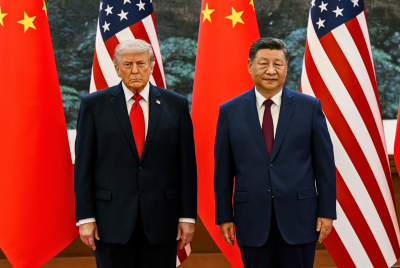
A smiling photo-op in Beijing masked a far starker message from Xi Jinping to Donald Trump: get Taiwan wrong and the world's two biggest powers could collide.

World War 3 fears were thrust back into the spotlight in Beijing this week, as Chinese President Xi Jinping warned Donald Trump that the United States and China could face 'clashes and even conflicts' over Taiwan if the issue is mishandled, according to China's foreign ministry and state media reports.
Trump arrived in China for a three-day visit heavy on pageantry but light, so far, on concrete policy breakthroughs. The US president, who has frequently praised Xi in public, held a private two-hour meeting with the Chinese leader at the Great Hall of the People, with trade, regional security and Taiwan all on the agenda. The talks unfolded against a backdrop of ongoing tensions over US arms sales to Taipei, frictions over Iran and trade rows that have repeatedly strained relations between the world's two biggest economies.

Xi's Stark Taiwan Message Fuels World War 3 Anxiety
Xi used the meeting to restate Beijing's long-standing position that Taiwan sits at the heart of its relationship with Washington. In a statement relayed by foreign ministry spokesperson Mao Ning and cited by state-linked outlets, Xi characterised the 'Taiwan question' as 'the most important issue in China-US relations.'
The warning was blunt. If handled properly, Xi argued, the relationship could remain broadly stable. If not, Mao quoted him as saying, the two powers risked 'clashes and even conflicts, putting the entire relationship in great jeopardy.'
It is that phrase that has triggered fresh 'World War 3' talk among anxious observers, not least because it comes at a moment when war in Europe and the Middle East has already reshaped global security assumptions. Beijing's choice to frame the danger so starkly looks calculated rather than careless. China has been increasingly vocal about its anger over US plans to supply Taiwan with advanced weaponry, and Xi's comments fit a pattern of escalating rhetorical pressure.
BREAKING: 🇨🇳🇺🇸 Xi’s Direct Warning to Trump Over Taiwan Leaves World Guessing What Happened Behind Closed Doors ⚠️👀 pic.twitter.com/5TaYn3jeS6
— World War 3 (@Worldwar_3_) May 16, 2026
Trump, by contrast, leaned on flattery and optimism in his public remarks before the closed-door session began. 'You're a great leader. Sometimes people don't like me saying it, but I say it anyway, because it's true,' he told Xi, before adding, 'It's an honour to be with you. It's an honour to be your friend.' He went on to predict that 'the relationship between China and the USA is going to be better than ever before.'
The gap between the two men's messaging was telling. While Trump cast the meeting as a personal rapprochement, Xi adopted a more sober tone. He questioned whether Washington and Beijing could avoid what he called the 'Thucydides Trap' and 'forge a new model for relations between major powers.' The phrase, borrowed from foreign policy circles, refers to the idea that when a rising power challenges an established one, military conflict has historically been the rule rather than the exception.

Taiwan, Arms Sales and Shadow of World War 3
Xi's focus on the 'Trap' was not new. He has been invoking the concept in relation to the US-China rivalry since at least 2014. This time, though, he linked it directly to Taiwan and the risk of confrontation. 'Cooperation benefits both sides, while confrontation harms both,' Xi said, stressing his view that Washington and Beijing 'should be partners rather than rivals.'
Behind the rhetoric sits a specific grievance. Chinese officials have repeatedly criticised a US proposal to sell arms to Taiwan, a package reported at around $11 billion and approved under the Trump administration, although deliveries have yet to begin. Beijing sees any foreign military support for the island as an intolerable challenge to its claim of sovereignty. Washington, in turn, presents arms sales as part of a broader commitment to help Taiwan defend itself.
Trump's own stance on Taiwan has often been ambiguous, and that ambiguity is part of what unsettles analysts. During his time in office he approved significant weapons deals and bolstered ties with Taipei, yet he also signalled at various points that support might be a bargaining chip in wider talks with China. The current visit has not resolved that contradiction, and there is no sign from the Chinese readout that Xi came away reassured.
The choreography around the summit only sharpened the contrast. While cameras captured lavish welcomes and carefully staged images of cordiality, Chinese state messaging emphasised risks and red lines. Reports in Chinese media even dwelt on Trump's new Chinese nickname, noted for its unflattering translation, a small but pointed reminder that admiration has hardly been unanimous on the other side of the Pacific.
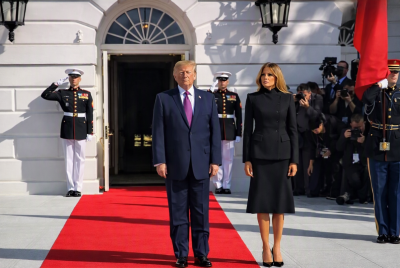
Adding an extra layer of intrigue, Trump's trip followed reports of a 'mystery blonde' seen accompanying him in China amid separate coverage of Melania Trump's reported distress, although no official explanation has been offered. It was an odd subplot to a visit otherwise dominated by questions that could shape the balance of power in Asia for decades.
For all the noise about World War 3, nothing in the official statements suggests that war is imminent, and there is no confirmation of any concrete military escalation tied directly to the talks. The warnings from Xi and the reassurances from Trump sit, for now, in the realm of political signalling rather than immediate crisis. Still, when the leader of a rising superpower openly speaks of 'clashes and even conflicts' with the United States, the margin for miscalculation suddenly feels thinner, and the costs of getting Taiwan wrong that much harder to ignore.
© Copyright IBTimes 2026. All rights reserved.
- Recommended For You