Andrew, Fergie's Marriage Branded A 'Myth' As Ex-Prince Slept With 12 Women In First Year: Royal Expert
Exploring the claims of affairs and convenience in Andrew and Fergie's marriage.

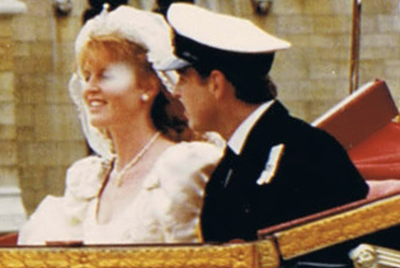
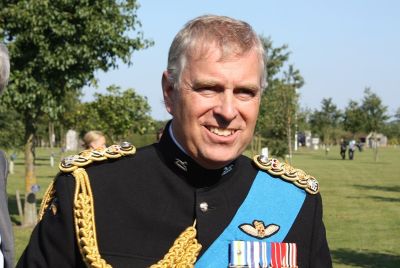
Andrew, Fergie have been cast once again as a marriage built on convenience rather than romance, after royal biographer Andrew Lownie said the pair were both having affairs during their time together and that the public image of a conventional royal couple was a 'myth.' The claims, drawn from his book Entitled: The Rise and Fall of the House of York, focus on the former Prince Andrew and Sarah Ferguson's marriage, which began in 1986 and ended in divorce in 1996.
The news came after renewed attention on the couple's long and awkwardly persistent proximity, years after their split and amid the continuing fallout from Andrew's ties to Jeffrey Epstein. King Charles III stripped Andrew of his remaining titles and royal style in October 2025, a move later formalised in the official record, and Sarah Ferguson has also been adjusting to life away from Royal Lodge as the household arrangement that once looked peculiar now looks, in royal terms, almost inevitable.
Andrew, Fergie And The Marriage Claims
Lownie's account presents a highly critical assessment of the marriage. In interviews connected to the book, he alleged that Andrew had relationships with 'more than a dozen women' during the first year of the marriage and portrayed the couple as maintaining the appearance of a conventional family life while largely leading separate private lives.
These claims are based on the author's research and interpretation and have not been publicly confirmed by the Royal Household. As is customary, the Palace has not commented on the allegations, leaving them unverified and open to public debate.
Ex-Prince Andrew and Sarah Ferguson Were Both 'Having Affairs' During Their Marriage, Author Claims: 'A Lot of the Romance Had Gone' https://t.co/Pwu1L6pBQF pic.twitter.com/52UN2uf4Jr
— OK! Magazine USA (@OKMagazine) May 28, 2026
Lownie told Fox News that Andrew liked 'the comfort of being a married man with a family' while also living as a 'playboy,' adding that he 'got the best of both worlds.' It is the kind of line that lands because it is economical and ugly in equal measure.
On Andrew's side of the ledger, the book portrays a man who was away frequently as a naval officer. On Ferguson's side, it depicts a wife left in what Lownie described as the role of a 'shore widow.' The language is his, not the palace's, and that distinction matters.
Andrew, Fergie And Separate Lives
Where the story gets messier is in the way the marriage supposedly functioned at home. According to Lownie, Andrew was aware of Ferguson's affairs and was 'generous' about them, even allowing romantic partners to visit the family home.
The book says he would sometimes dine alone on a tray in his study while Ferguson ate elsewhere with a lover. If true, it is the sort of detail that changes a royal marriage from private disappointment into something colder and more transactional. If untrue, it is the sort of detail that will follow both names around for a long time anyway.
Royal author Andrew Lownie dubs former Prince Andrew and Sarah Ferguson 'Bonnie and Clyde,' claiming their decades-long post-divorce living arrangement masked a partnership built on scandal and loyalty.
— Fox News Entertainment (@FoxNewsEnt) May 28, 2026
As Epstein fallout stripped Andrew of his titles and forced the pair from… pic.twitter.com/p94mLq2rdU
Lownie went further, calling Andrew and Ferguson the 'Bonnie and Clyde' of the royal family and arguing that the relationship survived less because of romance than because each had something to gain from the other. He said Ferguson's royal status helped her commercially, while Andrew retained what he saw as sentimental loyalty to her.
That may sound theatrical, but the odd thing about many royal marriages is that they often do end up looking like arrangements, especially once the fairy tale is long gone and the invoices are still arriving.
Andrew, Fergie After Divorce
What makes the Andrew, Fergie story persist is that divorce never really meant separation. They formally split in 1996, yet continued to live together at Royal Lodge in Windsor for years afterwards, a fact that fed decades of fascination and made their relationship look less like a broken marriage than a long, peculiar truce.
Even now, the arrangement has become part of the lore around both of them. It has also become harder to romanticise since Andrew's public disgrace deepened.
The royal fallout changed everything. Andrew's links to Epstein destroyed what remained of his once-playful public image, and the stripping of his titles last year left him known simply as Andrew Mountbatten-Windsor.
Representatives for Andrew have generally declined to engage with biographical claims, and the Palace keeps to its standard refusal to comment on unofficial books. That silence creates a vacuum, and biographies rush straight into it with their own version of events.
None of this means the book has been accepted as fact in every respect. Other claims in Entitled, including an allegation that Prince Harry fought Andrew, were strongly denied by Harry's legal team as 'gross inaccuracies.'
So the reader is left where most royal readers are left these days, somewhere between documentation and dramatisation, with enough smoke to suggest a fire but not always enough proof to say where it began. For Andrew and Ferguson, though, the central image is already fixed. It is not a love story. It is something more brittle, and a good deal less flattering.
© Copyright IBTimes 2026. All rights reserved.
- Recommended For You