Donald Trump's Shocking Air Force One 'Treason' Threat Reportedly Proves His War Delusions Are Worsening
The President explicitly admits he ignores the economic toll on ordinary families while defending his personal military record.


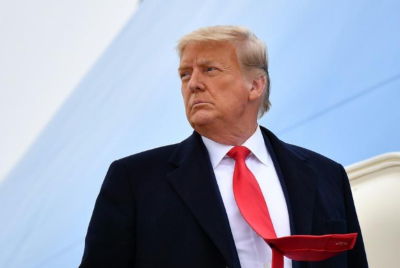
President Donald Trump has triggered a fierce diplomatic and media storm following an aggressive Air Force One outburst directed at journalists reporting on the Middle East.
The commander-in-chief accused a veteran White House correspondent of committing treason during a volatile press briefing regarding the ongoing US-Iran conflict.
The exchange has ignited intense national debate over executive transparency and the constitutional protections governing the free press. Critics are expressing deep alarm over the administration's stated refusal to consider how the widening military campaign impacts domestic inflation and Middle East energy costs.
As fuel prices climb rapidly nationwide, political opponents claim the executive branch remains entirely detached from the daily realities of working families. The high-profile confrontation highlights the growing institutional friction surrounding America's current foreign policy trajectory.
Trump to NYT's David Sanger: "I had a total military victory. But the fake news, guys like you, write incorrectly. You're a fake guy. We had a total military victory. I actually think it's sort of treasonous what you write. You should be ashamed of yourself. I actually think it's… pic.twitter.com/QK421YHKtq
— Aaron Rupar (@atrupar) May 15, 2026
David Sanger New York Times Clash Defends First Amendment Responsibility
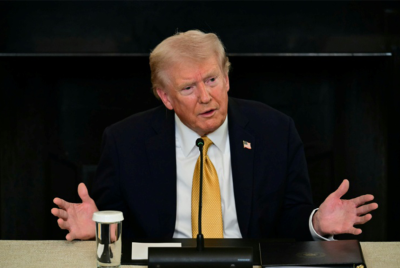
The intense confrontation unfolded when David Sanger, a New York Times reporter, questioned the president on the long-term effectiveness of his military strategy. The president rejected the journalistic scrutiny, claiming exclusive personal credit for regional operational outcomes.
'I had a total military victory,' he said. 'But the fake news, guys like you, write incorrectly. You're a fake guy. We had a total military victory. I actually think it's sort of treasonous what you write. You should be ashamed of yourself. I actually think it's treason.'
"Reporting is not treason," @SangerNYT says after Trump attacked him for his coverage of the Iran war. pic.twitter.com/FWlQFsaiyP
— Kaitlan Collins (@kaitlancollins) May 16, 2026
Sanger disputed Trump's assertions, stressing that reporting is not treason. 'You've been on the receiving end of these probably more than I have, and we all know what this is about,' he told CNN's Kaitlan Collins. 'It is an effort to intimidate news organisations into not doing the reporting, but reporting is the fundamental First Amendment responsibility that we have to go about.'
Did Trump Claim the Iran 'Victory' All for Himself?
The remark landed with extra force because Trump did not say it was a collective victory of the US, instead framing it as a personal achievement. Critics claim that his choice of words is consistent with his approach to politics, and especially his view of the Iran conflict.
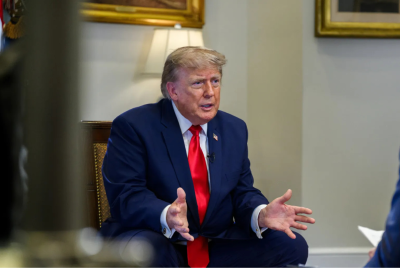
The claim also put Trump's previous statement on Iran in perspective. Speaking to White House correspondents, he said he doesn't consider Americans' financial difficulties as a motivation to end the Iran conflict.
Trump on Iran War:
— Acyn (@Acyn) May 12, 2026
Reporter: What extent are Americans’ financial situation motivating you to make a deal?
Trump: Not even a little bit. I don't think about Americans’ financial situation pic.twitter.com/TJ94pGpqD8
'Not even a little bit,' he stressed. 'The only thing that matters when I'm talking about Iran, they can't have a nuclear weapon. I don't think about Americans' financial situation. I don't think about anybody. I think about one thing: We cannot let Iran have a nuclear weapon. That's all. That's the only thing that motivates me.'
Critics Slam Trump's Apathy Towards Americans' Worries
'It was a stunning admission even for Mr. Trump, who has spent weeks downplaying the economic toll the war has taken on the country,' said Erica L. Green of The New York Times. 'The Labour Department reported on Tuesday that last month, inflation in the United States accelerated at its fastest rate since May 2023, driven by energy costs caused by the war in the Middle East.'
'Since Mr. Trump began the war in Iran in February, gas prices have surged past $4.50 a gallon — hitting the lowest-income Americans the hardest — compounding an already persistent cost-of-living crisis that has caused even his supporters to increasingly sour on his economic record,' she added.
Long-Term Impacts of Trump's Approach to Iran Conflict
Other critics claim that's telling of Trump's apathy about the broader context of the Iran conflict, which has impacted Americans through rising food and fuel prices. Raw Story asserts these consequences will persist even if fighting ends, because oil prices are shaped globally and the region's energy infrastructure has been badly damaged.
Trump's long-term energy plans also raise concern, as he allegedly intends to delay the transition away from fossil fuels toward renewable energy. Critics assert that he favours oil and gas subsidies while cutting support for renewables, even as wind, solar, biomass, and battery storage present feasible alternatives.
The outlet also cited US-Iran relations under previous administrations, arguing that the US was closer to containing Tehran's nuclear ambitions when Iran was still bound by the nuclear deal negotiated under Barack Obama. Trump's withdrawal from that agreement allegedly helped create a more dangerous environment, one that may have spurred Iran's current leadership to develop nuclear weapons.
© Copyright IBTimes 2026. All rights reserved.
- Recommended For You