Trump Says Planned 250-Foot Washington Arch Will Double as Drone and Sniper Military Complex
The proposed monument near the Lincoln Memorial and Arlington National Cemetery faces objections over aviation safety, presidential authority and damage to a historic landscape
President Donald Trump says a planned 250-foot triumphal arch in Washington DC will double as a military facility, with space to store and deploy drones and positions for snipers, after what he called the 'strong request' of the US military. Announcing the changes on Truth Social, he said the additions were driven by national security considerations.
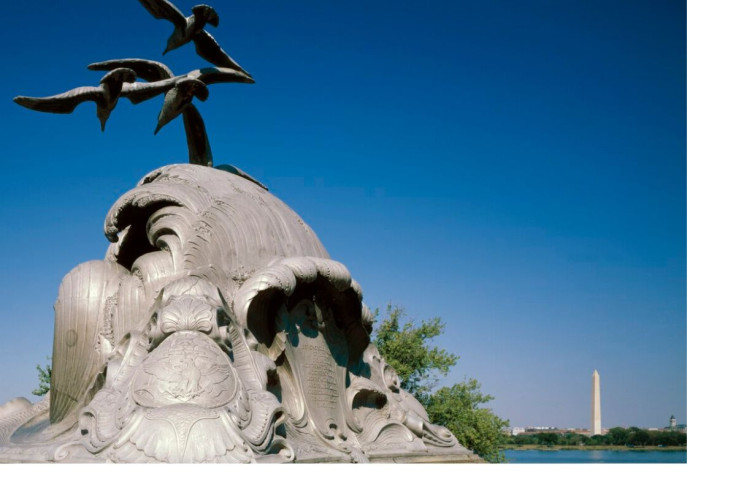
The arch is planned for Memorial Circle in Lady Bird Johnson Park, along the route connecting the Lincoln Memorial with Arlington National Cemetery. The Pentagon said it had no further details beyond Trump's post, while the White House declined to comment.
Lawmakers warn that operating military drones directly along Reagan National Airport's flight path poses air safety risks. Vietnam veterans also argue the president lacks authority to construct the monument, claiming it defaces the historic landscape surrounding Arlington National Cemetery.
Democrat Calls Drone Site 'Dangerous' Near Airport
The proposal has drawn criticism from US Representative Don Beyer, a Virginia Democrat. Beyer objected to the planned drone site because of its location near Ronald Reagan Washington National Airport. He said the proposed launch site would be dangerous and unworkable because it would sit in the airport's flight approach path.
The arch is the second major Washington construction project Trump has described in military terms. He previously referred to a planned $400 million expansion of the White House ballroom as an underground 'military complex'. The scale of the proposed arch would make it a major new feature of the capital's skyline.
Towering Arch Would Dominate Capital Skyline
A preliminary National Park Service report puts the total height at about 250 feet. The main structure would rise roughly 166 feet, with statuary and other elements making up the remaining height.
The arch would have a 91‑foot by 166‑foot footprint and a 55‑foot‑wide central opening. Inside, there would be 70,072 gross square feet spread across five occupiable levels.
An observation deck at 161 feet 6 inches would include about 9,812 square feet of exterior space. That would make the arch more than twice the height of the 99‑foot Lincoln Memorial and roughly half the height of the Washington Monument.
Plans call for granite from Vermont, North Carolina or California, with black granite paving and bronze, antique bronze and gold statuary. Among the proposed features are a winged crown figure, golden eagles and golden lions.
Lawsuit Argues President Lacks Authority to Build
The project is also facing a legal challenge from three Vietnam War veterans and an architectural historian.
Their lawsuit argues that the president cannot build a major monument in the capital without congressional authorisation. It also claims the arch would damage the grounds of Arlington National Cemetery and interfere with the historic vista between the cemetery and the Lincoln Memorial.
The lawsuit says the sightline was deliberately designed after the Civil War to symbolise the country coming back together. US District Court Judge Tanya Chutkan has ordered the administration to give 48 hours' notice before construction or excavation begins.
Park Service Flags Historic and Environmental Concerns
The National Park Service has raised its own concerns about the design. It warned that the project could have an adverse impact on historic properties, including the Memorial Avenue Corridor Cultural Landscape and Arlington Memorial Bridge.
The project would add about 62,875 square feet of impervious surface. To manage the resulting stormwater, around 6,300 cubic feet would need to be retained on site through bioretention rain gardens. There are also archaeological concerns.
An assessment found moderate‑to‑high sensitivity for intact precolonial and historic remains beneath 10 to 14 feet of fill. New water, sewer, electric and gas lines would also have to be extended across nearby roads and bridges.
Despite the concerns about the airport, the Federal Aviation Administration found that the arch would not create a hazard for aircraft.
The FAA also concluded that it would have no significant effect on flight procedures or navigational aids. It did, however, require obstruction lighting at the top of the structure. Earlier site and visual designs had received approval from the Commission of Fine Arts and the National Capital Planning Commission.
Visitors Would Face Airport-Style Security Screening
The exterior plaza would remain open to the public under the NPS plans, while access to the interior would use timed entry, similar to the system at the Washington Monument. Visitors would face security screening, including walk‑through magnetometers, X‑ray equipment and explosive trace detection.
The planned system is expected to process about 20 people every 15 minutes, making security the main potential bottleneck for visitors. Vehicles would be kept out of the plaza except for authorised maintenance, law enforcement and emergency access. Bollards, a barricade seat wall and continuous video surveillance are also planned around the site.
© Copyright IBTimes 2026. All rights reserved.
- Recommended For You