

America Faces a Huge 'Tsunami' of Church Closures as Pastors Note 'Pews Are Getting Emptier' Fast
PBS series Christianity at a Crossroads examines declining attendance, lost community services and changing congregations
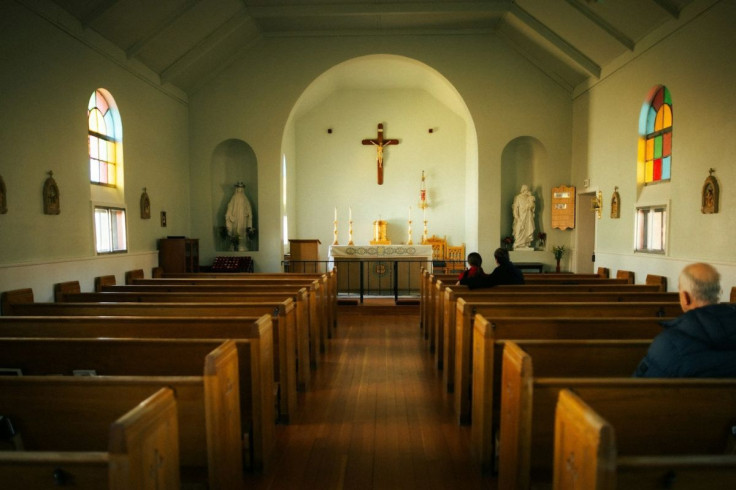
An estimated 100,000 churches across America could close or be repurposed over a decade, according to an expert forecast examined in the four-part PBS documentary series Christianity at a Crossroads.
The series features Belding United Methodist Church in Michigan, where the Rev. Melissa Wagner announced in summer 2024 that dwindling membership would force the congregation to close. About 12 elderly members occupied a sanctuary built for 1,000 people. There was no choir, organist or gathering of young families.
'You are still the church,' Wagner told worshippers. 'And while where you worship will change, the one you worship does not.'
Church Closings Reach Beyond the Pews
The documentary examines what communities stand to lose when congregations disappear, including services relied upon by people who do not attend church.
The Rev. Jacqueline J. Lewis, senior pastor at Middle Church in New York City, describes that wider role in the film. 'In so many neighborhoods, the church is the food pantry, the immigration station,' she states. 'This is the place that is (there) for the outsider, the stranger.'
The series describes most American churches as 'engines of social good'. Studies cited in the supplied reporting associate regular church attendance with greater charitable giving, political participation and membership of civic groups.
For congregations themselves, declining attendance also means declining income. One pastor quoted in the reporting described the pressure as 'Every year the pews are getting emptier and the collection plates getting lighter.'
Signs of Recovery Amid Church Closings
Christianity remains America's dominant religion. Pew Research figures cited in the reporting indicate that about 62% of US adults identify as Christian, while the series estimates that 30% of Americans, about 100 million people, attend church weekly.
The documentary examines a decline in attendance dating to around the 1960s, discussing reduced trust in institutions, disputes over homosexuality, clergy sex-abuse scandals and the rise of people describing their religious beliefs as 'nothing in particular'.
There are also signs of recovery. A Hartford Institute for Religion Research study recorded the first increase in in-person US worship attendance in 25 years, alongside greater giving and volunteering.
However, the same study concluded that there would be no return to the mid-20th century, when almost half of Americans routinely attended a church, synagogue or mosque.
The series highlights growing congregations, including Korean Central Presbyterian Church in Northern Virginia. Alfred Street Baptist Church in Alexandria, Virginia, has about 10,000 members, according to the supplied reporting. Filmmaker Martin Doblmeier, founder and president of Journey Films, told CNN it also attracts about 15,000 online viewers.
Worship Continues After Church Closings
At Christ Congregational Church in Silver Spring, Maryland, membership had fallen below 100 while insurance and maintenance for the sanctuary cost about $400,000 annually.
Senior pastor the Rev. Matt Braddock told CNN that financial pressures contributed to a migraine lasting six months. He described how the congregation closed its building and moved into another church's basement.
Braddock reported that savings enabled staff recruitment, membership stabilised, and pledges were strong. His headache had also disappeared.
Elsewhere, the Church Project in Texas primarily meets in members' homes. The Church of the Nativity in suburban Baltimore draws about 800 children and young people to Sunday services.
Braddock questioned whether congregations should define their vitality through size. 'People can get together for other reasons,' he states, 'but there's something important to people with similar spiritual questions and hungers getting together and finding meaning. That doesn't go away. Having vitality doesn't mean numerical growth. Churches can still be full of life without having to be megachurches.'
© Copyright IBTimes 2026. All rights reserved.