US House Votes to Kill the Penny for Good – Here's What It Means for Your Cash Purchases
The penny now costs 3.69 cents to produce, over three times its face value, prompting Congress to push to end circulating coins

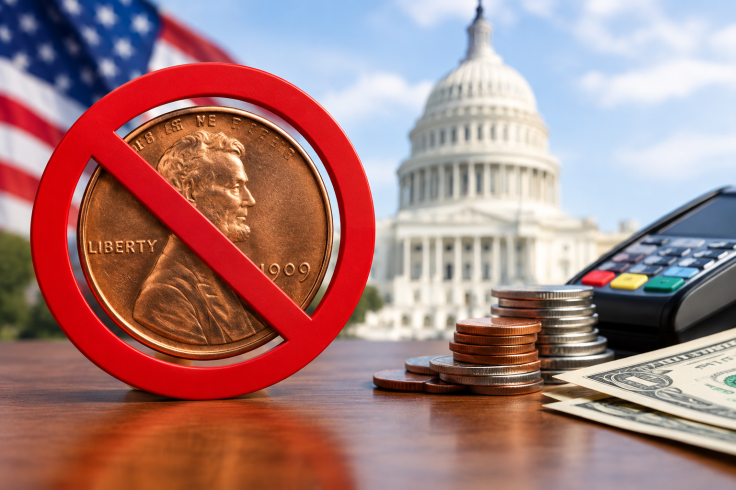
For more than two centuries, the American penny has passed through countless hands. It has been dropped into jars, left on shop counters, and counted out at cash registers. Now its days as a working part of US commerce could be numbered.
The House of Representatives has unanimously approved legislation designed to permanently end production of the one-cent coin for general circulation and establish a federal framework for rounding cash payments to the nearest five cents. The move comes after the US Mint already stopped producing circulating pennies in November 2025, ending a 232-year production run. Existing pennies, however, remain legal tender.
Why the Penny Is Being Phased Out
The argument behind the change is largely economic. According to the US Treasury, producing a penny had become far more expensive than its face value. The department said the cost had reached 3.69 cents for each one-cent coin.
The Treasury estimated that ending penny production would provide about $56 million in immediate annual savings in material costs. The US Mint's decision to stop making circulating pennies in 2025 was therefore not the result of the coins suddenly becoming worthless. It reflected the growing cost of manufacturing a denomination worth only one cent. The latest legislation would give that policy a permanent legal foundation.
What Will Happen at the Cash Register?
For consumers, the most noticeable change would come when paying with cash. The legislation establishes a rounding system for cash transactions when the final total cannot be settled exactly because pennies are unavailable. Amounts ending in one, two, six or seven cents would be rounded down to the nearest five cents. Amounts ending in three, four, eight or nine cents would be rounded up.
So a cash bill of $10.02 could become $10.00, while a total of $10.04 could become $10.05. The rounding would apply to the final transaction total rather than each individual item. Electronic payments would not need the same treatment because cards and other digital payment systems can process amounts to the exact cent. That distinction means the change would be most visible to people who still use cash.
Your Pennies Will Still Spend
The legislation does not make existing pennies worthless. Pennies already in circulation will remain legal tender. Americans can continue to use them for purchases or deposit them with financial institutions. The US Mint has also made clear that ending circulating production does not remove the coin's legal-tender status.
That means there is no deadline for Americans to empty their coin jars. Instead, the supply of pennies is expected to decline gradually as existing coins are lost, saved or removed from everyday use. The change also does not mean that no pennies can ever be produced again. The legislation permits limited production for collectors.
A Change That Began Before the Vote
Congress is effectively trying to put a permanent legal framework around a transition that has already begun.The Mint struck its final circulating penny in November 2025 after 232 years of production. The coin carried the image of Abraham Lincoln and had become one of the most familiar pieces of American currency.
The House had previously approved the Common Cents Act in July 2026, while the Senate subsequently passed its version in August. The latest House action clears the way for the legislation following the congressional process. The bill was led by Republican Representative Lisa McClain of Michigan and Democratic Representative Robert Garcia of California, giving the penny's phase-out bipartisan backing.
Nickels Face Their Own Cost Problem
The legislation also looks beyond the penny. It would give the US Mint greater flexibility to use cheaper materials when producing nickels. That matters because the five-cent coin also costs more than its face value to manufacture.
The aim is therefore broader than simply removing the penny. Congress is also looking at how the US coin system can reduce manufacturing costs. The legislation would additionally require the Treasury to examine how the new system affects groups including low-income Americans, older consumers and people who rely heavily on cash.
The End of an American Habit
The penny will not disappear from American life overnight. Millions of existing coins can continue circulating, and they will remain legal tender. But if the legislation takes effect, the United States will have formally committed to a monetary system in which the smallest circulating denomination is no longer needed for ordinary cash transactions.
For Americans accustomed to counting pennies at the checkout, the difference may seem tiny. But for a coin that has been part of US commerce for 232 years, its final disappearance from everyday transactions would mark a significant change in a very familiar piece of American life.
© Copyright IBTimes 2026. All rights reserved.
- Recommended For You