Here's Why Nancy Guthrie's Age and Health Point to Tragic 'No-Body' Case
A frail grandmother vanishes from her desert home, leaving behind blood, questions and a family caught between faith and the hard logic of a no‑body murder case.

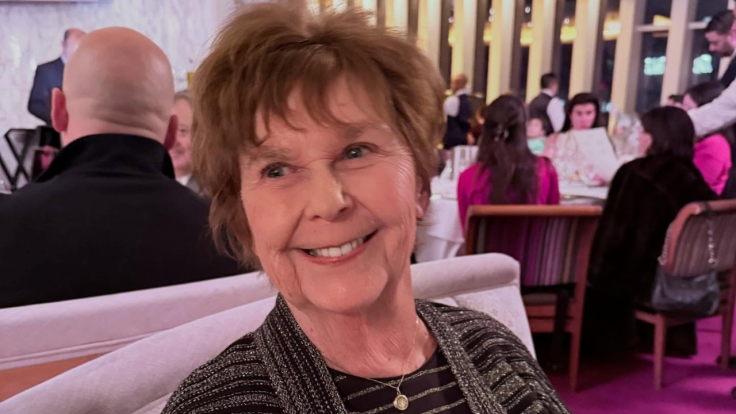
Nancy Guthrie, the 84‑year‑old mother of Today show host Savannah Guthrie, is now being treated by one leading expert as the victim of a likely 'no‑body homicide,' rather than a simple missing person, after she vanished from her Tucson, Arizona, home on 31 January. Morgan Wright, CEO of the National Center for Open and Unsolved Cases, told US channel NewsNation that Nancy's age, fragile health and apparent signs of violence in her house mean investigators should assume she is dead unless compelling evidence suggests otherwise.
For context, Nancy Guthrie was dropped off at her Catalina Foothills home on the evening of 31 January and failed to appear the next morning for a streaming church service, prompting her family to raise the alarm. The case quickly drew national attention, not only because of Savannah Guthrie's public profile, but because detectives in Pima County said early on that they believed the 84‑year‑old had been abducted. The FBI was called in, a reward of up to $1 million was offered by the family, and a search that began as a classic missing persons investigation has steadily taken on a darker tone.
Speaking on Brian Entin Investigates on Thursday 19 March, Wright set out his view bluntly. 'I said at some point you have to realise it's not a missing person anymore,' he told the presenter. In his assessment, investigators can no longer ignore the straightforward facts of Nancy Guthrie's condition: 'We have to realise Nancy was 84 years old [and] cardiac compromised.'
What appears to trouble Wright most is what was allegedly found inside her home. Although full forensic details have not been released, he referred to clear 'signs of a violent encounter.' He stated: 'You're violently confronted at 2:00 in the morning in your own home. We know it's violent because there was blood.'
He then posed the question many detectives will be asking privately, saying the 'one thing' he would want to know is whether there was blood pooled inside the house, something that could suggest a catastrophic injury rather than a minor struggle.
Why Experts Say The Nancy Guthrie Case Looks Like A 'No‑Body' Homicide
Wright's central claim is that the Nancy Guthrie investigation should now be approached as a 'no‑body homicide.' In practical terms, this is more than a grim label. It shifts the focus from finding a missing woman to proving a killing without a recovered body, which alters everything from search patterns to evidential priorities.
'You need to treat this as a no‑body homicide,' Wright argued, suggesting that, instead of simply scouring the area for any trace of Nancy herself, the search should widen to anything that indicates concealment. That could mean disturbed ground, hurriedly covered burial sites or items that look as if they have been discarded along transport routes. None of this has been confirmed by law enforcement and, at this stage, much of the analysis remains speculative. Wright's assessment, while rooted in his investigative experience, is not an official finding and should be taken with a degree of caution.
Even so, he did not sugarcoat his current view of the likelihood of finding Nancy alive. 'The longer this goes on, the more it appears to be a targeted abduction that went wrong,' he said. 'I know nobody wants to hear it, but I'm an investigator. I'd love to say there's hope out there, but in reality, this is a no‑body homicide right now.'
Sheriff's 'Targeted Abduction' Theory Deepens Concern For Nancy Guthrie
Local authorities have, in their own way, been edging towards a similar conclusion about how the Nancy Guthrie case began, if not yet how it might end. Pima County Sheriff Chris Nanos has previously described what happened as a 'targeted abduction,' telling NBC News on 12 March that his team believes the suspect had a specific reason for taking her.
'We believe we know why he did this and we believe that it was targeted,' Nanos said. At the same time, he stopped short of absolute certainty, adding, 'We're not 100 percent sure of that, so it would be silly to tell people, 'Yeah, don't worry about it. You're not his target.'' The sheriff's comments underline the uncomfortable gap between investigative theory and hard proof. No suspect has been named publicly, no charges have been filed, and crucial details of the evidence inside Nancy's home have not been released.
For Savannah Guthrie and the wider family, that limbo is excruciating. The 54‑year‑old broadcaster has used her platform to make repeated televised and social media appeals for her mother's safe return, while the family has put up a reward of up to $1 million for information leading to her recovery. That level of money is both a sign of their desperation and a tacit acknowledgment that someone, somewhere, may know far more than they are currently saying.
What happens next in the Nancy Guthrie case will depend heavily on whether investigators publicly follow Wright's advice and fully reclassify the file as a homicide without a body. That decision, if it comes, would not mean abandoning the search for Nancy, but it would formalise what many experts clearly suspect in private: that an 84‑year‑old woman with cardiac issues, apparently attacked in her own home at 2am, is unlikely to have simply wandered away.
Until there is a body, an arrest or a confession with corroborating evidence, the line between hope and realism in the disappearance of Nancy Guthrie will remain painfully thin.
© Copyright IBTimes 2026. All rights reserved.
- MOST POPULAR IN Trending