White House Pastor Franklin Graham Under Fire Over Claim God 'Raised Trump' To Kill 'Islamic Iranians' For 'Jewish People'
Graham's prayer at the White House draws parallels between Trump and biblical figures, sparking international debate.
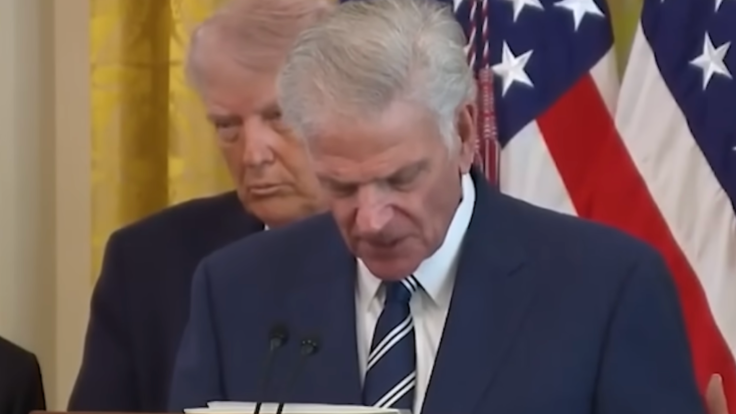
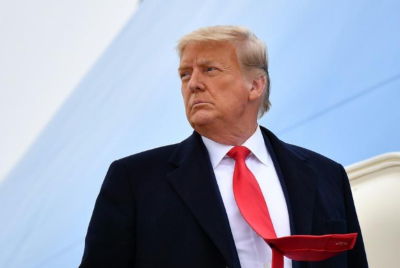
Evangelical leader Franklin Graham sparked immediate backlash after praying at a White House Easter event that God had 'raised up' Donald Trump to defeat Iran's 'Islamic lunatics' on behalf of the Jewish people.
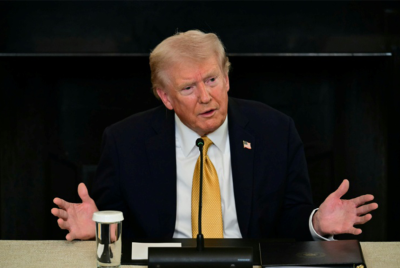
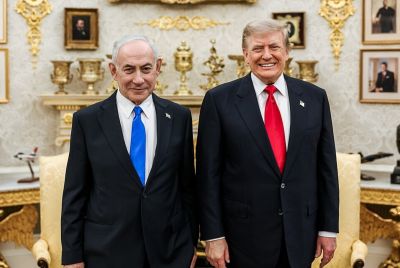
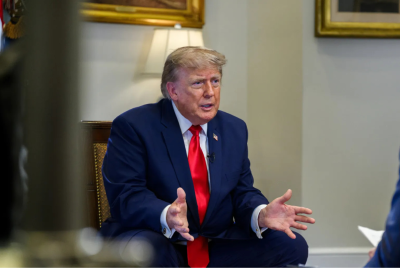
Graham, president and CEO of Samaritan's Purse and the Billy Graham Evangelistic Association, delivered the prayer on 1 April 2026 at a Holy Week lunch held at the White House, where Trump was present alongside a handpicked group of Christian faith leaders.
Drawing directly from the Old Testament Book of Esther, Graham compared the Islamic Republic of Iran to a Persian regime 'wanting to kill every Jew' and cast Trump as a divinely ordained figure called to lead the war.
The prayer, captured on video from a White House livestream that was subsequently removed from the official YouTube channel, drew immediate criticism from commentators across social media and international outlets.
The White House Easter Prayer: What Graham Said, Word for Word
Graham's prayer, delivered at a closed-press event that the White House briefly livestreamed before removing the footage, centred on a biblical parallel between the Book of Esther and the current US-Israeli war on Iran.
'Father, you tell us in the book of Esther that the Persians, the Iranians, were wanting to kill every Jew, woman, child, and to do it all in one day,' Graham said. 'But you raised up Esther to save the Jewish people.'
Graham then moved from scripture to the present. 'Today the Iranians, the wicked regime of this government, wants to kill every Jew and destroy them with an atomic fire,' he continued. 'But you have raised up President Trump. You've raised him up for such a time as this. Father, we pray that you'll give him victory.'
God 'raised Trump' to kill 'Islamic Iranians' for ‘Jewish people’ — top pastors at White House Easter
— RT (@RT_com) April 6, 2026
How Christian of them pic.twitter.com/jfvQhJIDeA
He closed by saying: 'We pray for the people of Iran who want freedom, to be set free from these Islamic lunatics.'
Historians and scholars of the ancient Near East have noted that the equation of Persia with Iran requires context. As France24 reported, the Persian emperor Cyrus the Great, still revered in Iran, was the first world leader to grant freedom to the Jewish people by liberating them from captivity in Babylon. Graham's prayer made no reference to that history.
Graham Defends Remarks on Piers Morgan, Citing King David Against Pope Leo
Graham elaborated on these themes during a Tuesday episode of Piers Morgan Uncensored, recorded around 31 March 2026, where he pushed back against Pope Leo XIV's Palm Sunday homily.
The pontiff had told tens of thousands of worshippers gathered in St Peter's Square on 29 March that 'Jesus is the King of Peace, who rejects war, whom no one can use to justify war', adding directly from Isaiah 1:15: 'He does not listen to the prayers of those who wage war, but rejects them.'
"Who asked you to sacrifice me... I don't want this alliance with you!"
— Piers Morgan Uncensored (@PiersUncensored) March 31, 2026
Former Israeli interim president Avraham Burg responds passionately to Christian Zionism: "Do not interfere with Jewish faith!"
Watch more👇
📺 https://t.co/qY6MaEMw0j
@piersmorgan | @Franklin_Graham pic.twitter.com/Vxic9ad1XK
Graham, who is Protestant and not bound by papal teaching, told Morgan: 'David, King David, he prayed that God would train his hands how to fight his enemies. We know that God does take sides in history, certainly as it relates to biblical history.'
He described the Islamic Republic of Iran as 'a danger to the whole world' and said he hoped for regime change there. 'I want peace, I don't want war,' he said. 'But I do believe, at times, there is justification when you're fighting evil.'
Another guest on the programme, Avraham Burg, who served as interim president of Israel in 2000 and as speaker of the Knesset, offered a direct counter to Graham's invocation of King David. 'He spoke about King David,' Burg said.
'King David, yes, was a warrior, but he explicitly, in the Bible, was not granted to build the temple for the good Lord because, as the prophet Nathan said, your hands are full of blood.' Burg added, in an apparent reference to 1 Chronicles 22:8: 'Bloody warriors are not entitled to build the house of God, the house of peace.'
The Religious Framing of the Iran War and a Pope's Formal Rebuke
Graham's prayer sits within a wider pattern of religious language surrounding the US-Israeli war on Iran, which entered its second month in late March 2026. As France24 reported, Defense Secretary Pete Hegseth has invoked his Christian faith to frame the conflict in explicitly theological terms.
Hegseth's tattoos include a Jerusalem Cross, the Latin phrase 'Deus Vult' (God wills it), a Crusader-era motto, and the Arabic word for 'infidel.' He previously wrote a book titled 'American Crusade' calling for a 'holy war' to rid the United States of the political left.
The Pope's response to this theology was the most direct by any major international religious leader. The full text of his Palm Sunday homily, published by the National Catholic Reporter, shows Leo citing Isaiah 1:15 to argue that God actively rejects the prayers of those who wage war.
The White House's response was light. Press Secretary Karoline Leavitt said it was 'very noble' to pray for troops during wartime.
Kenneth Williams, a former US military chaplain who now teaches at Georgetown University, told France24 that assertions of faith by those in positions of command authority carry institutional risk.
'Someone with command authority asserting a faith perspective in a manner of favoritism, disregarding the diversity of faiths represented in the military and the nation, is at the least disrespectful and careless and at the most an abuse of power,' Williams said.
A White House prayer that turned the Book of Esther into a battlefield theology for the Iran war has done what weeks of diplomatic protest could not: it placed the religious justification for the conflict under formal scrutiny at the highest levels of global Christianity.
© Copyright IBTimes 2026. All rights reserved.
- Recommended For You