US $2B Radar Plane DESTROYED in Saudi Base Attack – Shocking Photos Go Viral
An Iranian drone strike has crippled a Boeing E-3 Sentry and wounded 12 Americans as the regional war escalates

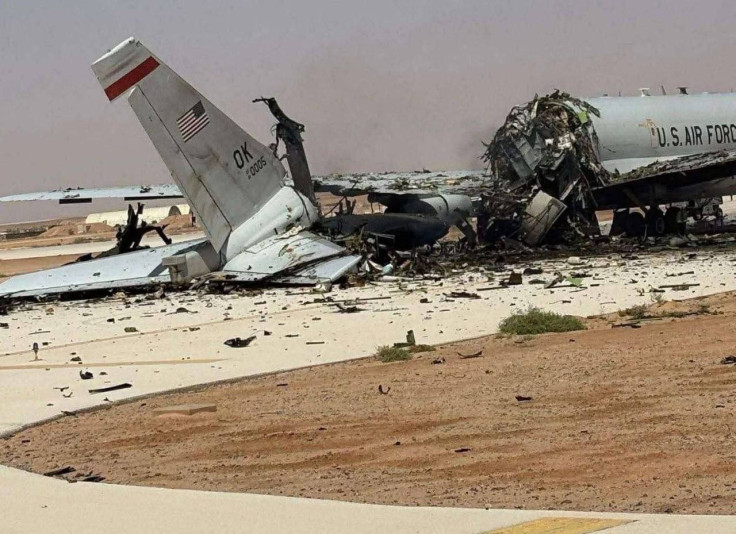
Verified photographs have confirmed an Iranian drone strike destroyed a US Boeing E-3 Sentry radar plane at a Saudi military base.
What the pictures appear to show is nothing short of extraordinary. A US airborne radar jet, worth nearly $2 billion, is seemingly torn apart on the ground. The images show the aircraft lying in two pieces at Prince Sultan Air Base. This incident marks the first combat loss of an Airborne Warning and Control System (AWACS) aircraft.
Reports said 12 US personnel were wounded in the strike, while two of the injured are stated to be in a serious condition.
Satellite imagery confirmed that an Iranian Shahed-136 drone hit the plane on the ground, verifying the location of the wreckage 100 kilometres southeast of Riyadh.
For a machine designed to see threats from hundreds of miles away, its sudden destruction has stunned war analysts.
Viral Photos Reveal Devastating Damage
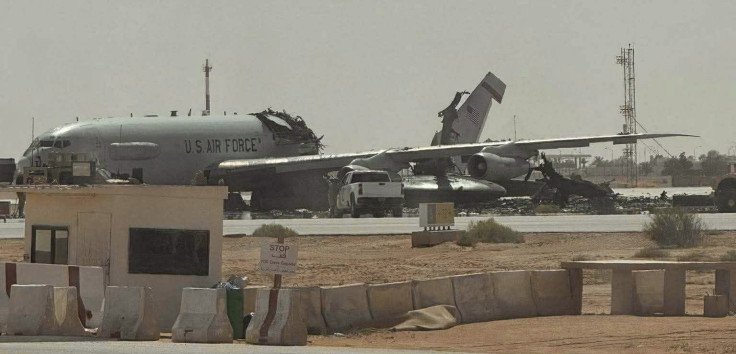
The photographs first appeared online through a Facebook page known for sharing US military news. At first glance, they seemed almost unbelievable. The aircraft in the images appears to be split in two. The massive radar dome atop the fuselage is still visible, yet the plane's body looks catastrophically damaged.
Investigators quickly began checking the authenticity of the images. Analysts compared the background features to satellite imagery. Pylons, storage structures, and ground markings matched those seen at Prince Sultan Air Base in Saudi Arabia. Once these visual clues aligned, the photographs were confirmed as genuine. The viral images suddenly became a major story.
A Strategic Aircraft Reduced To Wreckage
The aircraft involved appears to be a Boeing E-3 Sentry. In military circles, it is one of the most recognisable surveillance aircraft ever built. The E-3 is part of the Airborne Warning and Control System, commonly called AWACS. It is based on a Boeing 707 airliner but fitted with a large rotating radar disc mounted on top of the fuselage.
This radar allows the aircraft to detect other aircraft, missiles, and other threats at extremely long ranges. From high above the battlefield, the plane acts as the eyes and ears of military commanders. It gathers information, tracks targets and directs air operations. Without such aircraft, managing complex air battles becomes far more difficult.
The first E-3 entered service in 1977. Despite its age, it remains a crucial part of US air power and is expected to operate until at least 2035. Seeing one apparently destroyed on the ground is therefore deeply significant.
Drone Strike On Prince Sultan Air Base Breach And Injuries
The base serves as a critical hub for US air operations in the Middle East. The circumstances surrounding the damage remain unclear. US Central Command has not yet publicly commented on the incident. However, earlier reports from US officials indicated that an Iranian military strike targeted the Saudi base. According to Reuters, 12 US personnel were wounded during the attack, with two of them said to be seriously injured.
Iranian state-linked media later claimed that a Shahed drone struck the E-3 aircraft. Other reports suggest that at least two US refuelling aircraft were also damaged during the same incident. Satellite imagery captured shortly after the attack appears to show a fire burning on the base apron roughly 1.6 kilometres from the aircraft's location. Whether this blaze was connected to the same strike remains uncertain.
A Moment That Raises Serious Questions
The loss reduces the active US E-3 fleet to 15 operational aircraft. Ukrainian President Volodymyr Zelenskyy alleged that Russia provided satellite data for the attack. He claimed Russian satellites photographed the base three times in the days leading up to the strike.
Military analysts are now examining the implications. The destruction of such a valuable aircraft is rare. The E-3 platform represents decades of technological investment and strategic capability.
If the aircraft was indeed destroyed by a drone strike, it would highlight the growing threat posed by relatively cheap unmanned systems. Modern warfare is changing quickly. Expensive, sophisticated assets can suddenly become vulnerable to small, agile weapons.
For now, the viral photographs remain a powerful symbol of that reality. A giant radar aircraft built to watch the skies now sits broken on the ground. And the world is watching the fallout unfold.
© Copyright IBTimes 2026. All rights reserved.
- MOST POPULAR IN World