'The Entire Story Was Just a Cover': MeidasTouch Host Challenges Trump's Iran Pilot Rescue Narrative
Ben Meiselas disputes US airman rescue in Iran, hinting at a failed covert mission aimed at nuclear facilities
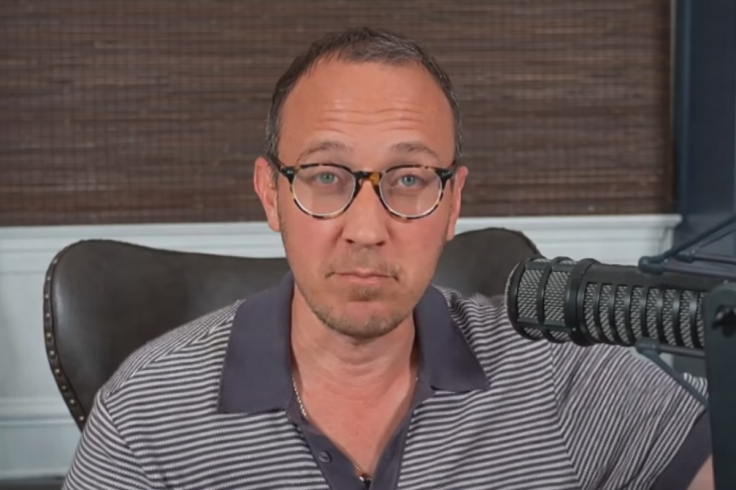
MeidasTouch host and attorney Ben Meiselas has put forward a pointed argument that the widely publicised rescue of a US airman from inside Iran last month was not what the Trump administration claimed it to be. In a recent episode of the MeidasTouch podcast, Meiselas laid out a geographic and logistical case suggesting the operation near Isfahan bore little resemblance to a straightforward combat rescue, raising the possibility that recovering the downed F-15E crew was either a pretext for, or a cover story concealing, a failed covert mission targeting Iran's nuclear stockpile.
His remarks arrived at a moment when the official US account of the April operation has already drawn scrutiny from independent analysts, former military officials and academics on both sides of the Atlantic.
Parachutes and Proximity
Central to Meiselas' argument is the distance between where the F-15E went down and where American forces established a temporary forward base. According to the documented account of the operation, the aircraft came down in Kohgiluyeh and Boyer-Ahmad province in south-western Iran, while the US forward operating base was positioned near Mahyar in Isfahan province — a separation of hundreds of kilometres.
Meiselas said he investigated how far a pilot could realistically travel under a parachute after ejecting, and concluded the distance to Isfahan was simply not plausible. 'When you parachute, you don't go all that far,' he said on his podcast. 'I checked.' He argued that the geographic gap between the crash site and the Isfahan base pointed to a separate objective entirely.
He concluded that US forces most likely attempted to carry out a previously discussed plan to raid the Isfahan nuclear facility, and that the mission collapsed after Iranian forces detected it. 'What probably happened here,' he said, 'was a failed and aborted mission that the Trump regime was talking about before, where they were going to go and invade the Isfahan nuclear facility, and Iran figured it out.'
Absolute bombshell. Prominent host Ben Meiselas confirms the pilot rescue in Iran was a complete CIA coverup.
— Furkan Gözükara (@FurkanGozukara) May 10, 2026
He reveals Trump administration launched a disastrous, secret invasion of the Isfahan nuclear facility that completely failed.
Washington is hiding a massive defeat. pic.twitter.com/UciosDc8CZ
Two Theories, One Conclusion
Meiselas presented two possible readings of the sequence of events. The first holds that two pilots were genuinely shot down and their rescue was subsequently used as justification for a broader ground operation at Isfahan. The second is more sweeping: that 'the entire story was just a cover by the CIA for an invasion of Isfahan's nuclear facility, and then that failed.'
He stopped short of asserting either scenario as confirmed fact, but argued that the scale of the operation — including the reported involvement of over 100 special forces personnel and multiple aircraft and drone assets — was disproportionate to a standard combat rescue.
Analysts Raise the Same Questions
Meiselas is far from alone in questioning the official narrative. Writing on X, Arash Reisinezhad, a visiting assistant professor at Tufts University's Fletcher School and a visiting fellow at the London School of Economics' Middle East Centre, stated that 'emerging evidence suggests that US operations south of Isfahan were unrelated to any pilot rescue mission,' adding that the deployment pattern pointed instead to 'a failed heliborne insertion aimed at locating uranium within Iran.'
Isfahan's strategic significance in the context of Iran's nuclear programme is well documented. IAEA Director General Rafael Grossi told reporters in Paris in March 2026 that the agency believed the city's tunnel complex held just over 200 kilograms of uranium enriched to 60% purity — a level regarded as a short technical step from weapons-grade — and that the material was in all likelihood still there. A subsequent AP interview with Grossi in late April reaffirmed that position, with the IAEA estimating Iran's total stockpile at that enrichment level stood at roughly 440 kilograms — enough, Grossi had previously warned, for as many as ten nuclear weapons should Tehran choose to weaponise its programme.
Iran's own foreign ministry described the American operation as 'a deception operation to steal enriched uranium,' a characterisation Tehran has maintained consistently since the wreckage of US aircraft was displayed publicly near the city.
The Trump administration still hasn't revealed the identity of the two downed F-15 pilots rescued in Iran leading many to wonder if the White House's narrative of the rescue was accurate. If it was, we would have seen Trump feeting them and awarding them medals in the White… https://t.co/v2TIE7GNS6
— David Pyne 🇺🇸 (@AmericaFirstCon) May 10, 2026
Washington's Account Holds Firm
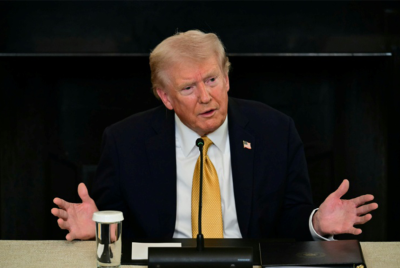
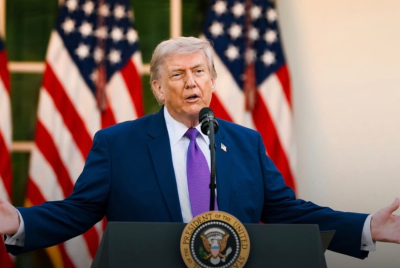
The Trump administration has not wavered from its position that recovering the downed airmen was the operation's sole purpose. At a White House press conference on 6 April, Trump and Defence Secretary Pete Hegseth both praised the mission alongside Joint Chiefs Chairman General Dan Caine, with Trump stating that US forces would do 'whatever was necessary to bring our brave warriors back home.'
The Pentagon confirmed that two MC-130J aircraft were deliberately destroyed on the ground after becoming immobilised in what Trump described as 'sandy, wet sand' at the improvised airstrip — characterising it as 'a farm, not a runway.' However, that explanation drew public scepticism from retired US Army lieutenant colonel and Green Beret Anthony Aguilar, who said he had 'seen MC-130Js plow through dirt, mud, snow, gravel' and doubted the sand explanation, suggesting instead the aircraft had taken hits from Iranian fire on entry.
The questions surrounding the Isfahan operation carry implications well beyond a single military mission. If American forces did attempt to seize or destroy Iranian nuclear material under the cover of a rescue operation, it would represent one of the most significant covert military actions in recent history — and one that, by most accounts, did not succeed. The gap between the official narrative and what independent analysts, academics and now prominent media figures are arguing in public continues to widen, and Washington has yet to offer a detailed response to the geographic inconsistencies at the heart of the story.
© Copyright IBTimes 2026. All rights reserved.
- Recommended For You