

Prominent Doctor Accuses Mitch McConnell's Staff of 'Elder Abuse' Over Bogus Senate Return Claims
Concerns Raised Over Political Messaging vs Medical Reality in McConnell's Rehabilitation
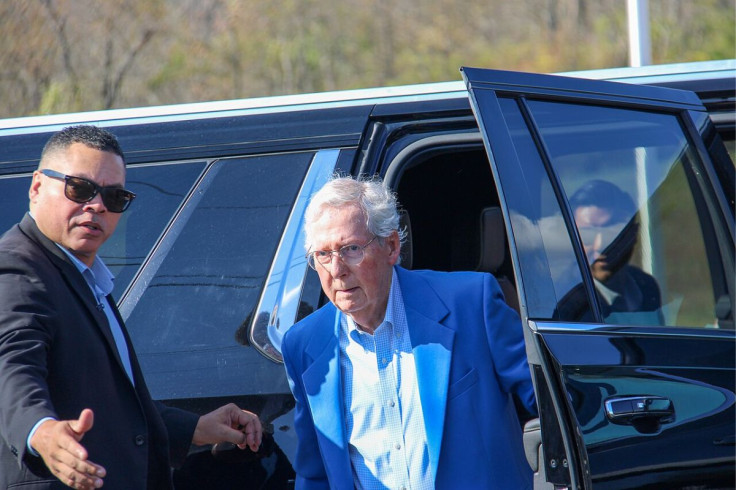
A prominent vascular surgeon has accused Mitch McConnell's staff of subjecting the veteran senator to 'elder abuse' by portraying his return to the Senate as imminent despite his physicians saying he has not yet been medically cleared to leave rehabilitation. Dr Anahita Dua argues the public messaging surrounding the 84-year-old Republican's recovery risks creating unrealistic expectations that conflict with the realities of frailty rehabilitation.
The criticism follows statements from McConnell's office saying the former Senate Republican leader is working towards returning to Washington 'soon', even as the Office of the Attending Physician confirmed he remains in a rehabilitation facility and has not yet been cleared to resume his Senate duties. Dua says that disconnect raises concerns that political messaging is moving ahead of medical reality.
Medical Reality vs Political Messaging
In a statement released on Monday, McConnell's office said the senator was continuing 'a strenuous course of physical therapy and rehabilitation' and remained focused on returning to work as quickly as possible.
Dua said that message risks giving the public an unrealistic picture of what recovery typically involves for an older patient following a serious fall and an extended stay in rehabilitation.
'Rehab for frailty, where you need to learn to walk and stuff again, it takes time to build up strength, is in months. That's how long it takes,' she said. 'Months of exercises and constant rehab, sometimes up to three hours, four hours of rehab a day.'
Her concern is not that McConnell wants to return to the Senate, but that public statements appear to suggest a timeline not reflected in the official medical update.
'Ridiculous Expectation'
Dua questioned whether expectations surrounding McConnell's return were appropriate given his condition.
'Why are we having this ridiculous expectation of him, and why is he portraying this ridiculous expectation that he's gonna get back to it?' she asked.
The Office of the Attending Physician says that McConnell is "not yet medically cleared to leave the rehab facility and return to the office." https://t.co/HObfrDbfRr pic.twitter.com/rioT1AqDiz
— Action News on 6abc (@6abc) July 27, 2026
She argued that rehabilitation should remain the priority rather than creating pressure to demonstrate continued political activity.
'If what they're saying is true, that they're working on Senate-related issues with this patient that is working on his rehab, that is atrocious,' Dua said. 'If I was his doctor, I would put the kibosh on that right away.'
In her view, the public messaging risks shifting attention away from recovery and towards an unnecessary expectation that McConnell should already be resuming legislative work.
Staff Activity Raises Concerns
Questions about McConnell's workload intensified after longtime adviser David Popp said the senator had been meeting with staff to discuss 'defense appropriations, foreign policy, the farm bill, constituent services and constituent federal grant requests'.
Senior Republicans have reinforced that impression. Senate Majority Leader John Thune, Senate Majority Whip John Barrasso and political commentator Scott Jennings have all said they have spoken with McConnell about policy matters during his recovery.
NEW: Statement on health of Sen. Mitch McConnell:
— RINewsToday (@RINewsToday) July 26, 2026
“The Senator continues to meet with staff regarding Senate and Kentucky business, including discussions on defense appropriations, foreign policy, the farm bill, constituent services and constituent federal grant requests. As…
Dua believes those updates risk creating a misleading narrative about his condition.
'Are his staffers potentially pushing silly things like this, and putting him in a situation where he really needs to just be left alone?' she said. 'I think all he's hearing is probably an echo chamber of you've got to get back, and they clearly don't have a clue what's going on. And this poor elderly man is being, as I've said before, abused.'
She stressed that her concern is not whether McConnell is capable of conversations, but whether those conversations are being presented publicly as evidence that he is ready to return to work.
Recovery Likely To Take Time
Based on the limited information released publicly, Dua believes McConnell's recovery is likely to extend well beyond the timeframe implied by recent public statements.
She said his age, frailty, prolonged hospitalisation and bout of pneumonia suggest he is likely receiving care in a skilled nursing rehabilitation facility rather than preparing for an immediate return to Capitol Hill.
Recovery after serious illness often progresses over weeks or months rather than days, particularly for older patients rebuilding strength and mobility.
Dua also cautioned against reading too much into the latest statement from the Office of the Attending Physician, noting that privacy rules prevent doctors from discussing detailed medical information without a patient's consent.
'What that was is very generic: he is in rehab, and the reason he is in rehab is to do rehab,' she said.
For now, that remains the clearest official assessment of McConnell's condition. Until his physicians formally clear him to leave rehabilitation, the gap between the optimistic messaging from his office and the more cautious medical guidance is likely to remain at the centre of questions surrounding his recovery and eventual return to the Senate.
© Copyright IBTimes 2026. All rights reserved.
- Recommended For You


