

Trump Impeachment Warning Sparked By Lindsey Graham's Death And Mitch McConnell Illness
As two Republican heavyweights fall from the stage, Donald Trump faces a midterm season where his political survival may hinge on the outcome of just a few precarious races.
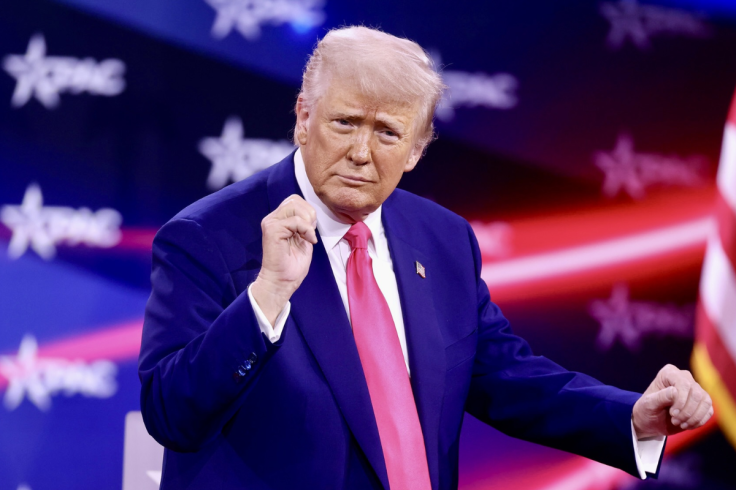
Donald Trump's grip on Washington has been shaken after Republican power-broker Lindsey Graham died in Washington, DC, and Senate Minority Leader Mitch McConnell remained in the hospital, raising fresh concerns from within the party that the president could face impeachment if Republicans lose ground in November's midterm elections.
The news came after Graham, a longtime Trump ally, died on Saturday night following what his office called a 'brief and sudden illness,' while McConnell, 84, has not been seen publicly for weeks after paramedics were called to his home last month. Together, the two men represented pillars of Republican influence in South Carolina and Kentucky, states that have become reliable conservative territory but now face uncertainty over who will hold those Senate seats as the election season accelerates.
Republicans currently hold a 53–47 majority in the Senate. If both Graham's vacant seat and any future vacancy from McConnell were to be won by Democrats, the margin would narrow to 51–49, further tightening an already polarised and sluggish Congress. That is not a prediction, only a mathematical possibility, but it is one that strategists in both parties are now quietly gaming out as the GOP scrambles to show it can legislate on issues such as affordability, immigration and national security before lawmakers leave Washington for their August recess.
Donald Trump Faces Midterm Headwinds And Impeachment Talk
The midterm backdrop for Trump is troubled. According to polling cited by the New York Times, Trump's approval rating among Americans stands at roughly 39 percent, with about 58 percent disapproving of his performance as president. His last average approval rating of 50 percent was in February 2025, those polls suggest, and he has not returned to that territory since.
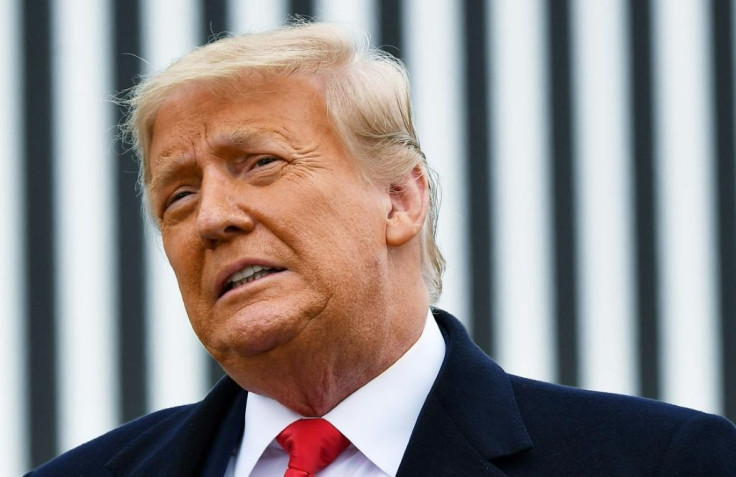
In the same surveys, Democrats hold a modest overall lead in general midterm races. That aligns with a familiar pattern in US politics, where the party out of the White House often claws back seats in midterms, but it underlines another point Republican insiders have started to stress in private: Trump and his party appear misaligned with swing voters on affordability and foreign policy, issues that are likely to dominate autumn campaigns.
That anxiety is bleeding into public warnings. Vice-President JD Vance, widely seen as a frontrunner for the 2028 Republican presidential nomination, argued in June that a Democratic surge in Congress would almost certainly translate into impeachment proceedings against Trump.
'I'm sure he'll get impeached,' Vance said. 'Look, they have nothing to actually run on or govern on. Their entire obsessive focus is that they hate Donald Trump.'
Speaker of the House Mike Johnson struck a slightly different note at the Faith and Freedom Coalition conference the same month, but the message was no less stark. He told activists that if Republicans lost the midterms, impeachment would not be the only concern, predicting that 'every committee of Congress' would become an investigative arm targeting Trump, his family, cabinet, donors and allies.
A Democratic-controlled House could impeach Trump with a simple majority vote. Removal from office, however, would still require a two‑thirds vote in the Senate, a bar that would remain high even if Democrats made gains. The more immediate risk, several Republicans privately concede, is a wave of investigations, subpoenas and legislative paralysis.
Senate Power Balance, Donald Trump And The Battle For Two Seats
Behind those warnings sits the more technical question of what happens next in Kentucky and South Carolina, and how that might affect Trump's room for manoeuvre.
McConnell has been in the hospital since paramedics responded to a report of cardiac arrest at his home in the Washington area last month. According to a report, the eyewitnesses saw the senator on a stretcher, but his team has not confirmed that he was the individual treated. His office has said only that he is 'receiving excellent care,' offering no substantive update for about three weeks. Nothing is confirmed yet beyond those sparse statements, so the swirl of rumours surrounding his condition should be treated with caution.
Under Kentucky law, if McConnell resigns before his term ends, the governor must call a special election. A proclamation would need to go to county sheriffs 63 days before the election date, with candidates filing 56 days before. The winner would serve until January 2027. Kentucky's Democratic governor, Andy Beshear, has urged McConnell to break his silence, saying last week that, as a fellow public official, he was asking the senator to provide an update on his health. On Sunday, he pressed again, telling him to 'end the crazy speculation' and explain 'what's going on.'
In South Carolina, there is less ambiguity but more immediate movement. Graham died after emergency services responded to a cardiac arrest call at his Capitol Hill home. The state's Republican governor, Henry McMaster, will appoint a replacement to hold the seat until January 2027. State law does not require him to choose someone from Graham's party faction or with Trump's ideological profile, but the appointee is expected to be a Republican.
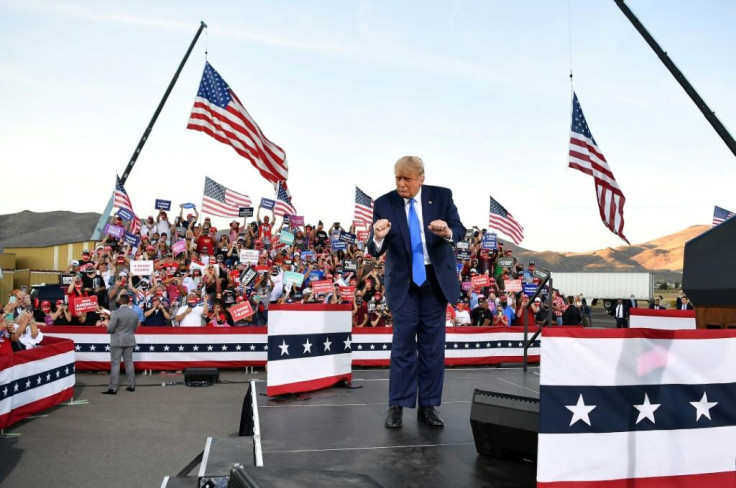
The South Carolina Republican Party has scheduled a special primary for 11 August to choose its candidate for the longer-term role. That nominee will face Democrat Dr Annie Andrews in November, in a race now loaded with national significance given the fragile Senate arithmetic.
Meanwhile, Republicans in Congress are racing to prove they can still govern under Trump's leadership. They are trying to move the Safeguard American Voter Eligibility (SAVE America) Act, the annual National Defence Authorisation Act and a stack of government funding bills before funding runs out in September. Ten appropriations measures remain outstanding.
Internal divisions are visible. Representative Don Bacon of Nebraska criticised colleagues for blocking House business to pressure the Senate into passing the SAVE Act. 'It makes no sense to paralyse the House to pressure the Senate to pass the SAVE Act,' he told The Hill, calling it 'a dumb strategy that weakens the House GOP.'
Trump himself has sent mixed signals about the importance of this year's midterms, at one point suggesting he was not particularly focused on them. Other Republicans, reading the numbers and sensing the stakes for Trump's presidency, are in no doubt that control of Congress and the question of whether Democrats get another shot at impeachment now turns on what happens in just a handful of races, and on the fate of two ailing titans of the Senate.
© Copyright IBTimes 2026. All rights reserved.