

Wainwright Fire Survivors Receive 'Spray-On Skin' Treatment as Doctors Tackle Severe Burns
Doctors are using RECELL, which uses a small sample of healthy skin to help treat much larger burn wounds
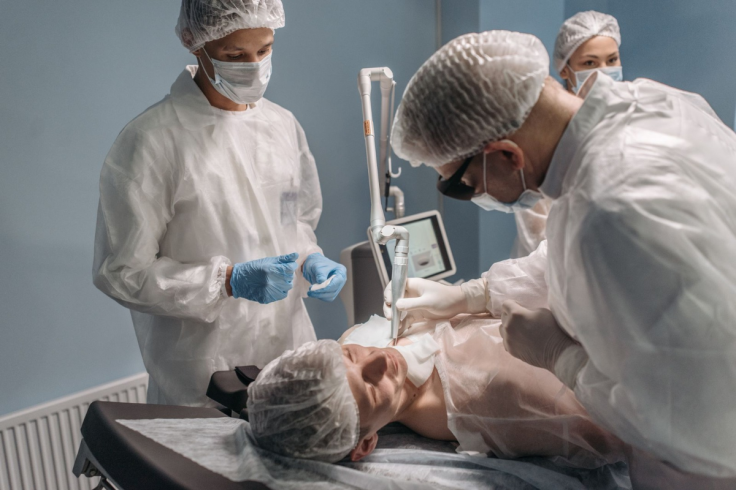
Weeks after a devastating fire at CFB Wainwright claimed the lives of four Canadian soldiers, doctors across the country are continuing efforts to treat dozens of injured military personnel. Among the advanced treatments being used is a technology known as 'spray-on skin'. Doctors say the device may help improve treatment options for patients with extensive burns.
The blaze ripped through CFB Wainwright in Alberta on 17 October 2026, which also left 39 service members injured. As patients remain hospitalised and rehabilitation efforts begin, medical teams across Canada are working around the clock to provide specialist treatment.
Toll of the CFB Wainwright Fire
The grass fire injured 39 military personnel. Many suffered serious burns that could take months, or even years, to heal.
Global News, citing a briefing document from the Alberta Health Services, reported that 25 soldiers remain hospitalised. Four had burns covering 51 to 60 per cent of their bodies.
Of those patients, 21 remain in Alberta hospitals, according to Acute Care Alberta. Nine were reported to be in critical condition, while 15 required ventilator support.
The Science Behind Spray-On Skin
The treatment uses a device called RECELL, authorised by Health Canada through its special access programme. The technology was developed in Australia by plastic surgeon Professor Fiona Wood and colleagues.
Surgeons take a tiny sample of a patient's healthy skin and process it into a spray containing the patient's own skin cells. That small sample can then be used to cover a much larger wound area. The cell suspension can be prepared at the patient's bedside in about 20 to 30 minutes, according to NICE guidance.
Standard burn care relies on skin grafts taken from the patient or a donor. For people with extensive burns, however, healthy skin suitable for grafting can be limited. Specialists say technologies such as RECELL may help reduce that challenge by expanding the area that can be treated from a relatively small skin sample.
Cross-Border Medical Response
Support has arrived from across the country. Military nurses travelled to Alberta, and a Hamilton burn centre sent nine specialists.
American medical experts have also contributed to the response. The US Army offered military burn specialists, while spray-on skin kits were shipped across the border under special emergency rules. Mineral oil used during surgery also arrived from the United States.
Dr Sayeh Zielke, interim chief executive of Acute Care Alberta, described the response in late October as 'all hands on deck'.
New Hope in Lab-Grown Skin Research
Scientists at the University of Manitoba are developing skin substitutes from the soldiers' own cells, CBC News reports. The goal is permanent, human-like skin that the body will not reject. Researchers say the experimental substitute is designed to more closely resemble human skin, including multiple layers and other biological features.
Until then, surgeons may replace damaged skin in several operations, often using artificial skin or donor skin as a temporary cover during treatment.
Long Road to Recovery
Recovery is expected to be lengthy for many of the injured soldiers. Four patients have already moved to hospitals in British Columbia and Ontario to be closer to their families. At Toronto's Sunnybrook Hospital, surgeons are caring for two soldiers around the clock, while a third attends as an outpatient.
Families have held bedside vigils in burn units. One burn survivor told CBC News that the road ahead is 'not an easy path'.
© Copyright IBTimes 2026. All rights reserved.