New White House App Sparks Alarm as Viral Claim Says It Tracks Exact Location With 'No Way' To Stop It
The app includes OneSignal tracking code and requests broad permissions, but users can deny location access through their phone settings

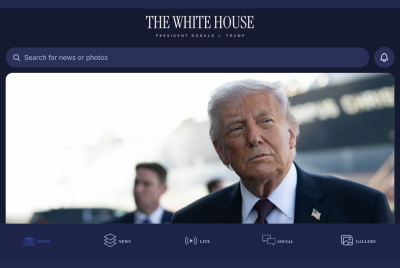
A post claiming the White House app contains a location tracker that cannot be switched off has spread widely, but testing found no evidence that the app is currently collecting users' exact coordinates, and location access can be denied from a phone's settings.
The claim was posted by the X account @GOP__Ls on 22 September 2026 and asserted that the app carries a location tracker with no way to disable it. The White House Official App launched on 27 March 2026, and the technical allegations about its code first circulated in the days after that launch.
Fact-checkers who examined it concluded the claim is misleading as a description of how the app actually behaves, though the permissions it requests and the tracking infrastructure it carries remain a legitimate concern.
What the Viral Post Claims
The September post recycled an earlier technical allegation. It carried a screenshot of the app's launch announcement alongside a Community Note stating that the app sends location data to a remote server every 4.5 minutes, according to a fact-check by Meaww, which noted the claim was resurfacing amid a political dispute rather than because of any new discovery.
🚨 BREAKING: The new White House app contains a location tracker with NO WAY to disable it. pic.twitter.com/Y3lz2Dz4nP
— GOP Ls (@GOP__Ls) September 22, 2026
The original analysis came from a developer. The X account Thereallo1026 published a decompiled code analysis on 28 March 2026 arguing that the app had the location pipeline of OneSignal, a third-party push notification and analytics service, compiled into it.
The White House App has OneSignal's full GPS pipeline compiled in, polling your location every 4.5 minutes, syncing your exact coordinates to a third party server. https://t.co/0HuNiSitA0 pic.twitter.com/UjLO9VdyVZ
— Thereallo (@Thereallo1026) March 28, 2026
A second post drove the wider alarm. An account posting as DiligentDenizen shared the app's permissions list on 27 March 2026, in a post viewed more than 832,000 times, describing the access requested as 'China-level big brother permissions'.
‼️🇺🇸: NEW WHITE HOUSE 'NEWS' APP HAS CHINA-LEVEL BIG BROTHER PERMISSIONS 👀
— Diligent Denizen 🇺🇸 (@DiligentDenizen) March 27, 2026
White House launched new app today claiming to let citizens to get news from source.
What they didn't tell you was that it logs your location, notifications, biometrics & more.
We pay for this 1984. 😒 pic.twitter.com/ssSjCnRns1
The screenshot listed precise and approximate location, the ability to modify or delete shared storage, use of fingerprint and biometric hardware, network and Wi-Fi access, the ability to stop the phone sleeping and the option to run at startup.
What Testing Found
The distinction is between what the code can do and what the app is doing. The app contains OneSignal location-tracking code configured for checks roughly every 4.5 minutes in the foreground and about every 9.5 minutes in the background, but independent network testing found no evidence that it is currently collecting or transmitting exact GPS coordinates at those intervals.
The second half of the claim is also wrong. Users can deny or revoke the app's access to location through their phone's operating system settings, which means it cannot obtain GPS coordinates without that device-level permission. Snopes and Yahoo Tech reached similar conclusions, describing the viral claim as misleading or mostly false as a description of the app's current behaviour.
One word in the claim also does not hold. The app is not new. It launched almost six months ago, and the code analysis behind the allegation dates from the week of that launch.
The Concerns That Do Stand Up
The more substantial issue has had far less attention. A security analysis of the app found that OneSignal's software contains a server-controlled setting capable of enabling the location functionality without an app update. That remote mechanism does not override the operating system's location permission, which is why denying location access at device level is the step a server-side switch cannot undo.
Other data flows are not in dispute. The app sends network traffic to third-party services including OneSignal and the widget provider Elfsight rather than exclusively to White House-controlled infrastructure, and an IP address alone can place a user in a city or neighbourhood without any GPS involvement.
The paperwork raises questions of its own. The White House privacy policy still carries an update date of 20 January 2025, more than a year before the app launched. The policy now refers to downloading or using the White House mobile app, but that dated version does not describe the OneSignal location infrastructure independent researchers later identified.
The app also reaches further than voluntary downloads. In late May 2026 the federal chief information officer, Greg Barbaccia, directed agency chief information officers to help facilitate deployment of the app across government-furnished mobile phones in the executive branch, and the Federal Aviation Administration was reported to have confirmed automatic installation on its devices.
The claim that spread this week is not accurate, and the reason it keeps finding an audience is that the app asks for more than its privacy policy accounts for.
© Copyright IBTimes 2026. All rights reserved.
- Recommended For You