

The Winds of Winter Ending: George R.R. Martin Admits Fans Guessed Correctly — Why He Won't Change It
George R.R. Martin confirms he won't rewrite The Winds of Winter's ending, despite fans guessing his subtle clues correctly
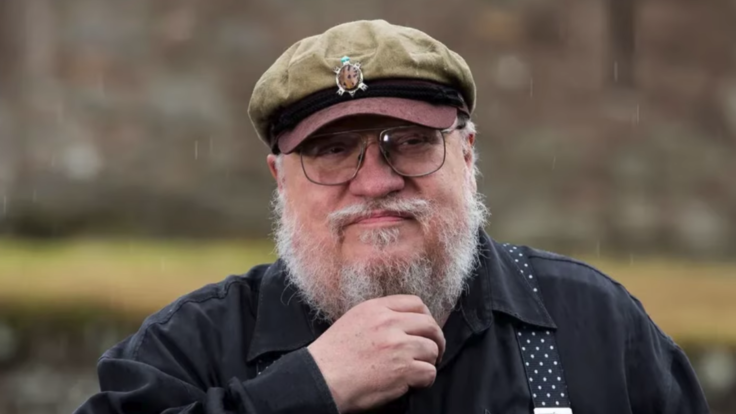
The question that has tormented millions of fantasy readers for nearly 15 years may finally have an answer. After the divisive and widely criticised conclusion of the TV adaptation, Game of Thrones, fans of the book series A Song of Ice and Fire have been waiting with bated breath for George R.R. Martin to release the next instalment, The Winds of Winter.
Now, in a rare, candid moment shared with a fan, the author has offered a sliver of hope that the colossal saga has, at the very least, a definitive road map.
At a recent signing event, a dedicated reader asked the question every fan wants answered, and the subsequent Reddit post has set the fan community alight. According to the fan's account, Martin let slip that he 'knows how the story will end.'
This simple admission carries massive weight, implying that the overarching plot points for both the long-delayed The Winds of Winter and the final book, A Dream of Spring, must be fully mapped out in the author's mind, even if the daily struggle of the writing process continues.
The fan was honest about the immediate future, sharing that the novel is 'not coming any time soon' — a brutal reality for those who have been waiting since A Dance with Dragons was released all the way back in 2011. However, the revelation that he 'knows how the story will end' means that the author has successfully navigated the daunting structural challenges of his narrative.
It gives us a comforting sense of finality, even while the wait continues. The pressure on Martin is unimaginable; not only must he finish one of the most anticipated novels of all time, but he must also deliver a satisfying conclusion that somehow redeems the controversial ending of the HBO series.
The 'Bittersweet' Ending George R.R. Martin Has Promised
Long before the TV showrunners had to take over the narrative reins, Martin had been open about the tone he intended for the ultimate conclusion of the Westeros saga. He has consistently signalled that readers should prepare for an ending that is far from a simple 'happily ever after', instead favouring a more realistic, emotionally complex payoff.
Speaking in an interview with Observer a few years ago, the 77-year-old writer confirmed his enduring vision: 'I've said before that the tone of the ending that I'm going for is bittersweet'.
This style, which he has championed, draws inspiration from one of the most beloved fantasy series in history. Martin specifically pointed to J.R.R. Tolkien's The Lord of the Rings as his benchmark, noting how that epic concluded with the same nuanced tone.
For the author, a great story doesn't just wrap up neatly; it shows the cost of victory and the scars left by a long, terrible conflict. It's a powerful idea, even if Martin himself admitted he wasn't entirely sure he could 'pull this off', saying the final interpretation would ultimately be up to his readers.
It has also been confirmed that the book series, despite having a more detailed and expansive plot, will conclude in a manner 'somewhat similar' to the Game of Thrones finale. Given that the show ended on an open-ended note—leaving key characters' fates ambiguous and sparking endless debates online — fans of the books have been duly warned that the final pages of A Dream of Spring are unlikely to tie up every single loose thread in a neat bow.
How George R.R. Martin Stuck to His Original Plot Despite Fan Theories
For an author who prides himself on laying down 'subtle and obscure clues', the rise of the internet theory-crafter has been both a blessing and a curse. Over the years, countless fans have dedicated themselves to dissecting Martin's prose, historical analogies, and cryptic statements to predict the final destination of Daenerys, Jon Snow, and Tyrion.
This rigorous fan speculation reached a point where some readers genuinely managed to crack the code. Martin confessed to The Telegraph that 'some of the theories are right', and that at least two astute readers had managed to 'put together the extremely subtle and obscure clues' he'd deliberately planted throughout the earlier novels, from A Game of Thrones (1996) right up to A Dance with Dragons (2011).
This must have been a genuine nightmare for the writer, who, for a moment, considered completely rewriting the ending just to throw the successful theorists off the scent. It's a natural inclination for any writer to want to surprise their audience.
However, Martin, realising the integrity of his decade-spanning work was more important than a momentary twist, resolved that altering the plot would only 'ruin the entire story'. The embedded clues, the seeds he had sown through five massive novels, were too fundamental to abandon.
The publishing history of the saga illustrates the mounting wait for the final chapters: A Game of Thrones was released in 1996, followed by A Clash of Kings (1998), A Storm of Swords (2000), A Feast for Crows (2005), and finally, A Dance with Dragons in 2011. Both The Winds of Winter and A Dream of Spring remain listed as 'To Be Announced' (TBA).
The confirmation, therefore, is this: We are still on track for the original, decade-old ending to A Song of Ice and Fire. We simply have to wait a little longer for Martin to finally deliver the thousands of pages that bridge the gap to that bittersweet, inevitable conclusion.
So, while the wait for The Winds of Winter — and eventually, A Dream of Spring — drags on, we have the bittersweet certainty that the destination is fixed, even if the journey is still being written. The author is sticking to his guns, preserving the integrity of his subtle clues against the collective might of the internet's best theorists.
All that's left for us is to be patient and perhaps reread the existing five novels for the hundredth time. In the meantime, which fan theories do you believe George R.R. Martin is referring to?
© Copyright IBTimes 2026. All rights reserved.