Diddy, 50 Cent Feud Explained: Legal Team Issued Cease-And-Desist to Netflix Over Documentary
P. Diddy's legal battle to ban 50 Cent's Netflix docuseries failed as the show became the #1 hit, defeating Stranger Things 5

The world of hip-hop rivalries has always been ruthless, but this isn't simply a beef played out on a diss track. This is a media war, and the stakes have just gone through the roof. The decades-long clash between Sean 'P. Diddy' Combs and Curtis '50 Cent' Jackson has boiled over spectacularly, culminating in a four-part Netflix miniseries that has done the unthinkable: it dethroned one of the streaming giant's most sacred cows.
Sean Combs: The Reckoning, a documentary executive produced by the formidable 50 Cent, has stormed the Netflix charts, quickly becoming the number one show in the US, temporarily knocking Stranger Things Season 5 from its coveted perch.
In an age where true crime scandal rivals sci-fi blockbusters for viewership, the success of this series — which delves into the grave allegations and legal trials facing the music mogul — has intensified the spotlight on the two rappers' heated back-and-forth like never before.
The timing, the controversy, and the deeply personal nature of 50 Cent's involvement have transformed a long-running music feud into a cultural flashpoint.

The Legal Firestorm: How Diddy Tried to Cease-and-Desist Netflix
The series' stunning chart performance is undoubtedly fuelled by the intense legal firestorm surrounding its release. While 50 Cent took to X (formerly Twitter) to celebrate his Executive Producer credit with characteristic glee, joking that Diddy had sent him a bouquet of flowers as a mock 'warning sign', the real legal response was deadly serious.
In the days leading up to the documentary's worldwide premiere, specifically on Dec. 1, 2025, just hours before its debut on Dec. 2, Diddy's legal team reportedly issued a formal cease-and-desist letter to Netflix. This aggressive legal push demanded the immediate withdrawal of the series.
His representatives claimed that much of the archival material used in the production was originally shot for a personal documentary Combs had been planning since his youth. They alleged that the footage, which includes scenes of Combs strategising with his legal team shortly before his arrest, was 'illicitly' obtained and misused to create a 'hit piece' designed for 'one-sided character assassination'.
Now I’m #1 in the US, and #1 in UK, Stranger Things gotta move over FIGHTLAND is on the way stop playing with me ! @50CentAction247 • https://t.co/WtNREs3AKy pic.twitter.com/Onc1wAAK5p
— 50cent (@50cent) December 5, 2025
Netflix, for its part, quickly and publicly refuted the claims, defending the legality of the footage acquisition and the integrity of the project. The streamer stated unequivocally that the footage of Combs was 'legally obtained' and pushed back hard on the claims of bias, insisting that 50 Cent 'does not have creative control' over the series and that 'no one was paid to participate'.
This back-and-forth served only to heighten public interest, catapulting the four-part show past major titles and affirming that controversy, when handled by an adversary like 50 Cent, sells. Speaking about the motivation behind the series, Curtis James Jackson III made it clear that his commitment was to the gravity of the subject matter, stating via The Mirror US:
'I've been committed to real storytelling for years through G-Unit Film and Television. I'm grateful to everyone who came forward and trusted us with their stories, and proud to have Alexandria Stapleton as the director on the project to bring this important story to the screen.'
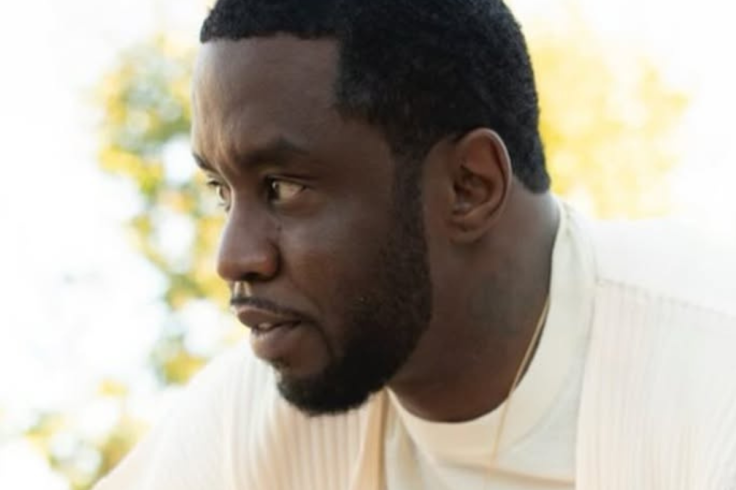
More Than a Feud: Tracing the Decades-Long Battle Against Diddy
To understand the sheer vitriol driving the documentary's creation, one must look back nearly two decades. The feud between P. Diddy and 50 Cent dates all the way back to the early 2000s, beginning shortly after 50 Cent's mainstream emergence. What started as mere industry ignorance and playful taunts soon evolved into a rivalry marked by increasingly pointed public attacks.
By the mid-2010s, the tension had escalated considerably. 50 Cent began using social media as his weapon of choice, consistently mocking Diddy's music, branding, and even accusing him of shady business dealings.
This period saw the notorious 'vodka wars' — a public battle between Diddy's Cîroc and 50 Cent's Effen vodka — where social media posts became the primary battleground. For years, Diddy largely stayed silent, opting not to dignify the constant barrage of insults with a response, allowing 50 Cent's one-sided commentary to dominate the narrative.
The late 2010s and early 2020s, however, saw things become dramatically more direct. The rapper-turned-producer capitalised mercilessly on the escalating allegations against his rival, moving from playful pokes to sharp, public critique as Diddy's legal woes mounted.
The release of the Netflix documentary, coming as Diddy is serving a 50-month prison sentence for his conviction, has not just reignited the feud — it has given 50 Cent the ultimate high ground in their enduring conflict, proving that for some disputes, revenge is a dish best served on a massive streaming platform.
The ultimate victory in the decades-long conflict now belongs to 50 Cent, delivered not on a diss track, but on a global streaming stage that transcended music, law, and celebrity. The question remains: has the public's thirst for true crime scandal permanently redefined the rules of the hip-hop rivalry, making legal jeopardy the ultimate weapon?
© Copyright IBTimes 2026. All rights reserved.
- MOST POPULAR IN Entertainment